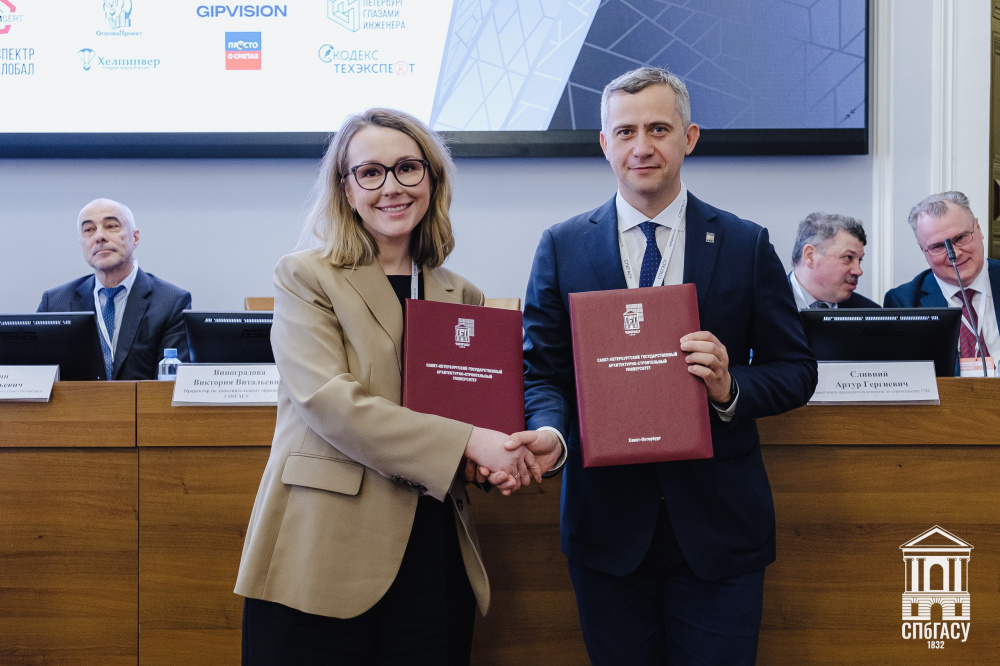
 Signing of the cooperation agreement between SPbGASU and the Leningrad Region Urban Development Policy Committee. Pictured: Viktoria Vinogradova and Sergey Lutchenko
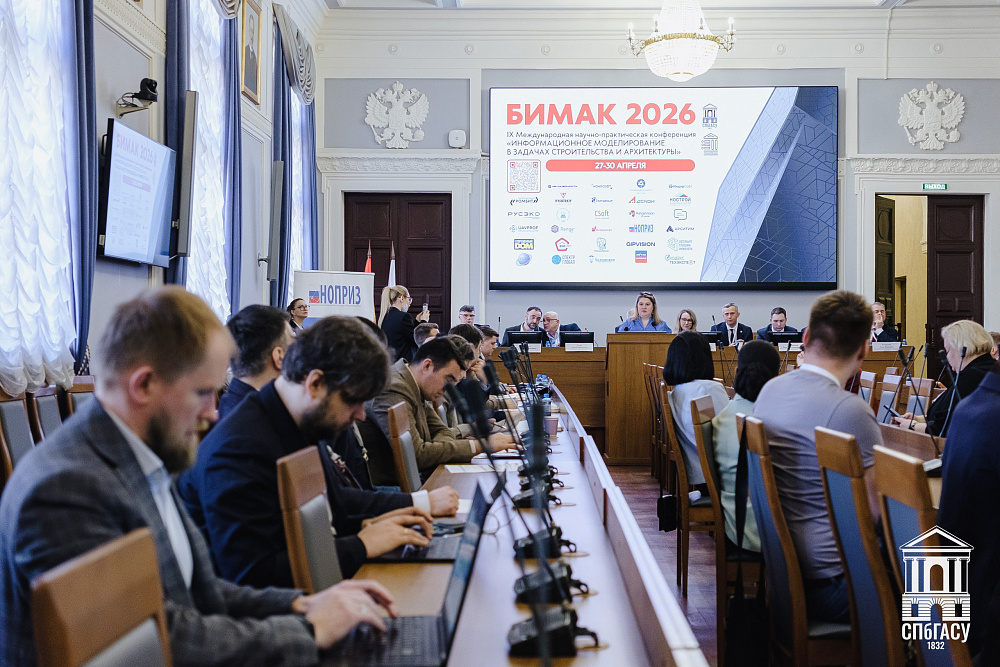
SPbGASU has opened the IX International Scientific and Practical Conference "Information Modeling in Construction and Architecture" (BIMAC-2026). The first day of the forum brought together representatives from government agencies, the professional community, business, and education to discuss key areas of digital transformation in the construction industry.
Grand opening and welcoming words
The conference opened with a series of greetings outlining the key development vectors for the industry – digitalization, personnel training, and cross-industry collaboration.
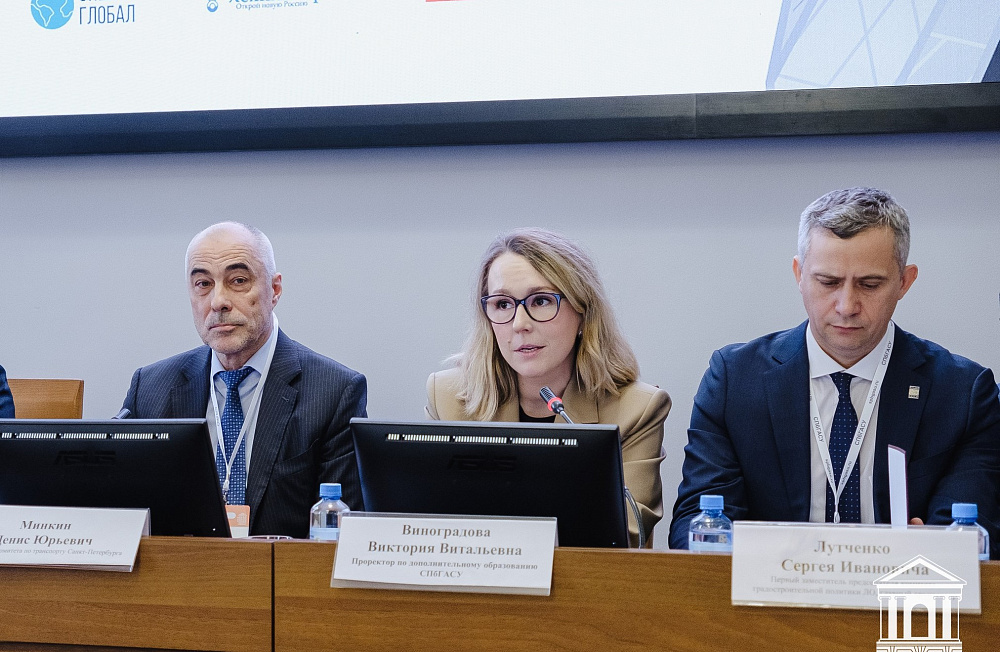
Viktoria Vinogradova, SPbGASU Vice-Rector for Continuing Education, delivered a welcoming speech. She wished the participants fruitful and interesting work and emphasized the importance of partnership with industry: "I hope that the conference will become a venue for effective professional dialogue, exchange of experience, and, of course, new joint initiatives."
The Chairman of the St Petersburg Transport Committee, Denis Minkin, noted the inevitability of a technological leap “…primarily in the area of digital technologies, artificial intelligence, and control systems.”
"Digital data and models are no longer just a designer's tool, but also the foundation of a unified digital ecosystem," says Pavel Tokarevsky, Deputy Chairman of the Committee for Urban Development and Architecture of St Petersburg.
Deputy Chairman of the Leningrad Region Construction Committee Evgeny Enokaev spoke about digitalization, the rejection of paper media and the transition to electronic document management, and the implementation of analytical monitoring systems.
Discussing the inevitable digital transformation of the information space, speakers repeatedly noted that this, first and foremost, required high-quality training of new-level specialists, as well as close cooperation between the government, business, and universities.
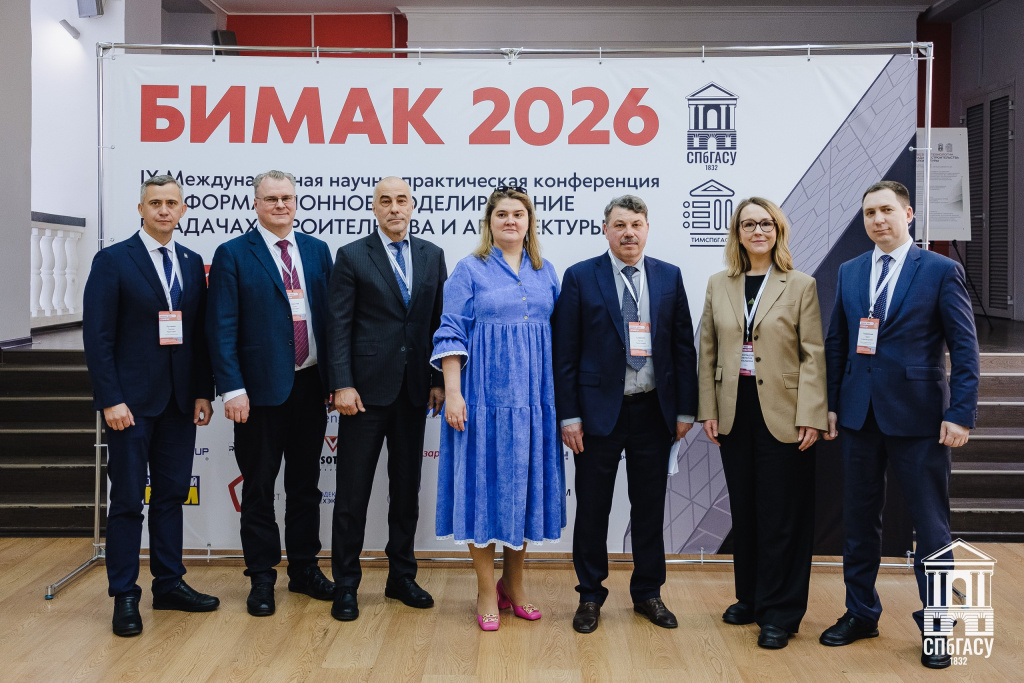 Sergey Lutchenko, Director of Programs for the Development of Interaction with Educational and Scientific Organizations at Nanosoft OOO; Oleg Egorychev; Denis Minkin; Ekaterina Kozyreva; Deputy Chairperson of the St Petersburg Construction Committee; Artur Slivniy; Viktoria Vinogradova; and Pavel Tokarevsky.
Those gathered paid special attention to the preservation of cultural heritage sites. Ekaterina Kozyreva, First Deputy Chair of the Committee for State Control, Use, and Protection of Historical and Cultural Monuments (KGIOP) of St Petersburg, recalled that 10 percent of all cultural heritage sites in Russia are located in St Petersburg, and each of these sites is unique. This requires careful restoration, but also the use of modern information technology. She also noted that digital technologies helped speed up processes but could not completely replace expert human judgment.
Signing of a cooperation agreement
The key event of the first day was the signing of a cooperation agreement between SPbGASU and the Leningrad Region Urban Development Policy Committee. It was signed by Viktoria Vinogradova, SPbGASU Vice-Rector for Continuing Education, and Sergey Lutchenko, First Deputy Chairman of the Leningrad Region Urban Development Policy Committee and Chief Architect of the Leningrad Region. Participants emphasized that the signing was not the beginning, but a logical continuation of the already established collaboration.
The agreement is related to the launch of a project for the digital revival of regional architectural heritage sites. As part of the initiative, SPbGASU students will create digital and physical models of the sites, and the results will be presented in 2027 at an exhibition dedicated to the 100th anniversary of the Leningrad Region.
Plenary session: technologies and practices
Following the opening, a plenary session was held entitled "End-to-end technologies at various stages of the life cycle of capital construction and cultural heritage projects."
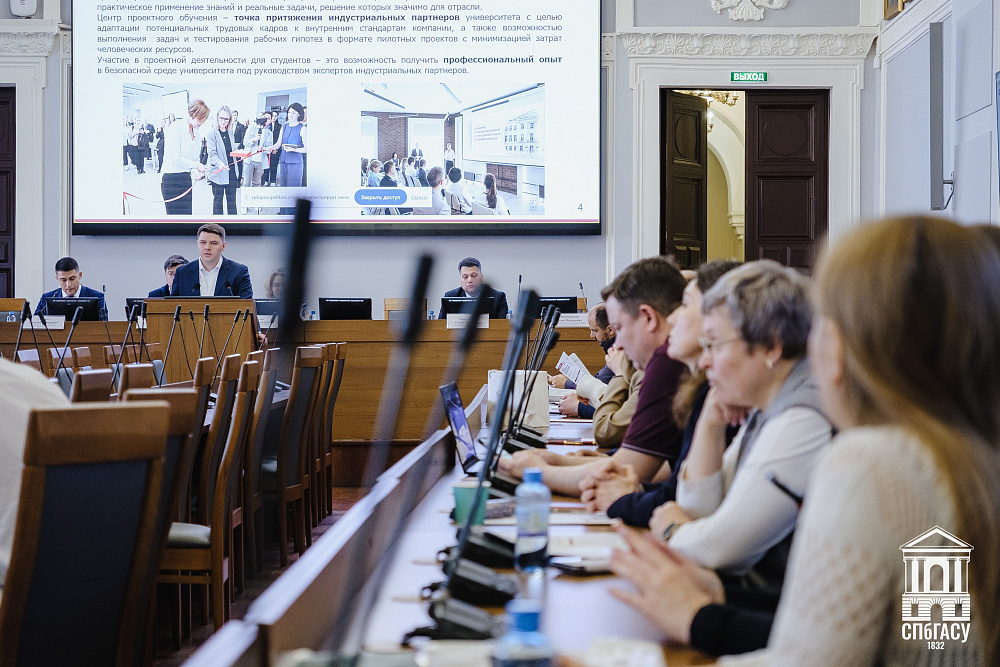
Denis Nizhegorodtsev, Director of the University's Educational Center for Digital Competence, delivered a keynote speech on the topic of cross-cutting technologies in SPbGASU's project activities.
He presented the university's project-based learning system, which covers all levels of training: school – university – vendor – employer, and spoke about the launch of the Educational Center for Project-Based Learning in 2025.
The speaker focused on student teams' work on real-life challenges for industrial partners, joint diploma projects in the Building Information Modeling (BIM) environment, and the "Digital Revival of Architectural Heritage Sites" project.
“These are not just training models – we create solutions that can be applied in real practice,” the speaker noted.
First day agenda
Leading industry experts also spoke during the plenary session:
-
Andrey Reshetnikov, Executive Director of OOO ROMBIT, presented a report titled "Creation and operation of digital twins of cultural heritage sites using domestic software. Technologies for preserving history in the digital age."
-
Vera Burtseva, General Director of OOO Bureau of Technology, report "High-rise buildings. Environmental engineering and digital twins."
-
Aleksey Agafonov, Deputy Director General for Support and Development of Design Production at Atomenergoproekt JSC, report “Design: from concept to decommissioning.”
-
Elena Kolosova, Development Director of K4 OOO, report “The foundation of a successful project, or How to avoid derailing a project before it starts.”
-
Vladimir Frolov, General Director of S-INFO OOO, report “Application of TIM in the construction and operation of transport infrastructure facilities.”
In the afternoon, the conference continued with sections devoted to digital restoration of cultural heritage sites and cost modeling issues.
The conference will run through 30 April. The program will include discussions and presentations on digital technologies in construction, transportation, and road and bridge construction; seamless education in the field of TIM/BIM; artificial intelligence in construction and architecture; and the development of digital competencies for industry specialists.
The conference will include a roundtable discussion on the application of domestic software, organized by SPbGASU jointly with the Northwestern Federal District Construction Industry Consortium and the SRO "Association of Builders of St Petersburg."
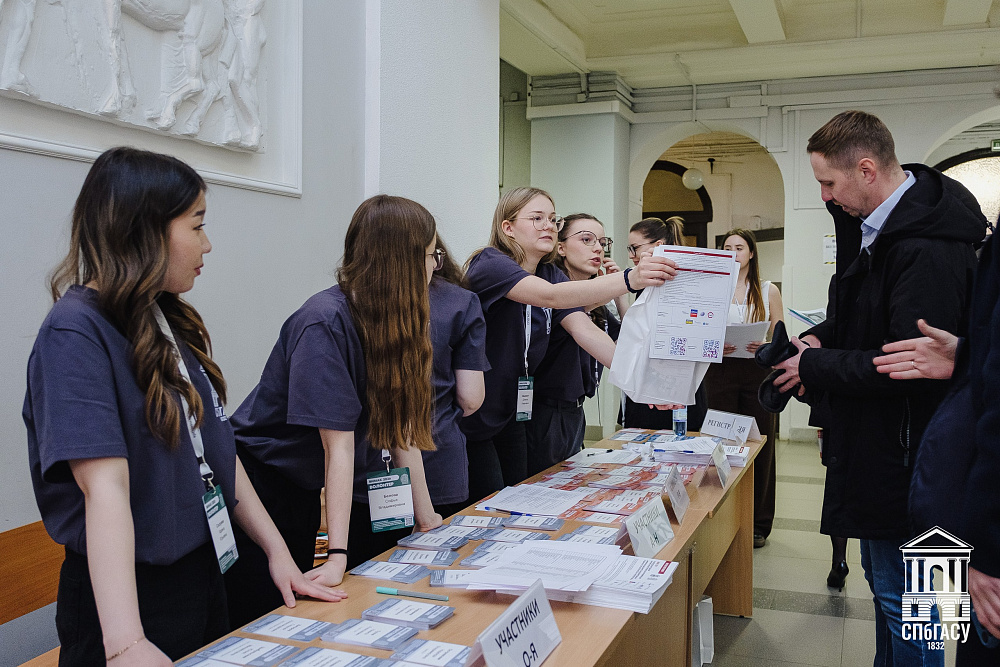
The conference features a daily exhibition where BIMAC partners present their developments in the field of high technology and software.
At the conclusion of the conference, on 30 April, the results will be announced and the awards ceremony will be held for the winners of the "All-Russian SPbGASU TIM Championship. The SVE League 2026", which began on 25 April. Additionally, diplomas and prizes will be awarded to the winners of the All-Russian School TIM Championship of SPbGASU, which took place in March of this year.