On 12 April, Russia celebrates Cosmonautics Day, a holiday that symbolizes scientific progress, the boldness of engineering, and the pursuit of new heights. This day has special significance for the construction industry and engineering education: behind every space achievement lie complex structures, infrastructure, and the work of specialists from a wide range of fields.
At SPbGASU, this intergenerational connection is especially felt by faculty members whose professional activities were directly related to the space industry. One of them is Professor Sergey Savin at the Department of Reinforced Concrete and Masonry Constructions, who worked at Baikonur in 1988.
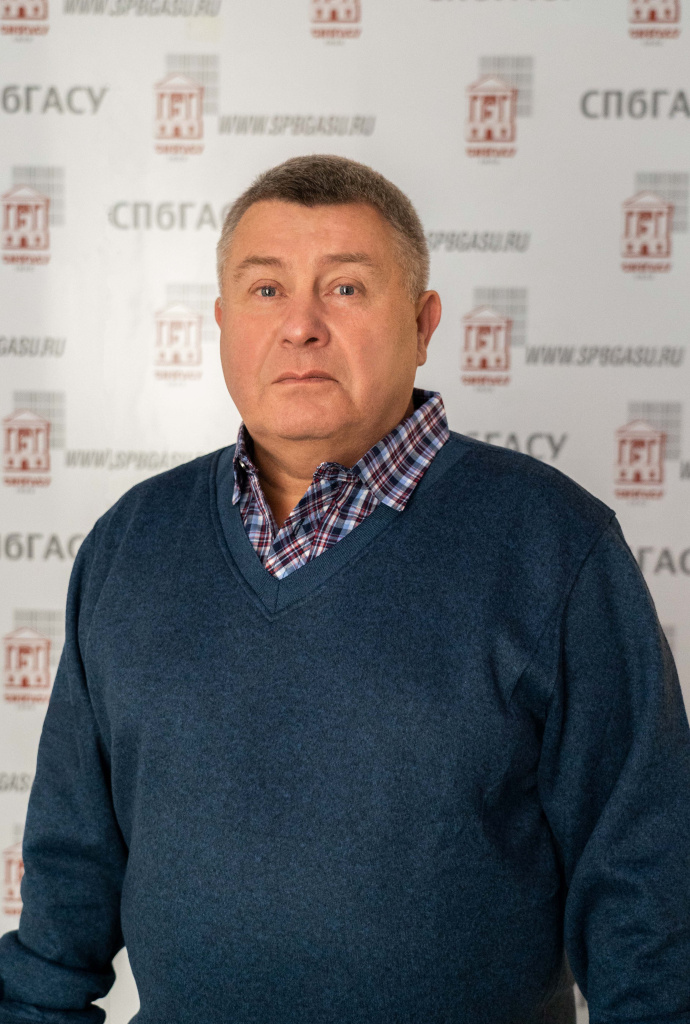 Sergey Savin
In mid-August 1988, he was sent on a mission by order of the Chief of Construction and Quartering of the USSR Armed Forces – Deputy Minister of Defense. He and a colleague flew on a special flight from the "Arsenal" Scientific and Production Association. At the time, Sergey Nikolaevich was working at a military research institute involved in the construction of specialized facilities.
The specialists were tasked with inspecting the roof of the assembly and testing building housing the "Buran" spacecraft. Over time, the roof began to leak, jeopardizing the strict equipment storage conditions.
“Imagine: there are hygrometers, thermometers, psychrometers all around – and next to it there’s a bucket with water flowing from the roof into it,” he recalls.
The work took place in extreme conditions. Baikonur greeted the specialists with sweltering heat: "When the plane door opened, it felt like sticking my head in an oven. And we spent a whole month in that 'oven.'"
Despite this, it was here that the scale of the space industry was particularly acutely felt – from the gigantic structures to the complex logistics of moving around the cosmodrome.
Sergey Savin was particularly impressed by the missile launches, which he observed directly from the roof of the facility: "It was as if I were sitting in the front row of the balcony. The spectacle was so grand that it couldn't compare to the television broadcast."
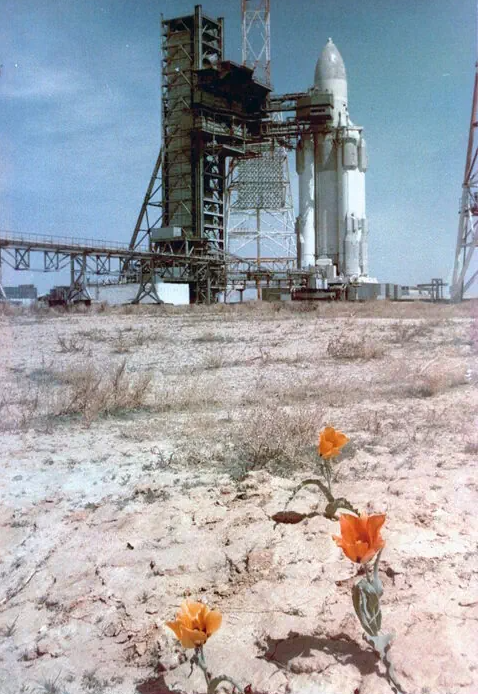 The Energia launch vehicle with the Skif-DM payload at launch. Baikonur. Postcard, 1987.
But the most important thing was the professional experience gained during the project. The team was able to find an effective engineering solution using fundamental physical principles. By conducting temperature measurements and mapping the moisture distribution within the roof structure, the specialists were able to significantly simplify the restoration process.
“Then I realized: the more knowledge you have, the more opportunities you obtain to solve a problem in a critical situation,” he notes.
Today, this experience is becoming part of the educational environment at SPbGASU, being passed on to students and inspiring a new generation of engineers.
On Cosmonautics Day, Sergey Nikolaevich addresses students with the words: "Space is a worthy goal. Do study: no amount of knowledge will be superfluous in your future life."
The stories of these specialists serve as a reminder that behind every rocket launch are not only designers and cosmonauts, but also civil engineers who ensure the reliability and safety of these unique facilities. This means that the contributions of future SPbGASU graduates to the industry's development could be part of new achievements in the near future.