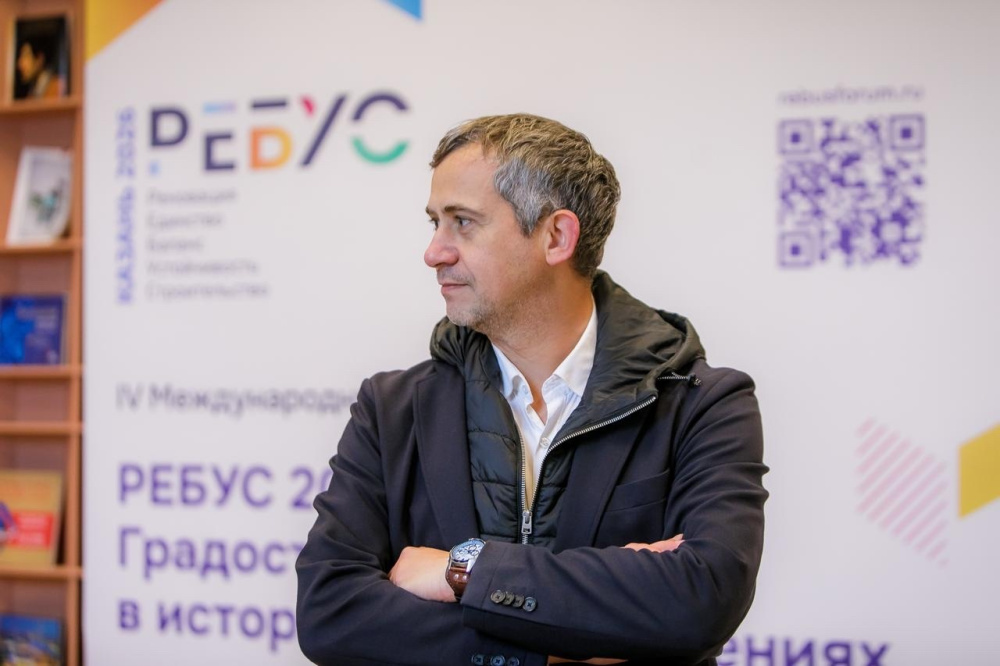
 Sergey Lutchenko
On 11–13 November, Kazan hosted the IV International Forum "REBUS 2026: Urban Planning in Historic Settlements," organized as part of the BRICS International Construction Week. One of the forum’s events was a roundtable for chief architects of historic settlements, which focused on pressing issues regarding the preservation and development of historic urban environments.
The round table was attended by Sergey Lutchenko, PhD of Architecture, Acting Head of the SPbGASU Department of Architectural Environment Design. He delivered presentations addressing key issues related to the preservation and development of historical environments, the integration of contemporary architecture into historical settlements, and the implementation of cultural heritage projects.
In his remarks, Sergey Lutchenko emphasized that the preservation of cultural heritage sites should not be limited solely to their physical conservation. In his view, ensuring the long-term survival of such monuments requires identifying relevant public functions for them and integrating them into contemporary urban, social, and economic life. This approach makes it possible not only to maintain the condition of historical sites but also to reintegrate them into the everyday cities' life.
The expert placed particular emphasis on the principles of contemporary architectural practice within historic settlements and designated heritage sites. Sergey Lutchenko highlighted the importance of a contextual approach, in which new structures are delicately integrated into the existing urban and natural landscape, and traditional architectural forms are reinterpreted through modern means. At the same time, it is crucial to avoid pseudo-historical stylization and the direct copying of architecture from the past.
Another topic addressed in the presentations was the practice of architectural competitions. As a representative from SPbGASU noted, both open and invited competitions demonstrate a high level of professional interest in working with historical heritage and help generate high-quality design solutions. However, a gap often emerges between the selection of a winning concept and its subsequent realization: the developed designs do not always reach the stage of practical implementation.
Among the obstacles to implementing such initiatives, Sergey Lutchenko highlighted the lack of unified, transparent regulations and coordinated interdepartmental procedures for handling the protected features of cultural heritage sites. This can significantly extend the time required for the approval and execution of socially significant projects, even when the proposed solutions involve a careful, respectful approach to the historic environment.
Furthermore, in his presentations, the SPbGASU representative analyzed approaches to the development of large-scale memorial complexes and historical-cultural clusters that are subject to significant human-induced pressure. In his view, for such spaces, it is necessary to shift from the fragmented improvement of individual monuments toward the creation of an integrated system of routes. This system should connect historical sites, ensure convenient transport accessibility, and be supported by well-thought-out navigation and service infrastructure.