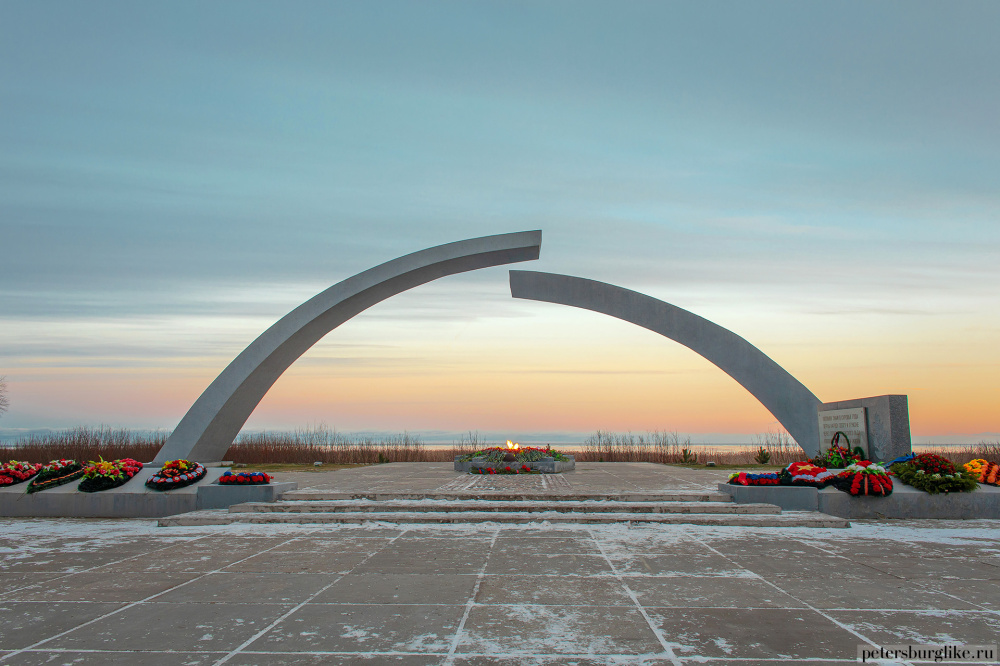
18 January, 2026, marks 83 years since the lifting of the Siege of Leningrad—one of the most important and tragic chapters in the history of the Great Patriotic War. On this day in 1943, troops from the Leningrad and Volkhov Fronts, during the operation Iskra, linked up near Workers' Settlements No. 1 and No. 5, breaking the siege and restoring land connections between the besieged city and the rest of the country. A year later, on 27 January, 1944, the siege was completely lifted. This day became Russia's Day of Military Glory.
The dates of January are forever etched in the history of Leningrad as symbols of inhuman trials, mass heroism, and the unparalleled resilience of its residents. For nearly 900 days, the city lived and fought amid hunger, cold, and constant artillery shelling and bombing. The price of liberation was terrible: hundreds of thousands of dead, destroyed neighborhoods, and shattered lives. But Leningrad endured.
The contribution of the Leningrad Civil Engineering Institute (LISI), now the Saint Petersburg State University of Architecture and Civil Engineering, holds a special place in the history of the besieged city. During the war and the siege, LISI students, teachers, and staff fought on the front lines and worked in besieged Leningrad, making a significant contribution to the defense and preservation of the city.
From the first days of the Great Patriotic War, the institute's teachers and laboratory staff were engaged in work serving the needs of the front and the home front. LISI scientists completed over two dozen military defense research projects and developed designs for mass-produced military equipment. Gun steel was tested in the mechanical and chemical laboratories, and components for anti-tank weapons were manufactured.
The institute's architects and engineers examined buildings damaged by bombing and shelling, assessed their continued use, and developed structural reinforcement and restoration projects. LISI specialists contributed to camouflaging industrial, military, and civilian facilities, as well as protecting Leningrad's historical and architectural monuments.
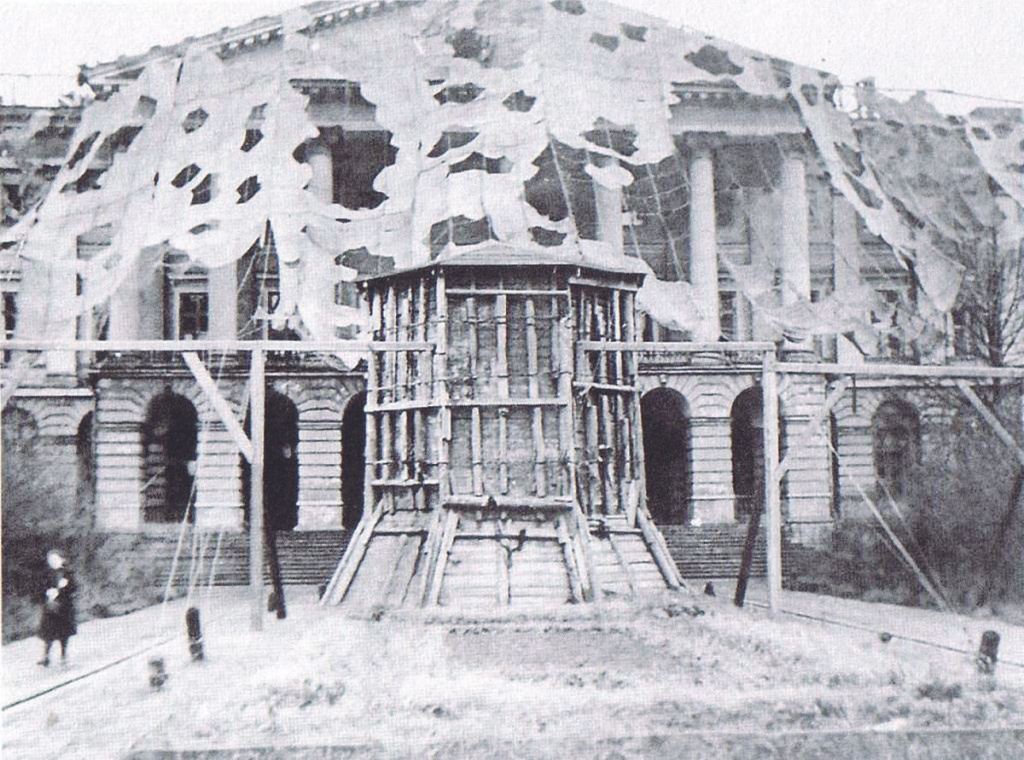
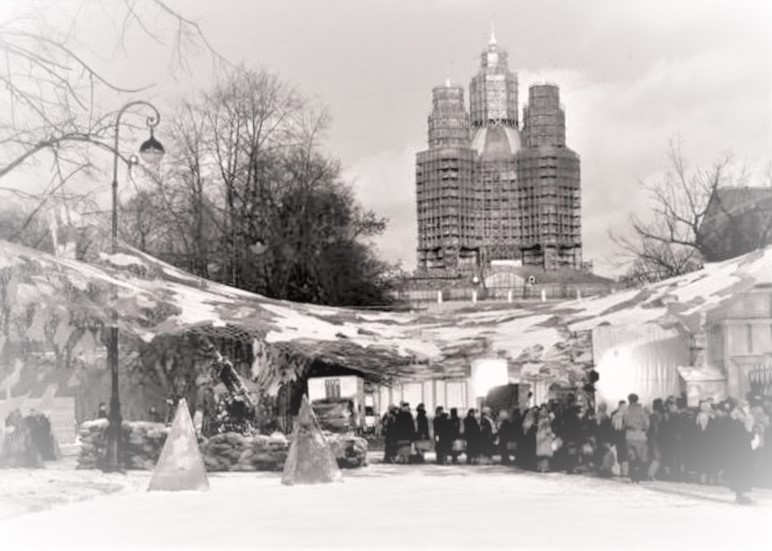 A plan to camouflage the city's most important landmarks was developed before the war by a group of architects led by Chief Architect Nikolay Varfolomeevich Baranov (a 1931 graduate of the LIIKS (Leningrad Institute of Municipal Construction Engineers, now SPbGASU)) and his deputy Aleksandr Ivanovich Naumov (a 1936 graduate of the LIIKS (now SPbGASU). Smolny was camouflaged according to a design by Aleksandr Ivanovich Gegello (a 1920 graduate of the Institute of Civil Engineering (IGI, now SPbGASU). Large-scale camouflage work in the city began as early as 26 June, 1941, on the fifth day of the war.
Even during the siege, the Institute continued its work. In January 1942, during the most difficult period, LISI held the defense of its diploma theses. A small group of employees remained in the city, entrusted with preserving the Institute's buildings, equipment, archives, and library. This dedicated work became one of the most memorable chapters in LISI's wartime history.
More than 220 students, teachers, and staff members of the Institute died at the front, from exhaustion in besieged Leningrad, or during the evacuation. Their names are listed in the Book of Memory, which is kept in the SPbGASU History Museum, and will forever remain a part of the University's history.
After the siege was lifted, the Institute continued to fulfill its vital mission: training engineering personnel for the country. As early as 1943, LISI was one of the first Leningrad universities to resume operations in its home city, despite the enemy still being on its borders. Teachers and students participated in the restoration of the Institute's buildings, dormitories, and academic buildings, preparing the University for the return of the bulk of its staff from evacuation.
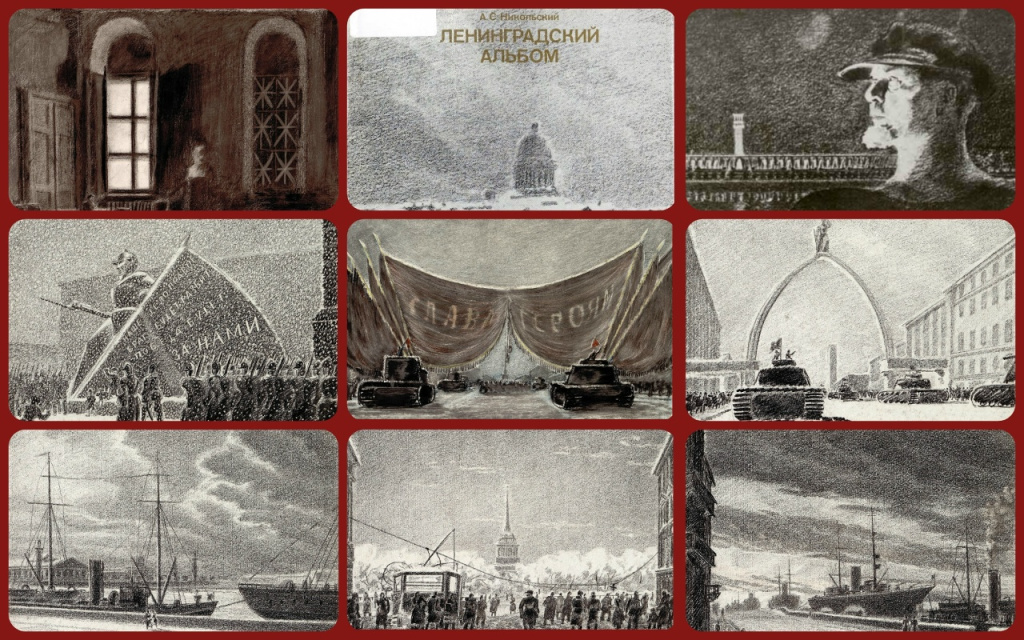 Aleksandr Sergeevich Nikolsky was an architect, a 1912 graduate of the Institute of Civil Engineering (IGI), and a lecturer at the Institute of Civil Engineering (IGI, now SPbGASU) from 1927 to 1931. The "Leningrad Album" contains his drawings, engravings, and wartime projects. During the siege, A.S. Nikolsky led a team tasked with camouflaging industrial facilities and kept a diary in which he recorded and sketched the everyday life of the besieged city.
The memory of the siege and wartime is carefully preserved by the SPbGASU Scientific and Technical Library. Its collection contains unique documents—authentic testimonies of the selfless work of scientists, architects, artists, editors, and printers during the siege of Leningrad. These materials allow us to see the war through the eyes of those who continued their scientific and creative work amidst hunger and constant threats to their lives.
One of the most valuable exhibits is the book "Proportionality in Architecture" by IGI/LISI Professor Herman Davidovich Grimm, published in 1935. During the winter of 1941–1942, the architect, while in besieged Leningrad, worked on revisions and additions for a subsequent reprint of the textbook: he added handwritten notes in the margins and supplemented the text with materials typed on notebook sheets. These pages became living testimony to the scholarly work that continued under inhumane conditions. Herman Davidovich Grimm died on 23 March, 1942.
The Library also houses documents related to the preparations for the Institute's centennial anniversary. On 28 November, 1942, Acting Director of LISI Konstantin Petrovich Sergeev created a Jubilee Commission to commemorate this significant anniversary. The commission's materials, created in the besieged city, today form an important part of the University's historical legacy.
Of considerable interest are the creative works from 1943–1944 by Aleksandr Mikhailovich Sokolov, a lecturer at the LISI and one of the architects behind the Technological Institute metro station. During the war, he served on the commission to establish and investigate the atrocities of the Nazi invaders and conducted approximately 500 scientific examinations of Leningrad buildings damaged by artillery shelling and bombing.
The anniversary of the lifting of the Siege of Leningrad is an opportunity to revisit history, reflect on the scale of the heroism of the city's defenders and residents, and remember the contribution of Leningrad's universities to the common cause of Victory. The Saint Petersburg State University of Architecture and Civil Engineering cherishes the memory of its students, teachers, and staff who survived the Siege and made an invaluable contribution to the rescue, preservation, and restoration of Leningrad, passing this memory on to future generations.