 Svetlana Rurikova
On 23–24 April, the SPbGASU Department of Intercultural Communication participated in the IV National (All-Russian) Scientific and Practical Conference with International Participation, "Current Issues of Economics and Management in Construction," held at our university. As part of the conference, the department organized sections on "Language training for future professionals" and "Science in a foreign language – a step into the professional's future." Participants included teachers, undergraduate and postgraduate students from universities in St Petersburg, Moscow, Smolensk, and Nizhny Novgorod, including international students.
Opening the section meeting, Elena Selezneva, Head of the Department of Intercultural Communication and PhD of Pedagogic Sciences, emphasized: "Knowledge of a foreign language in today's world is the key to successful and fruitful scientific and cultural communication."
Every year the number of applications for the conference grows, so the work of the two sections was divided into five subsections.
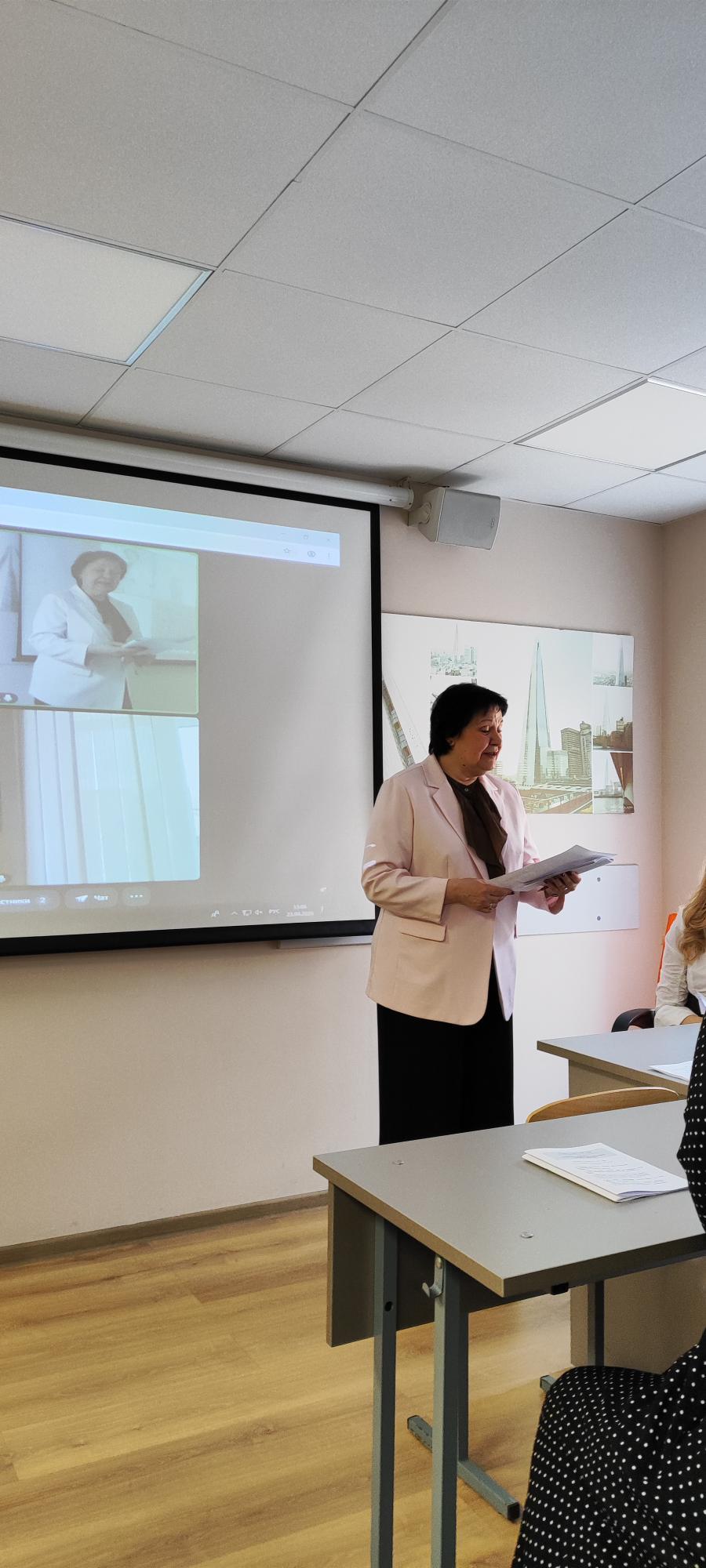
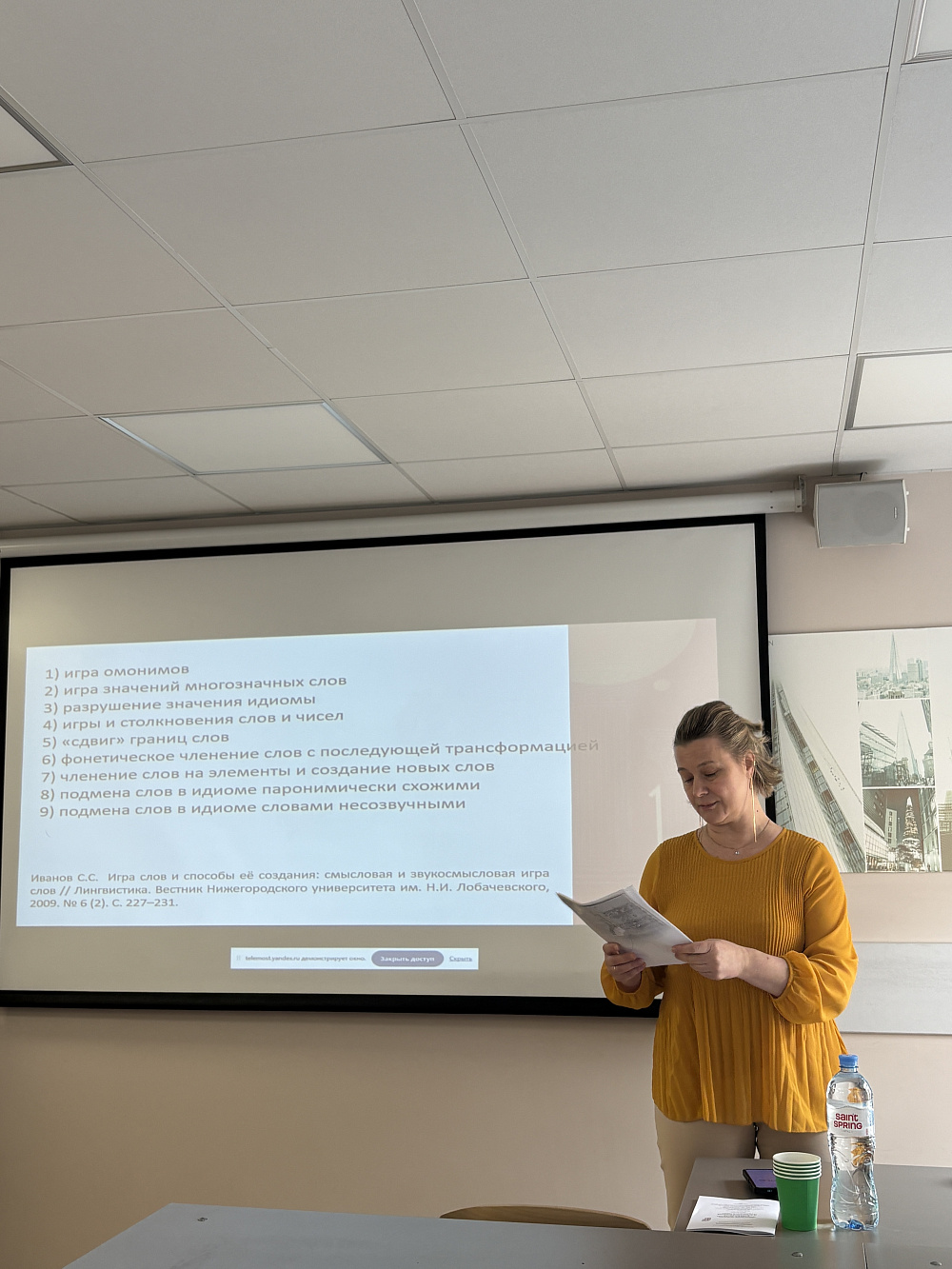
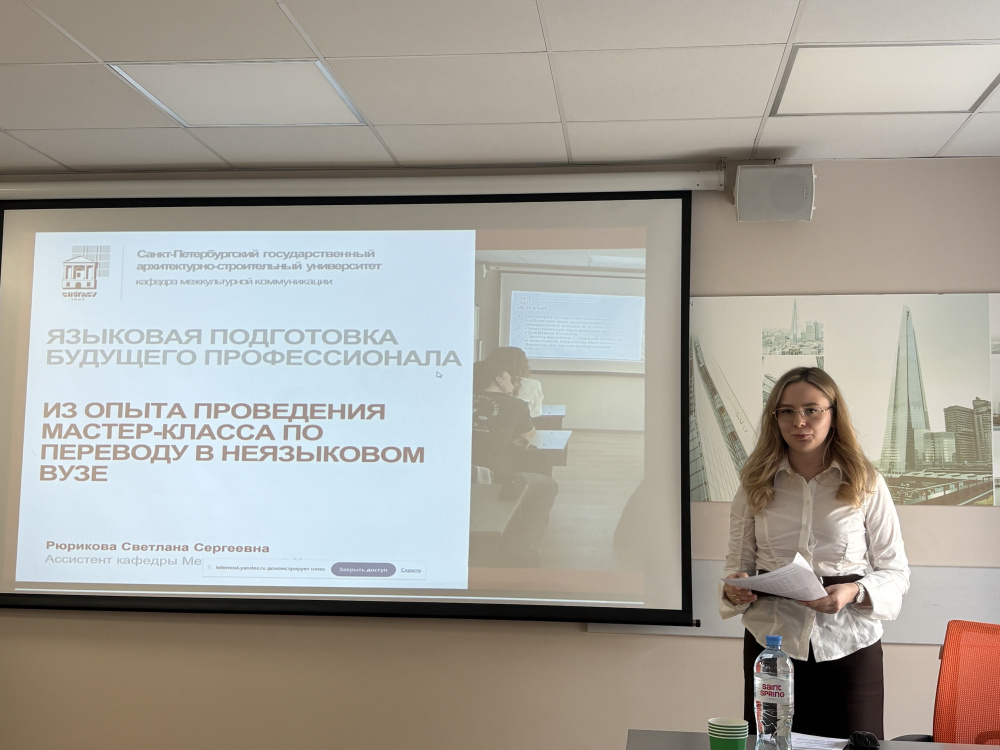
On the first day, the teachers subsection was moderated by Svetlana Ryurikova, an Assistant at the Department of IC, who also presented a report on conducting a master class on translation at a non-linguistic university. Anastasia Gubaydullina, an Associate Professor at the Department and a PhD of Philological Sciences, spoke about the role of comedy in teaching Russian as a foreign language. The discussion also included current issues in teaching foreign languages at technical universities, the use of artificial intelligence in teaching, and the development of professional skills in future specialists through foreign language learning.
Works by students were of great interest. An entire series of reports, written under the supervision of teachers from the Department of IC — Associate Professor, PhD of Pedagogic Sciences Valeria Ryabkova and Senior Lecturer Svetlana Ermolaeva — was devoted to the problems of technical translation. Students of the translation courses organized by the Department of IC, Anastasia Fedorova, Tatyana Latypova, and Ksenia Kochugurova, demonstrated not only a high level of English but also the depth of their research.
Stanislava Efimova, a representative of the St Petersburg State Chemical-Pharmaceutical University, presented a vivid and compelling concept for increasing the motivation of future pharmacologists to study Latin using Latin idioms.
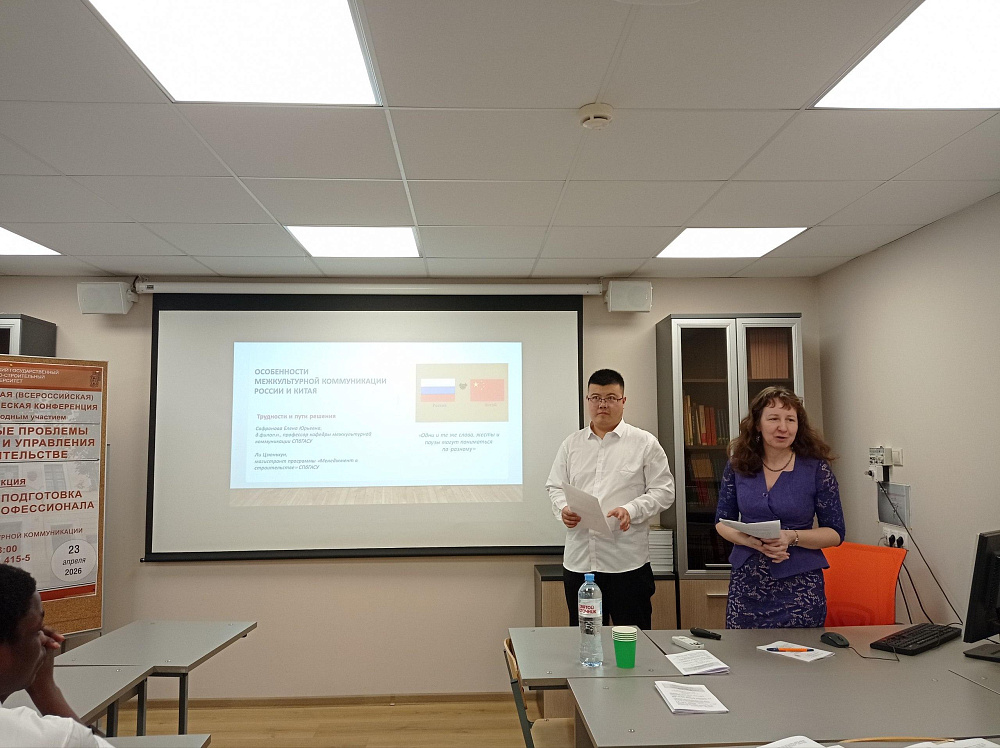
SPbGASU master's students from from China (supervisor - Professor at the Department of IC, DSc in Philological Sciences Elena Safronova) spoke about the features of intercultural communication (Li Junhong), the place and importance of critical thinking in Russian and Chinese education (Wei Jiajun).
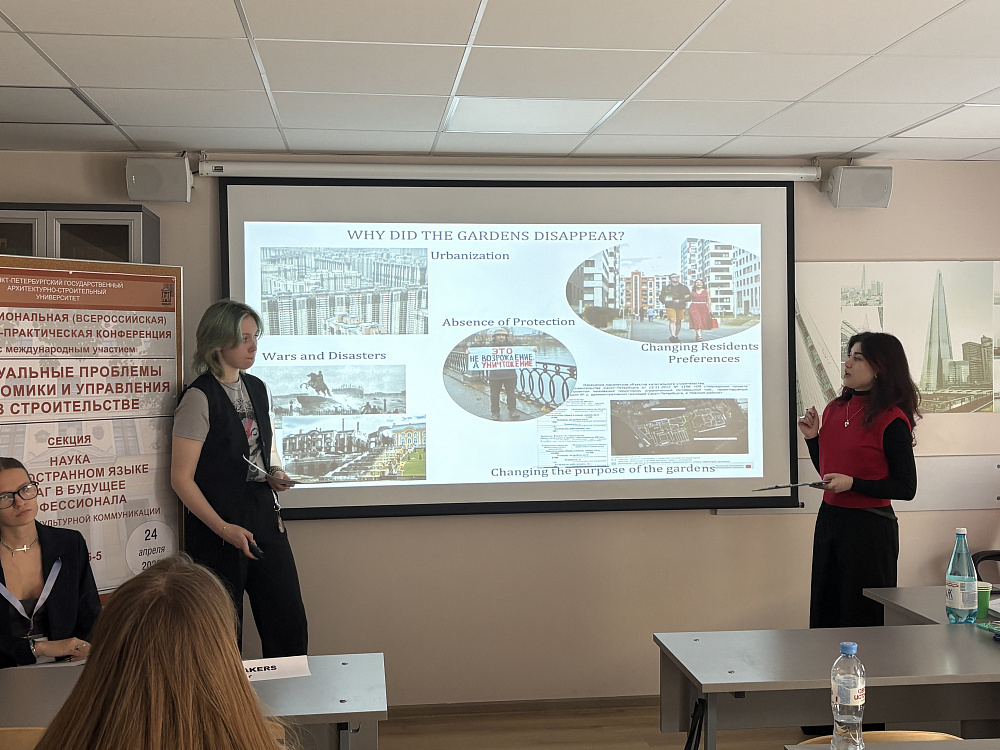
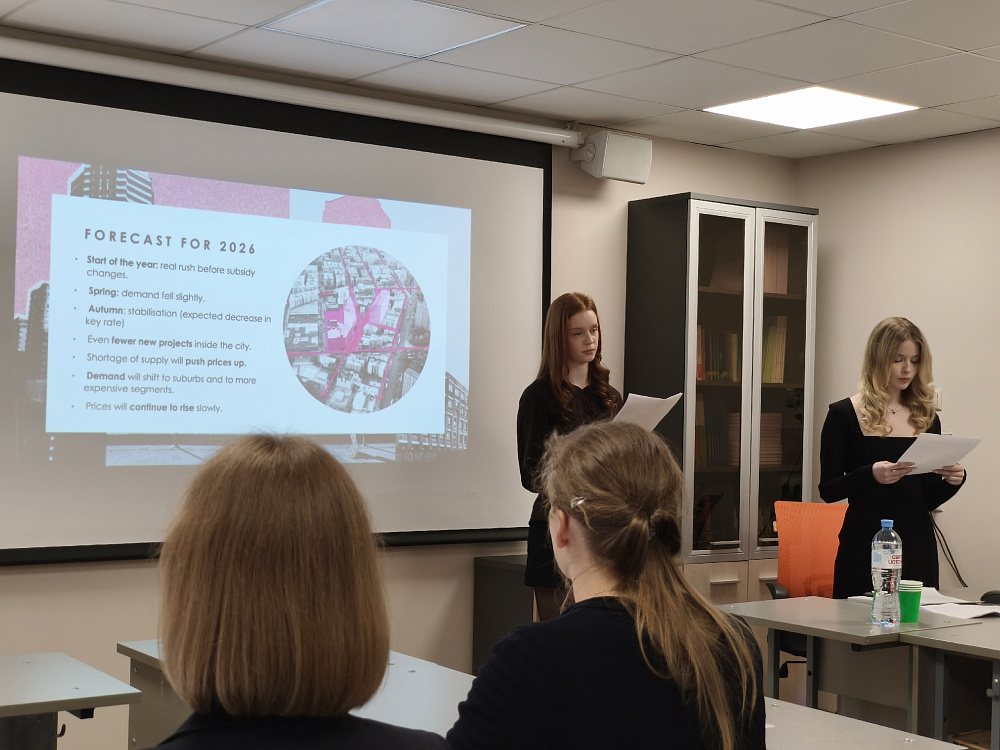
The section "Science in a foreign language – a step into the professional's future" was divided into three subsections, thematically related to research in architecture, economics, and construction. The presentations in the architecture subsection were of particular interest to our university: Daria Karaulova (SPbGASU) presented the concept of a "smart city" using Russian cities as an example, while Valeria Kadysheva and Ksenia Kurochkina (St Petersburg State Forest Engineering University) spoke about the world's lost gardens and parks. Daria Pokotilo and Veronika Sargaeva (SPbGASU) highlighted the pressing issues of greening cities in the Far North.
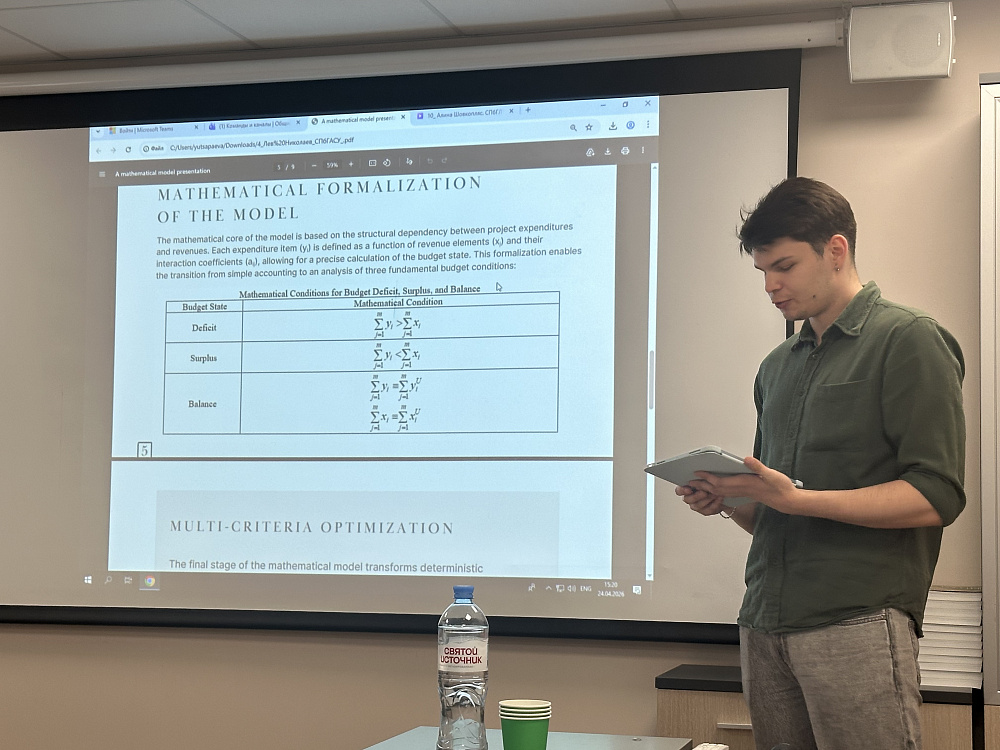
In the economics subsection, participants discussed a wide range of issues related to pricing (Viktoria Lipatova, SPbGASU), ecology, the economics of war, the forestry industry, and transportation in modern megacities (Ivan Beshentsev, SPbGASU). Lev Nikolaev (SPbGASU) presented a mathematical model for estimating the cost of housing construction.
The reports in the third subsection aroused high professional interest. They discussed issues such as architectural trends in the design of residential premises for the elderly (Elena Kochetova, Nizhny Novgorod State University of Architecture and Civil Engineering), museums and exhibition pavilions (Aurika Andreeva, SPbGASU), and others.
Following the event, young scientists noted that participation in scientific conferences not only helps them acquire new knowledge but also provides the opportunity to improve their writing skills in scientific reports and articles, including in foreign languages.