 Konstantin Kolodin
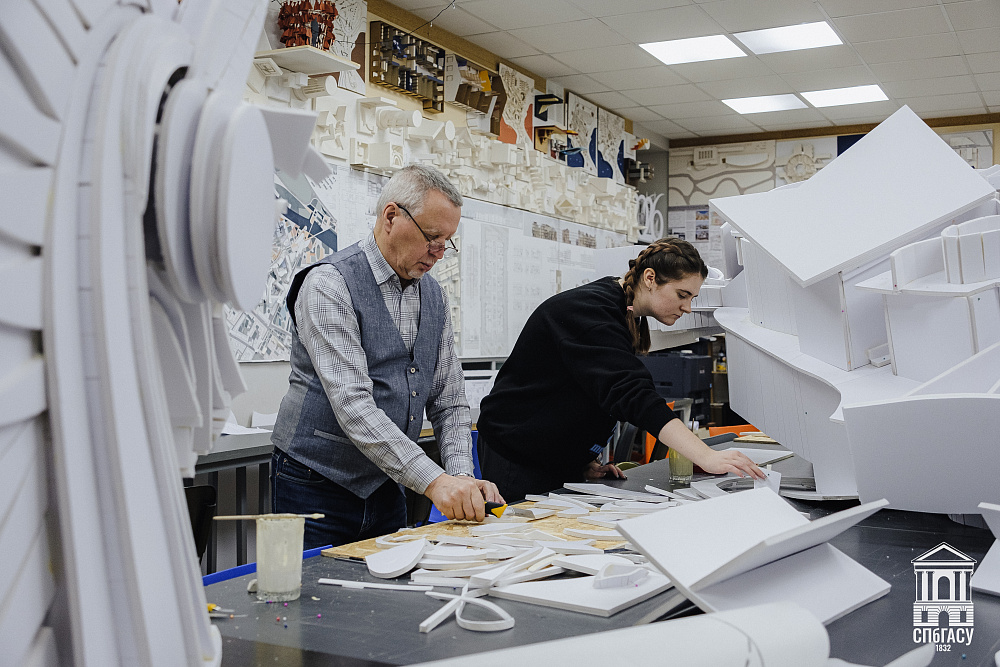
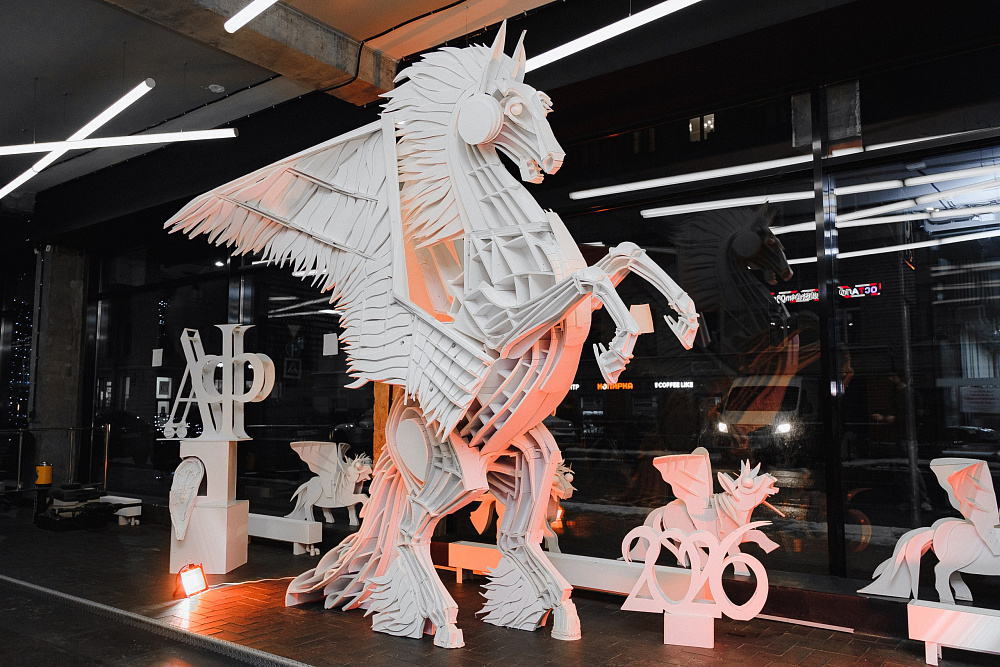
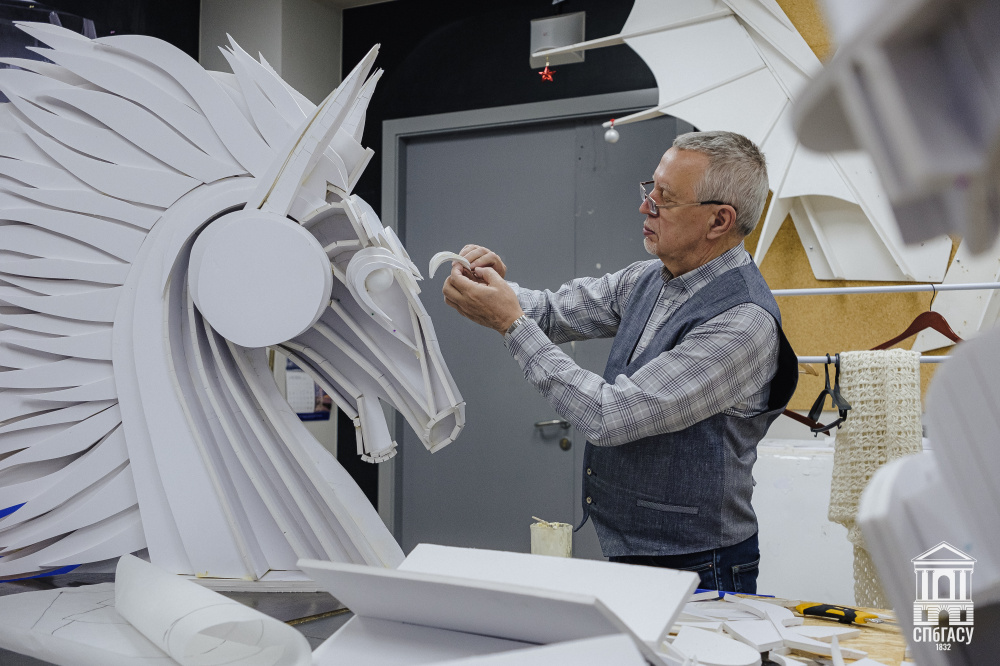
For several years now, SPbGASU has maintained a tradition: on the eve of the New Year, its symbol according to the Eastern calendar appears at the entrance to the Architecture building. It is created using 3D graphics technique by architect and artist Konstantin Kolodin, Associate Professor at the Department of Architectural Environment Design, and his students. This vibrant event invariably attracts the interest of SPbGASU students, staff, and guests.
This time, everyone is greeted by the Red Fire Horse, accompanied by small winged ponies.
We met with Konstantin Ivanovich to find out how these sculptures were born, why they were significant for the university, and what meaning they had for the author personally.
– Konstantin Ivanovich, how did you come with the idea of creating a symbol for the university each year?
– The idea arose spontaneously. I've been teaching at the Faculty of Architecture for a long time, and I'm always filled with a multitude of thoughts and images. Some of them remain just in my head, while others I want to bring to life. New Year is an opportunity to give something to people, to create a small miracle that will be remembered by students, staff, and visitors to the university. Thus, a tradition gradually emerged: a symbol of the year.
– Where does it all begin?
– Everything begins with a feeling and an inner image. I don't rely on the calendar or fashion trends. The main thing is that the symbol is emotionally charged and memorable. Often, it's the result of a synthesis of different ideas: you combine one style with another, experiment with compositions, divide them, combine them again—and ultimately, an image is born. Sometimes even students are surprised by how this happens.
– This year, you gave the horse, the symbol of the coming year, wings. Why?
– A horse represents strength, energy, and freedom. And wings are a metaphor for creativity, imagination, the ability to fly, think, and create. For me, it's also a personal image: I remember my grandfather, his horses, and the childhood memories associated with them. It was this emotional connection that inspired me to create a horse with wings in the university workshop.
– Are these sculptures always created together with students?
– Yes, we assemble a team of students, and it's both an educational and creativity process: they learn to work with volume, plan, collaborate, and see results that take on a life of their own. For them, this isn't just a task—it's an experience that lasts a long time.
– So these are academic projects?
– No, these aren't academic projects; they're living objects that become part of the university's history. They remain in space, in people's memories. They are already art, even though they are created in an educational environment. What's more important here is the emotion, the impact, and the joy of the result, not the grade.
– You work in a limited workshop space. How does this affect your work?
– There are always limitations: ceilings, room space, access to materials. But even in a small studio, you can create large and expressive works. And yet, my dream is to have a separate space where you can work on projects, experiment, create large-scale compositions, and show them to the public. Then you can develop ideas, create more complex images, and engage more students.
– How do students and staff at the university react to the emergence of the new "hero" of the year?
– The feedback is always lively and sincere: some take photos, some discuss the details, some simply smile. This is the best indicator that the symbol is working: it evokes emotions and creates a festive mood. A beautiful image can leave a lasting impression. This is especially important for students: such small miracles are remembered for a lifetime.
– Do you save them?
– If possible, yes. Every piece of work that takes time and energy deserves to live on. Some of the models have been in my home for decades. I dream of one day collecting all the symbols and putting them on display—so that future generations can see how the tradition evolved and what New Year's looked like at SPbGASU.
– Do you already have an idea of what the symbol of next year will be?
— I try not to make predictions. Any artist will tell you that it's bad to predict what hasn't yet been created. But images and ideas are always within, and they guide future work.
– Could these sculptures be said to be your dialogue with the university?
– Rather, it's a dialogue with the world. I share what's inside me, and it's important for others to see it. This isn't a competition or a desire to be better than everyone else—it's the natural state of a creative person: to make and give, to make the space around me alive and filled with meaning.
– How important is it that the meaning of creation is clear to everyone?
– It's important for a festive symbol to be understood by everyone—both artists and ordinary visitors. Emotion and joy should be accessible to everyone. And details and depth can be discovered by those who want to delve deeper. Finding a happy medium between artistic intent and accessibility is crucial.
– What do you think are the prospects for this tradition?
– There are always more ideas than resources. But the most important thing is the desire to continue. If the tradition is maintained, it can develop, attract students and visitors, and become a significant part of the university's life. Perhaps, over time, an exhibition, master classes, or a studio will appear – and then it will become a true cultural project of SPbGASU.