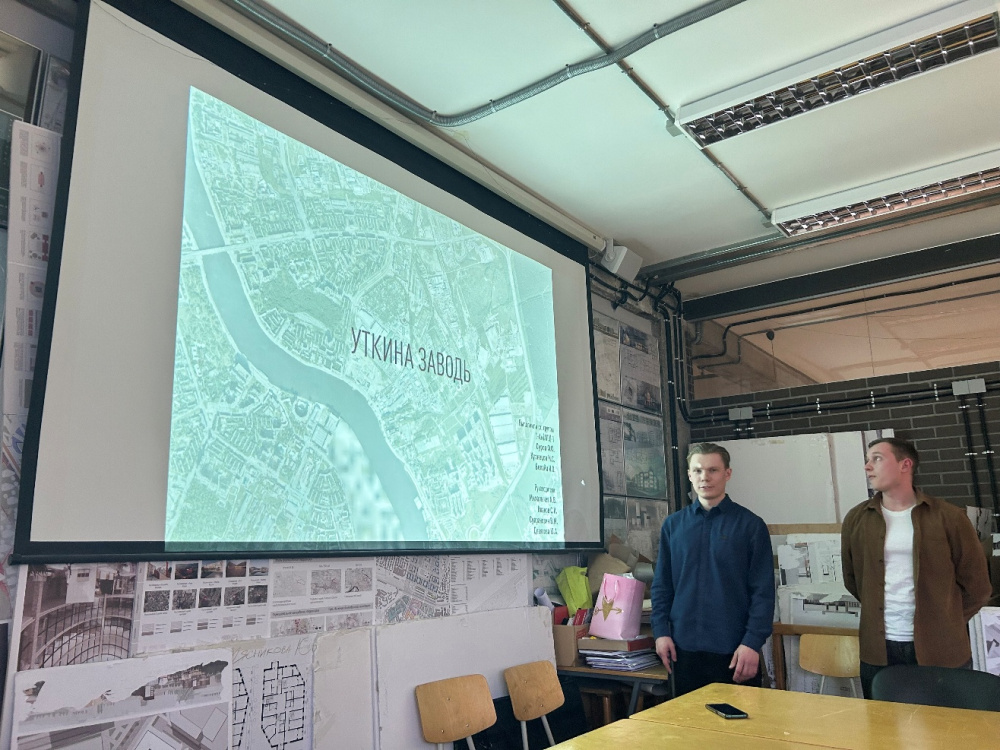
 Fedor Surov and Maksim Kuznetsov presenting their project
On 26 March, the Saint Petersburg State University of Architecture and Civil Engineering held the 7th Roundtable "Modern Approaches and Methods of Research Work in Architecture". The event brought together master's and doctoral students from the Faculty of Architecture, who presented their innovative research. Key topics included the sustainable development of northern cities and the refunctionalization of St Petersburg's industrial areas.
The North revival
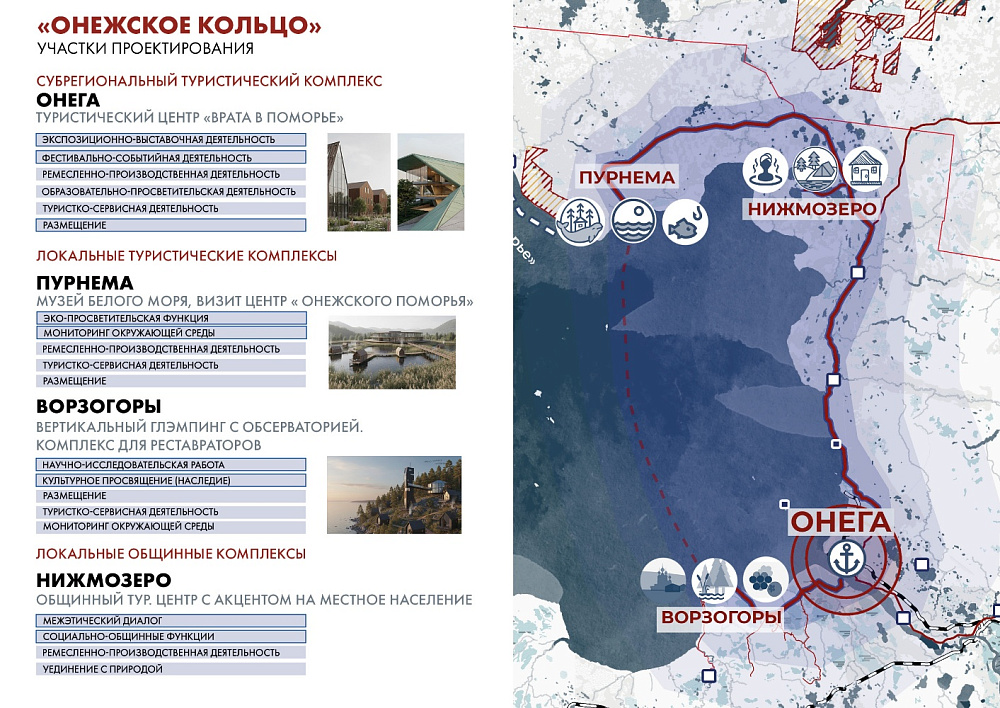
Participants focused on the development of northern territories. First-year master's student Svetlana Bryukhanova presented a concept for tourist complexes in the Onega District of the Arkhangelsk Region, where the town of Onega serves as a cultural and events center. As part of the practical application of scientific principles, a system of tourist and cultural centers for the Onega Region is being developed. The "Gateway to Pomorye" subregional center in Onega will be a key element of this system. Thus, Pomor memory is being transformed into a functioning tourism system capable of halting the degradation of unique settlements through interconnected routes.
A team of first-year master's students, consisting of Sofia Galkina, Angelina Savitskaya, Aleksandr Grekov and Daria Tolstovaya, presented a project for a linear public framework along the embankment, capable of creating new points of attraction, which would increase the attractiveness of the territory and create a sustainable development model for Onega.
First-year master's students Valeria Trepykhalina and Arina Tikhonova focused their research on the image of the "Onega of the Future," which would help attract personnel and funds to the project, make the existing environment more modern and comfortable, without destroying the way of life of the local population.
Aleksey Matveenko's research has made an important contribution to understanding of the development of northern territories. The PhD student presented the results of an expedition to the Onega District, where he studied the regional factors that influenced the architecture of the cultural centers of the White Sea region. The author focused on the need to create attractive public spaces that would reflect local identity.
The concept for developing tourist centers on the Kola Peninsula, presented by first-year master's students Sofia Malysheva and Elizaveta Pauk, is based on the creation of a single recreational route that would connect the central part of Murmansk and the city of Kola. The main points of this route are two main tourist centers.
PhD students Vitaly Klets and Artem Martynenko discussed their research in the field of adaptive architecture of public buildings for northern cities.
New life for historic industrial areas
The section on refunctionalizing industrial zones presented concepts for transforming St Petersburg districts such as Utkina Zavod, Malaya Okhta, and the Krasny Brickmaker plant site. The projects aim to create innovative clusters, technology parks, and modern public spaces integrating environmentally friendly technologies.
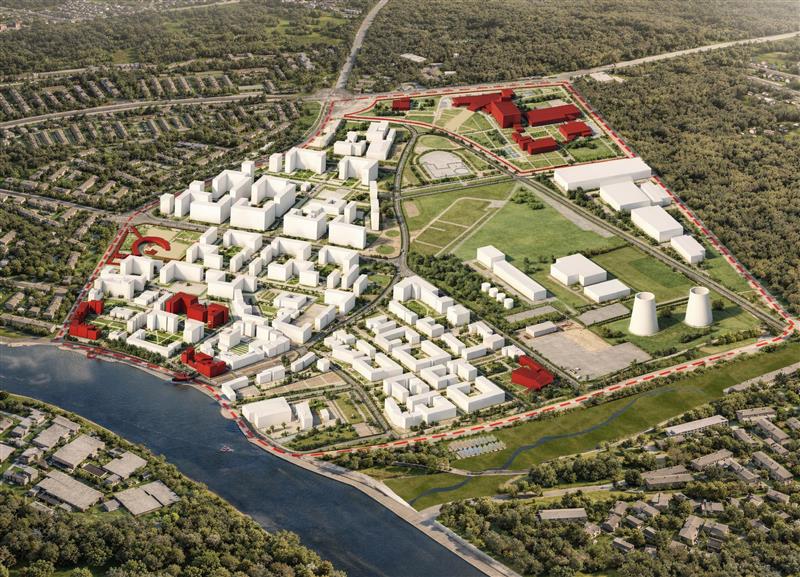
First-year master's students Fedor Surov, Maksim Kuznetsov, Ivan Belaits, Olga Umarova, Diana Kuvarina and Anna Kabanova prepared concepts for the development of territories in the Utkina Zavod area. They proposed transforming this territory into a balanced urban space.
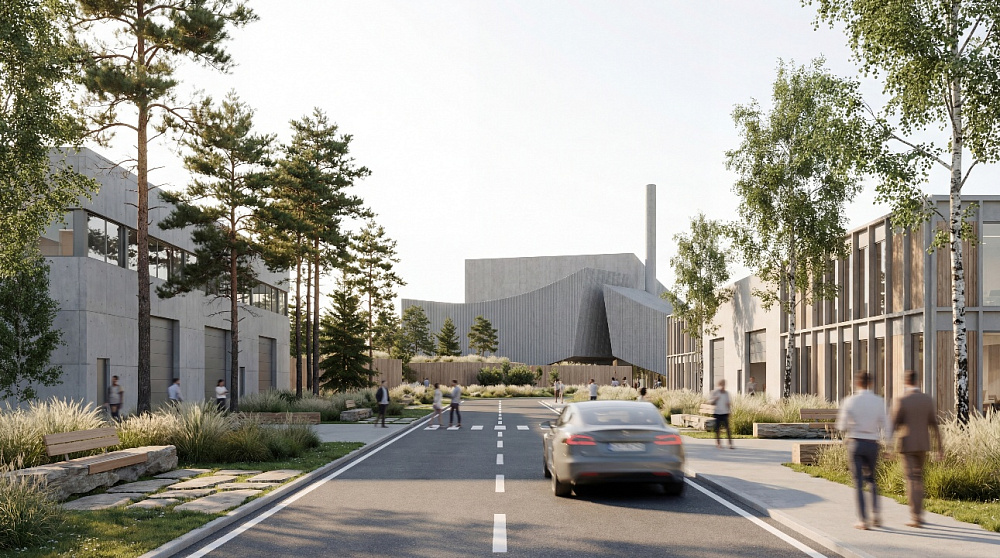
First-year master's students Gasan Abasov, Amir Nurmiev, Ekaterina Oreshko, Alena Fedorova, Daria Krakovich, Sofia Kunavina, and Ekaterina Nosova worked on repurposing the Krasny Brickmaker plant in Kolpino. The students proposed creating a technology park on the site, including a waste processing plant. The key idea behind this proposal is to create a technological symbiosis between production, science, and the urban environment.
The concept for the development of the Malaya Okhta area by first-year master's students Ksenia Saifullina, Irina Gansior, Anastasia Fedorova, and Tatyana Mikholdyko envisages the reorganization of the development near the Ladozhsky railway station with the development of the existing logistics center and the creation of new public and commercial facilities.
Innovative approaches in architecture were a separate topic of discussion. PhD student Vasilisa Maksimadzhi presented research on the use of biophilic design in rehabilitation centers, while PhD student Mikhail Zheltov presented research on the integration of artificial intelligence into the urban design process.
Hard decisions in the interests of the city
An important part of the roundtable was a discussion with the participation of Arina Safronova, a representative of the Committee for Urban Development and Architecture of St Petersburg, on the issues of refunctionalization of industrial areas.
Arina Dmitrievna noted: "Unfortunately, the existing urban infrastructure is not ready for the implementation of large-scale specialized engineering infrastructure projects, particularly for solid municipal waste management. Architects are required to develop an updated environment that will ensure the efficient operation of such facilities. Furthermore, architectural and planning solutions are needed to enhance the humane appearance of these complexes in the eyes of citizens. SPbGASU students are prepared to successfully address these challenges and the overall renewal of the urban environment, for which I express my sincere gratitude to the university's teachers."
All submitted projects received expert evaluation and recommendations for further development. Following the roundtable discussion, priority areas for research at the Faculty of Architecture were identified: development of northern territories, sustainable design, and the adaptation of industrial zones to modern urban functions.