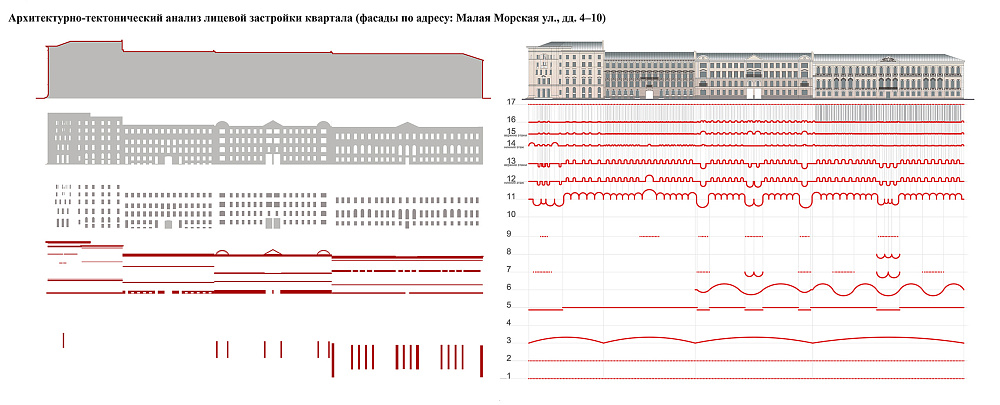
This study examines the structural and compositional features of St Petersburg's construction using a specific, significant fragment of the 18th-century core of the historic center as an example. The work identifies the stages of development in the planning and spatial structure of the construction, as well as the compositional features of the established architectural and artistic appearance of the urban environment, in the area of Bol'shaya and Malaya Morskaya Streets.
The planning structure of the Morskaya Streets area, the demarcation of individual plots, and the initial development of stone houses had already taken shape by the mid-18th century. Between the 18th and 20th centuries, phased reconstruction was carried out within the existing development. The special significance of the area under study (the core of the historic center, integrated into the central square system), as well as the continuity of urban development, significantly influenced the spatial characteristics of the block's development and the compositional organization of the building facades.
The results of the study may be important for further research into individual zones of the historical environment of St Petersburg and their comparative analysis, as well as in the educational process in the training of architects.