Oksana Solodyankina:
“When your project comes to life, it inspires you the most”
Oksana Solodyankina
By the anniversary of the St. Petersburg State University of Architecture and Civil Engineering, we continue to talk about its graduates. Oksana Solodyankina graduated from the SPbGASU Faculty of Architecture in 2017 and is now part of the IPG.Estate team, a consulting company in the commercial real estate segment that provides a range of services – consulting, brokerage (rent and sale), property management, and also specializes in design, construction and furnishing of commercial spaces. Its clients are large Russian and international companies.
– You have been designing public spaces and interiors for more than ten years, and recently became the head of the effective workspace organization department at IPG.Estate. Why do you think this direction is becoming more and more popular?
– Typical working hours are a third of the day, but in reality, many have an irregular schedule, and they work much more than eight hours. As a result, we spend a significant part of our lives in the office. However, over the past two years, under the influence of the pandemic, the attitude to business processes has changed: today, far from everyone’s work is directly related to staying in the office.
A new attitude to work processes dictates new trends in the organization of workspaces. We must move away from the usual scheme, which includes only the design project, construction and equipment. Now our task is wider and deeper – to create the most comfortable conditions for our clients and their employees, which will satisfy the newly formed values: freedom of movement, independent planning of work schedules, balance of work and leisure, a higher technological level of the office.
✔ Office spaces are undergoing a major functional transformation. The need for effective organization of the workspace comes to the fore. We understand how important it is to motivate people to return from a remote format to joint corporate work. To do this, first of all, it is necessary to adapt the office to new employee requests, new tasks of companies, optimize resources and processes, and financial costs for office maintenance.
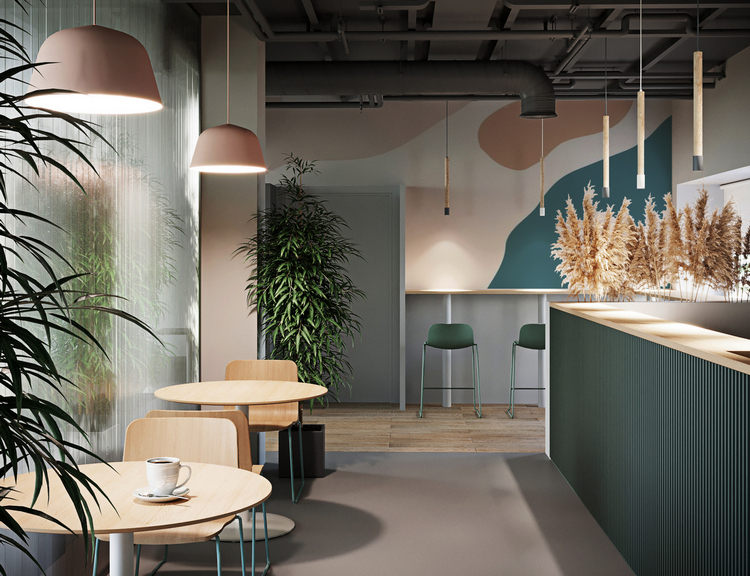
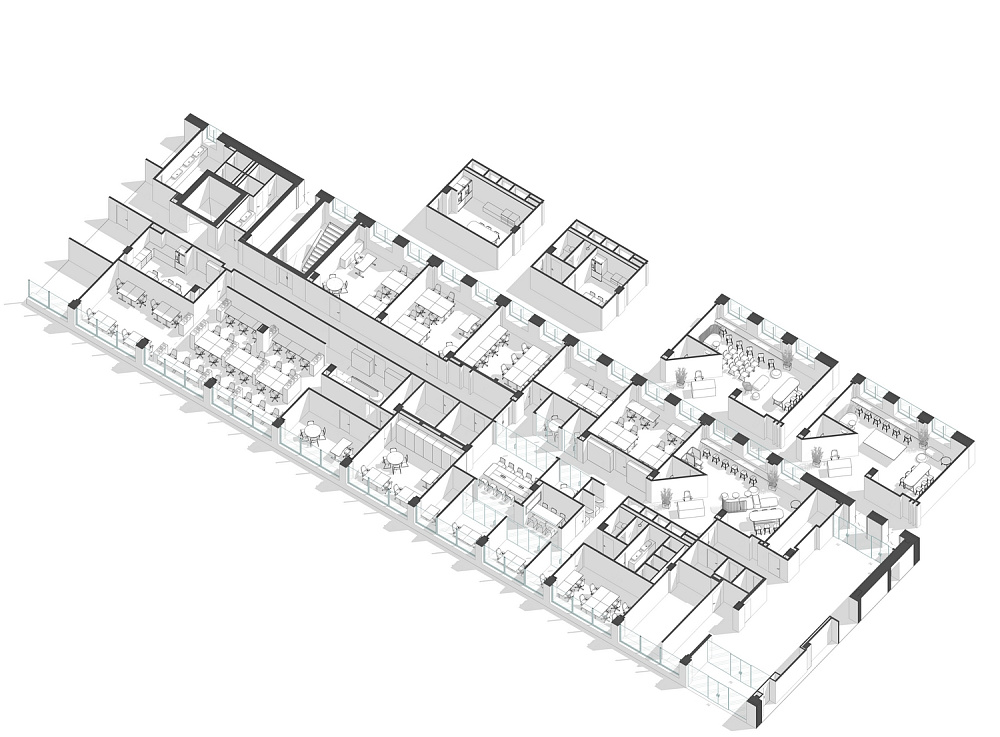
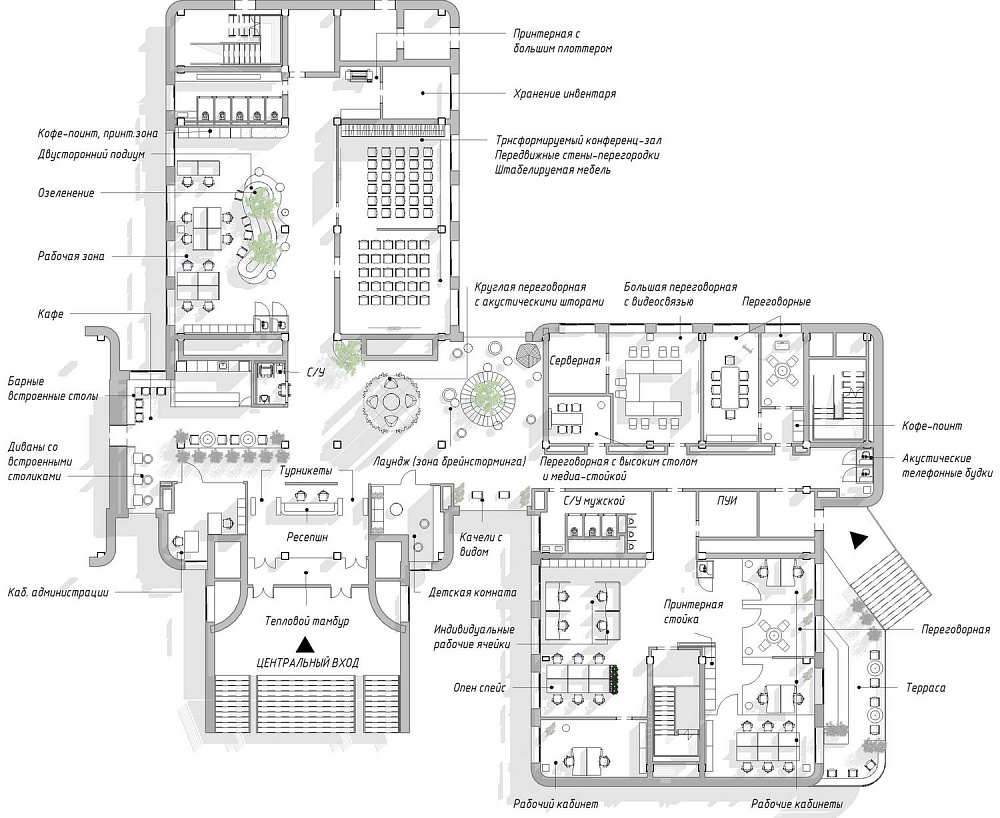
Office spaces designs by Oksana Solodyankina. Visualization
– Speaking of requests, how does today's customer see his ideal workspace?
– The main requests of most clients are the ergonomics and comfort of workplaces, the ability to quickly and flexibly change the configuration of office areas and adapt them to different tasks. In the design of office spaces, more and more transformable, mobile and technological solutions are used that make the premises multifunctional.
✔ A modern office is a place not so much for daily work, but for generating ideas, group interaction, communication with clients. {gallery name="0503"}
– Please tell us how your career developed after graduating from SPbGASU? Or did it start at the time of study?
– I started working in the field of design when I was still a student, at the age of 20, when I studied at another university. I came to the design of office and public spaces after graduating from the master's program at SPbGASU and quite rapidly, a year later, rose to the position of the chief architect of the project in one of the leading design studios in St. Petersburg. For several years, I was a team leader of a creative group of architects and designers, and personally developed design projects.
– What are your impressions of studying at our university, and which of the teachers influenced you the most?
– The study was productive, teachers' multi-format approaches made it possible to look at the specialty from different angles, to choose the closest direction for oneselves.
A significant event for me was participation in a large city project for improvement of the Alexander Park on the Petrograd side under the leadership of Svetlana Borisovna Danilova and Aleksandr Vladimirovich Demin. Our project won first place in a closed architectural competition and was included in the development plan for the Petrogradsky District. It was a great experience of intense creative teamwork.
Svetlana Vladimirovna Bochkareva, an example of a strong, competent and fair leader, had a great influence on me.
And, of course, I would like to express my gratitude for the professional support to my scientific adviser Andrey Gendrikhovich Zubov, under whose guidance I wrote my master's thesis on the topic "Light organization of the architectural environment." The dissertation was awarded by the Russian Union of Designers and MOOSAO.
– You have prepared office design projects for Russian and international companies. Please tell us which of them are you most proud of?
– I cannot single out any one project, because each of them implemented unique task. Regardless of whether it is an international company or a Russian one, it is important for me to build a dialogue with the client, understand all his needs and offer the best solution for functional content, layout, and design “shticks”.
International companies usually have a more comprehensive and rigorous approach to office design, clearer terms of reference, well-established brand books and guidelines that need to be taken into account in interior design. In Russian companies, we sometimes develop such office standards together with the client, and this is a very interesting and creative task.
✔ My work experience in the USA was related to the design of airport buildings and university buildings. I was part of the design team, which is where my journey in architecture and design began.
A few years later, in Germany, I was engaged in analytics and the study of the transport infrastructure of Russian cities, which affected urban planning issues more. Then I came to the design of the environment, and then to the interior design of public spaces.
– What is your source of inspiration?
– Probably, this is the realization of the benefits that my work brings to people, no matter how loud it may sound. The most reverent and incredible feeling is when, after long and difficult months of working on a project, you enter the completed premises, you see how many processes and people now "live" in this interior, how much the general atmosphere, comfort and status of the company's employees have improved. At this moment, you understand that the project with its "shticks" and features, which was born in your head, has now come to life. It is this feeling that inspires me the most.
– What advice would you give to current students who plan to work with architectural design? How to become a truly good specialist?
– I recommend that they start trying themselves in practical work as early as possible. Everything you learn in theory at the university is very important: it is your base and tools for the future. But it is equally important to understand how this relates to real processes in design.
You need to choose the right mentors for yourself – an architect or a bureau that is close to you in terms of worldview, and learn from their experience. And do not be afraid to embody your most daring ideas: even if not all of them work, as you know, one learns from mistakes. This is how a professional is formed.
Text: Aleksandra Podolnikova
Photo: Oksana Solodyankina
✔ Learn more about the university's Faculty of architecture