An important component of the educational process at SPbGASU is ongoing interaction with employers. Students complete internships at leading organizations in their respective fields, write courseworks and final theses using materials from partner companies, and certain courses are taught by practicing specialists with experience in implementing large-scale infrastructure projects.
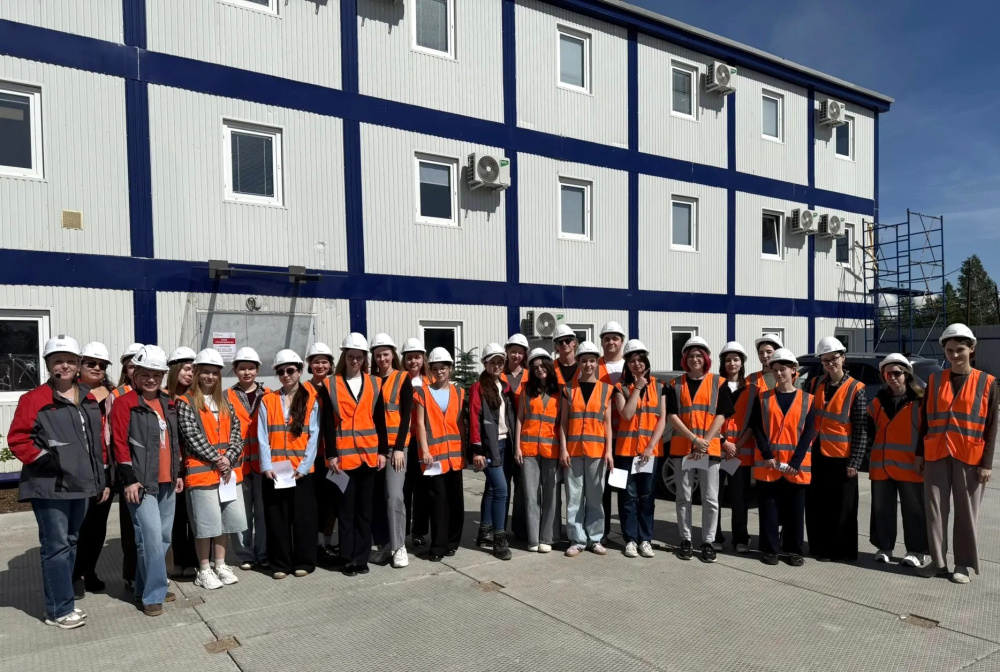
A striking example of this approach was the introductory training of students from the Faculty of Environmental Engineering and Municipal Services (FEE&MS) in the field of study 20.03.02 "Environmental Management and Water Use" at the construction site of the Astra-Continental residential complex, which is being implemented by Setl Group, a partner of SPbGASU. The excursion allowed future specialists to see how modern environmental requirements and engineering solutions are applied at a large construction site.
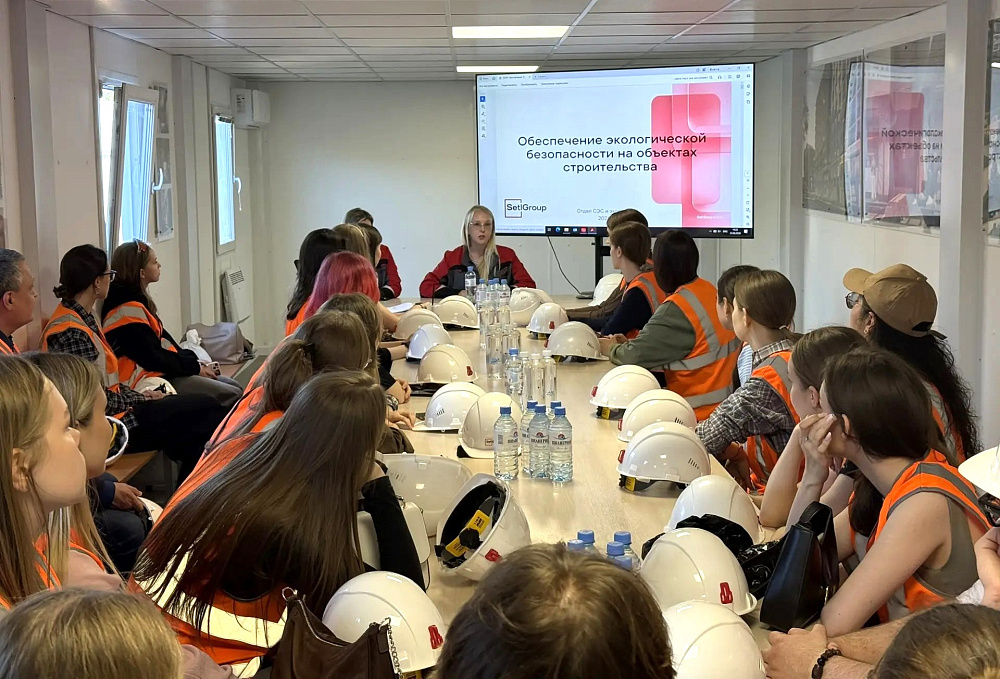
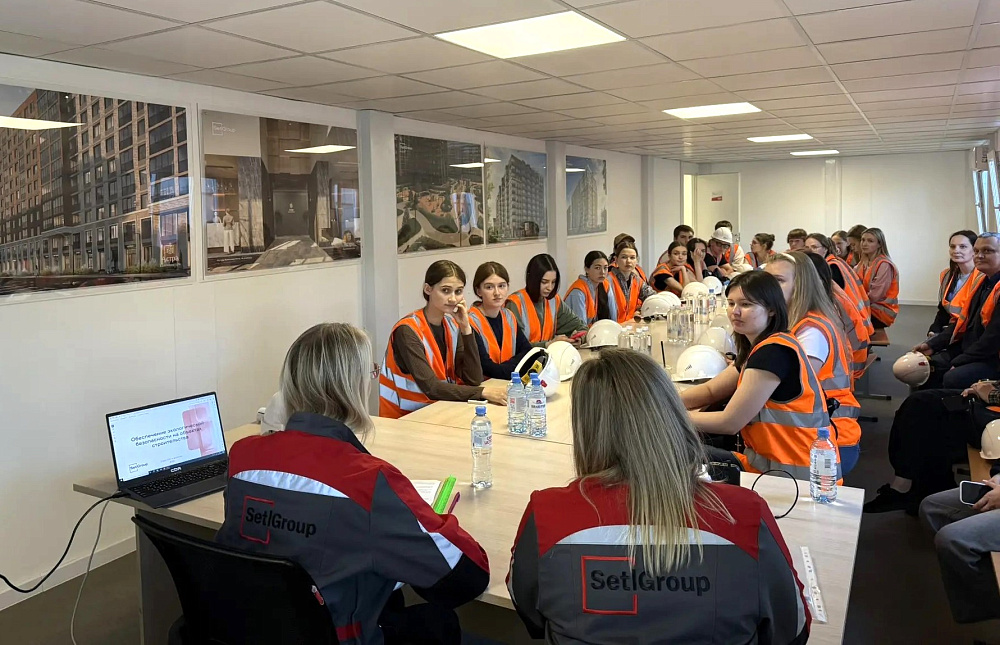
The internship program was designed to introduce students to the professional work of an environmental engineer. At the construction headquarters, the holding's specialists gave a lecture and presentation on the environmental monitoring system at the company's facilities, current regulatory requirements, and the mechanisms for implementing them in daily work.
The participants then visited the construction site, where, under the guidance of specialists, they monitored the condition of the territory, assessed the implementation of environmental measures, became familiar with the dust control system, the organization of construction waste management, and other aspects of environmental support for construction.
The tour was led by Setl Group's Head of Sanitary and Epidemiological Services and Ecology, Olga Fedorova, and Chief Environmental Engineer, Tatyana Serkova. They spoke to the students about the real-life challenges faced daily by construction environmental specialists and shared their practical experience interacting with designers, builders, and regulatory authorities.
The internship resulted in an assessment of the property using professional criteria and a discussion of the results with company experts.
The experience confirmed the value of this training format. Ksenia Tesakova, a first-year student who participated in the internship, noted that the construction site visit allowed her to see how environmental safety principles are implemented in real-life work and to see that responsible construction is impossible without competent engineering support. She noted that these types of practical training helped her understand the prospects for professional development and motivated her to work in the field of green construction.
Her coursemate, Ksenia Kiseleva, emphasized that the tour changed her understanding of the role of an environmental engineer. She noted that modern construction companies viewed environmental standards not as a formal requirement, but as an essential part of the effective organization of the construction process and sustainable development of territories.
Practice-oriented learning is one of the key advantages of SPbGASU's educational programs. This learning format allows students to acquire not only fundamental knowledge but also practical skills in demand in the labor market. Thus, future specialists are having the opportunity to see their profession in action and take the first step toward creating a safe, comfortable, and sustainable urban environment.
.jpg)

.jpg)
