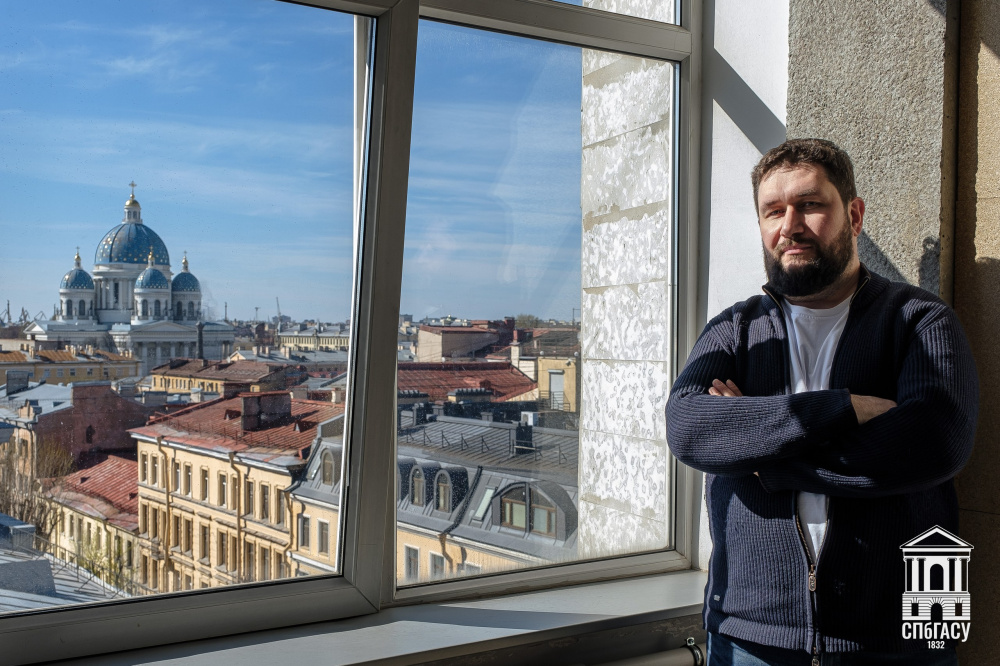
 Andrey Surovenkov
18 April marks the International Day of Monuments and Sites (World Heritage Day) worldwide. This day aims to draw public attention to the preservation of cultural heritage, its vulnerability, and its importance for future generations.
Acting Dean of the Faculty of Architecture, Head of the Department of Architectural Design, and PhD of Architecture, Andrey Surovenkov, spoke about the significance of the historical environment, its current state, and the role of the professional community.
"This day is essential not to specialists, but to citizens."
According to Andrey Surovenkov, the main goal of International Day of Monuments is to attract the attention of a wider audience to the problems of preserving architectural heritage.
"Experts think about this constantly. But for people unfamiliar with architecture, this is an opportunity to think for the first time about what a historical environment is and why it's important," he noted, drawing attention to a common problem: many perceive the loss of original buildings as insignificant. "You often hear: 'So what? They tore down the old building and built something new, and it's even better.' But that's not true. A replica is no longer a historical heritage," Andrey Surovenkov emphasized.
He also believes that poor-quality restorations and simplified architectural solutions lead to lower environmental expectations among city residents. As a result, people become accustomed to poor architectural quality and lose appreciation for authentic monuments.
International recognition
According to Andrey Surovenkov, inclusion of sites on the UNESCO World Heritage List serves as a kind of "seal of quality," enhancing their significance and promoting tourism. At the same time, this status also imposes significant obligations to preserve the historical environment.
He is confident that the entire historical center of St Petersburg is of high value, but the ensemble of the Spit of Vasilievsky Island occupies a special place.
"This is a unique space, united by the Neva River. The Winter Palace, the Stock Exchange building, the Peter and Paul Fortress—all these elements form a holistic composition that has no equal in the world," he noted, expressing concern that the historically established environment is gradually undergoing changes that are not always architecturally justified.
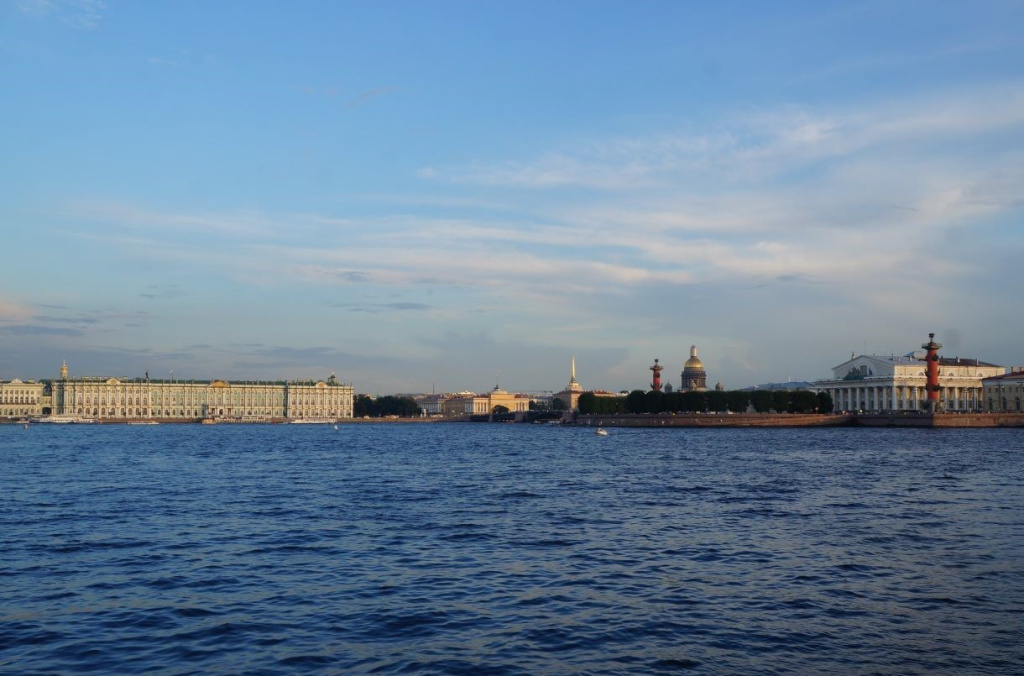 View of the Spit of Vasilievsky Island
The main threats are unprofessionalism and loss of authenticity
The expert identified unprofessionalism during restoration work as one of the key problems.
"There's often a lack of understanding of how to properly work with historic buildings. Stained glass windows, doors, and decorative elements are replaced with modern materials. This effectively destroys the authentic environment," he emphasized.
The general condition of buildings in the city center is a serious problem, requiring major repairs. However, funding remains an open question.
Andrey Surovenkov also noted that attempts to mechanically "fit" modern functions into historic buildings often changed their appearance. Typical errors include distorted facades, poor proportions, and disregard for architectural principles. There are also controversial projects where only the facade is preserved, while the rest of the building is effectively lost or constructed in violation of its historical context.
Balance between development and conservation
The expert emphasized that the city cannot remain unchanged, but development must be meaningful.
"There's no need to create pseudo-historical buildings that imitate old architecture. But modern architecture should also be high-quality and respectful of the environment," he noted.
In his opinion, it's especially important today to establish a dialogue between developers, city authorities, and urban preservationists. "Right now, it's often confrontational, but there needs to be a dialogue that will allow for balanced solutions," the expert believes.
The role of architects and engineers
Industry professionals play a special role in heritage preservation. Engineers must understand historical construction technologies, design features, and materials, while architects must understand the site within the context of the urban environment.
"An architect today is not only a designer, but also a promoter of a caring attitude toward the city," the expert emphasized.
He also emphasized the importance of a comprehensive approach: it is necessary to consider not only the condition of individual elements, but also the processes occurring within the structures—for example, the destruction of wooden floors due to moisture.
Education as a basis for preserving heritage
Speaking about training specialists, Andrey Surovenkov noted that students at architecture universities needed to thoroughly study the history of architecture, construction technologies, and restoration principles.
"It's important to understand the principles of classical architecture, the structure of orders, details, and proportions. Without this, it's impossible to work effectively with the historical environment," he noted.
Equally important is the development of professional ethics. According to the expert, future specialists must understand their responsibility for preserving cultural heritage and avoid compromising it for short-term gain.
Contribution of SPbGASU graduates
Graduates of SPbGASU (former LISI - Leningrad Civil Engineering Institute) take an active part in working with cultural heritage sites, among them - the Chairman of the Committee for State Control, Use and Protection of Historical and Cultural Monuments (KGIOP), Honorary Restorer of St Petersburg, 3rd degree, PhD of Architecture Aleksey Mikhailov, Deputy Chairmen: Honored Restorer of St Petersburg, PhD of Architecture Ekaterina Kozyreva (First Deputy) and Olga Batalova, General Director of the State Museum of the History of St Petersburg, President of the St Petersburg Union of Architects, Honored Architect of the Russian Federation Vladimir Grigoriev.
Andrey Surovenkov especially noted the contribution of the People's Architect of the Russian Federation, Honored Architect of the Russian Federation, full member of the Russian Academy of Architecture and Construction Sciences, laureate of the State Prize of the Russian Federation Nikita Yavein, who was involved in the restoration of the General Staff building. According to Andrey Viktorovich, the reconstruction of the General Staff building is an example of successful work with a historical site; according to him, the project demonstrates a high level of integration of modern solutions into the historical environment.
University graduates also took part in projects related to such significant sites as the Admiralty and St. Nicholas Cathedral.
Representatives of the professional community associated with the university also work on modern facilities in historical environments, striving to integrate new buildings into the existing architectural context.
"Love St Petersburg and learn"
In conclusion, Andrey Surovenkov addressed students and young professionals with a call to actively learn and adopt the experience of professionals.
The expert noted that the loss of the historical environment would lead to serious consequences not only for culture, but also for the city's economy."It's important to connect with teachers and practicing architects, to not be afraid to ask questions, and to gain knowledge. And most importantly, to love St Petersburg and treat it as a treasure that must be preserved.".
"If we focus only on immediate gains, we risk losing much more in the future."
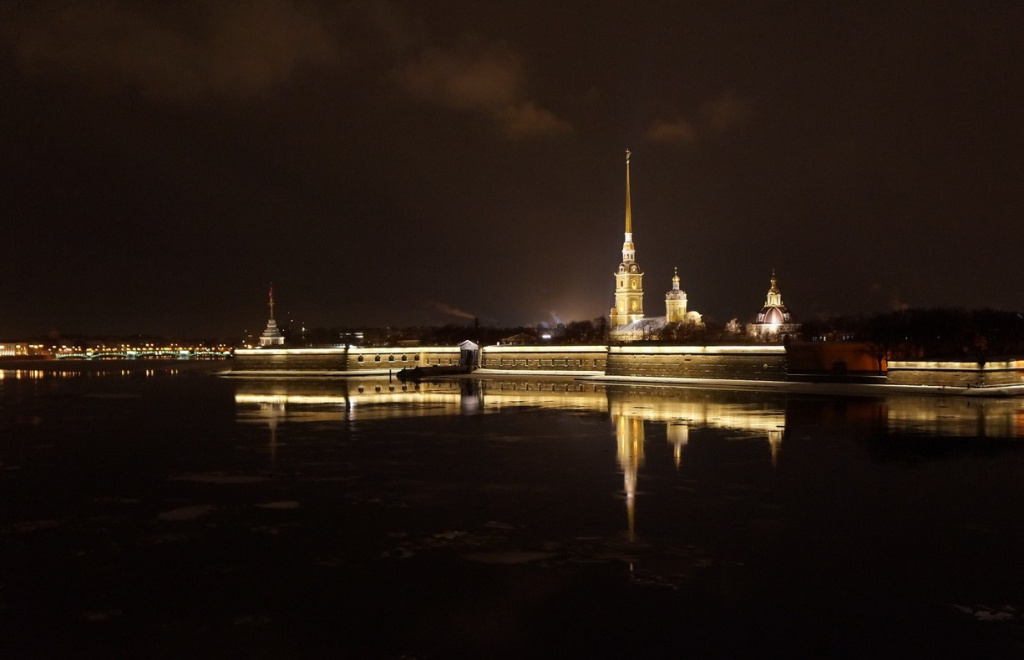
Peter and Paul Fortress
From 1 September, 2026, SPbGASU will begin training restoration engineers under the program "Restoration of Buildings and Structures" within the framework of the field of study 08.03.01 "Civil engineering".
Образовательная программа разрабатывается в тесном взаимодействии с индустриальными партнёрами и при поддержке КГИОП.
The new educational program will place particular emphasis on engineering training for restorers, including the study of theoretical mechanics and the principles of structural operation. More about the program.