 Meeting participants
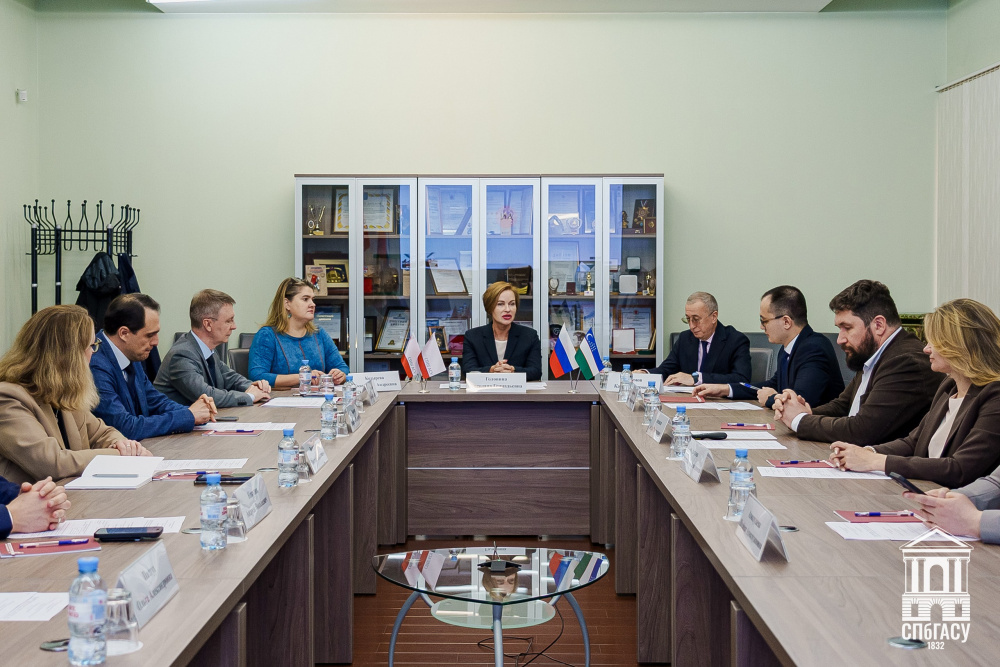
On 29 September, top managers of the Saint Petersburg State University of Architecture and Civil Engineering held a working meeting with Kabul Alimov, Consul of the Republic of Uzbekistan in Saint Petersburg. Key topics included the development of cooperation with universities in Uzbekistan, the training of specialists for the restoration sector, the preservation of architectural heritage, and the launch of joint educational and research projects.
The meeting was attended by Svetlana Golovina, SPbGASU First Vice-Rector; Ekaterina Kozyreva, First Deputy Chair of the Committee for State Control, Use and Protection of Historical and Cultural Monuments of the Government of St Petersburg (KGIOP) and Head of the KGIOP Corporate Department; Vice-Rector for Educational Activity Sergey Mikhailov; Vice-Rector for Research Evgeny Korolev; Vice-Rector for Continuing Education Viktoria Vinogradova; Dean of the Faculty of Architecture Andrey Surovenkov; Dean of the Faculty of Civil Engineering Andrey Nikulin; Head of the Department of Architectural and Urban-Planning Heritage Nadezhda Akulova; Associate Professor at the Department of Architectural and Engineering Constructions Olga Pastukh; and Head of the International Relations Division Shuaynat Akhmadullaeva. Representatives from Tashkent Institute of Architecture and Civil Engineering and Samarkand State Technical University also joined the discussion.
SPbGASU has a long history of cooperation with universities in Uzbekistan. It has been collaborating with the Tashkent Institute of Architecture and Civil Engineering since 2006. Samarkand State Technical University and Tashkent State Transport University are also among SPbGASU’s partners. In 2026, SPbGASU has concluded an agreement with Namangan State Technical University.
Particular attention was paid at the meeting to architectural heritage and restoration. Participants noted that the shared history of architectural and construction development creates extensive opportunities for professional exchange between Russian and Uzbek specialists.
One of the key proposals involved expanding international cooperation within the "Preservation of Architectural Heritage" Consortium, established by SPbGASU and KGIOP in 2025. The Consortium comprises educational and research institutions, as well as representatives from the business community and government authorities. Its work focuses on developing modern restoration technologies and innovative scientific solutions, as well as training specialists for the industry.
SPbGASU has invited the Tashkent Institute of Architecture and Civil Engineering and the Samarkand State Technical University to join the Consortium.
"We would like to combine architectural, construction, engineering, and technological expertise to jointly seek solutions for preserving architectural heritage sites and training a new generation of specialists," noted Svetlana Golovina.
The participants also discussed specific formats for collaboration. These include project studios, student and teachers participation in competitions, summer schools, academic mobility, internships, research, conferences, and exhibitions.
Nadezhda Akulova proposed developing interdisciplinary international projects in which Russian and Uzbek specialists could collaborate on cultural heritage sites—initially in St Petersburg and subsequently in Uzbekistan. Such teams could bring together restoration architects, structural engineers, and specialists in restoration technologies and materials.
SPbGASU representatives briefed their colleagues on the admission results for the new "Restoration of Buildings and Structures" bachelor's degree program offered by the Faculty of Civil Engineering. The program integrates architectural, engineering, and restoration training; students study restoration materials and technologies, architectural and structural disciplines, and issues related to the preservation of cultural heritage sites, fire safety, and engineering systems. The inaugural intake exceeded 90 students, demonstrating significant interest in the profession of restoration engineer.
"Training restoration engineers is a definite step toward bringing chief project engineers and chief project architects closer together, ensuring that the structures undergoing restoration are given a new lease on life," noted Andrey Nikulin, Dean of the Faculty of Civil Engineering.
The development of this area is part of the SPbGASU strategic project "Modern Technologies for the Restoration of Architectural Heritage Sites." Within the project, the university plans to combine the expertise of architects, builders, engineers, and specialists in materials and digital technologies.
Representatives of Samarkand State Technical University spoke about the work of the faculty dedicated to the preservation and restoration of cultural heritage. The university is ready to develop academic mobility and joint research projects with SPbGASU.
The professional development of specialists could also become an important area of cooperation. The Uzbek side proposed engaging the Cultural Heritage Agency of the Republic of Uzbekistan in this collaboration and organizing professional development programs for specialists.
Consul Kabul Alimov emphasized Uzbekistan's interest in expanding cooperation specifically in the fields of culture and restoration. Proposals included the participation of Uzbek architects in Russian professional competitions, joint projects, and the further development of contacts between relevant organizations in both countries.
In addition, partners from the Tashkent Institute of Architecture and Civil Engineering have invited SPbGASU representatives to participate in the Global Architecture and Construction Forum, which will take place on 15–16 October.
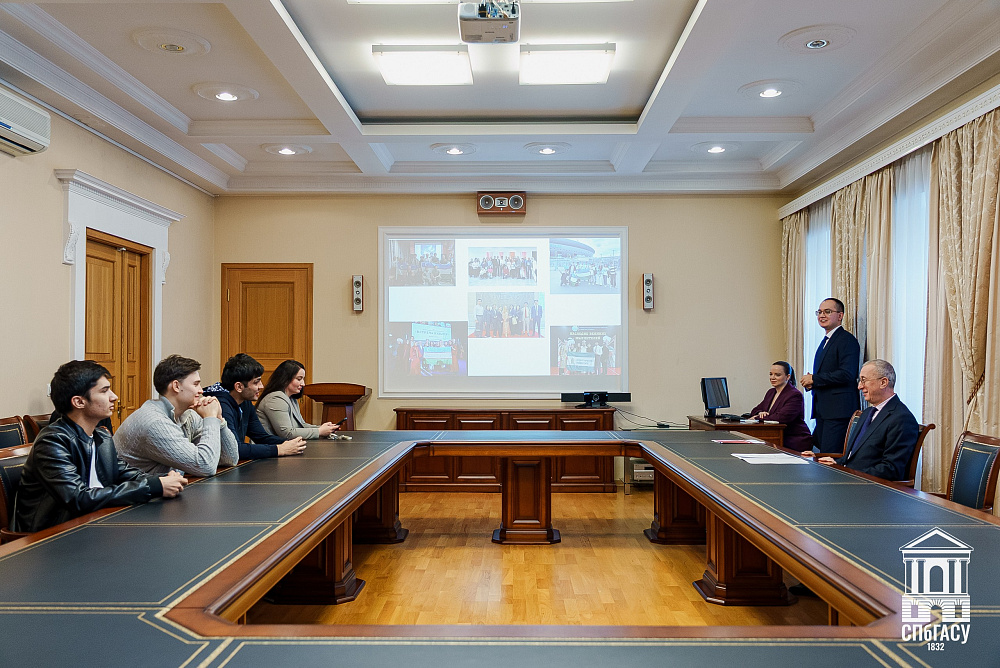
Meeting with students from Uzbekistan
The visit continued with a meeting between the Consul and students from Uzbekistan studying at SPbGASU. As of 1 September 2026, there are 37 citizens of Uzbekistan enrolled at the university, 15 of whom are full-time students. Uzbek students constitute one of the largest groups of international students at SPbGASU.
Kabul Alimov regularly meets with students; this time, he discussed matters regarding their studies, documentation, medical care, registration, and participation in cultural events. The students were informed about consular support options and the official services provided by the consular section.
Particular attention was paid to the career prospects of graduates. Participants discussed the possibility of collaboration between Uzbek employers and the SPbGASU Career Center, enabling students and graduates to access information about professional opportunities in Uzbekistan.
A proposal was also made to more actively involve Uzbek students in university and cultural events and to establish closer communication between the students and the diplomatic mission.
Thus, the visit by the Consul of Uzbekistan encompassed several areas of cooperation—ranging from specialist training and joint research to the preservation of architectural heritage and student support. The next stage will involve updating the cooperation roadmap and moving toward the implementation of new joint projects between SPbGASU and universities in Uzbekistan.