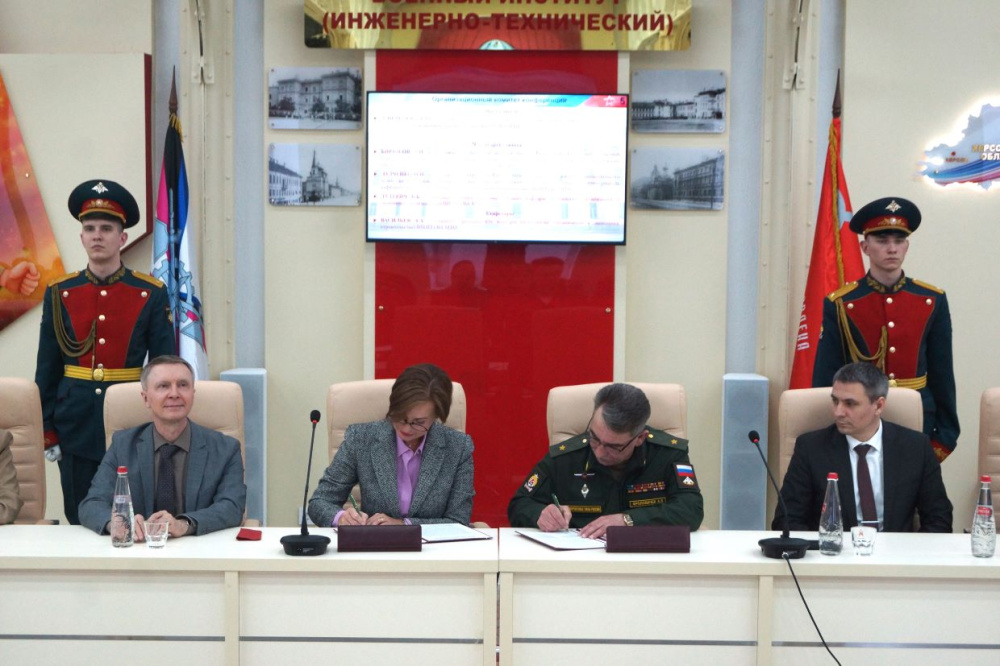
 Signing of the agreement at the Military Institute (Engineering and Technical)
The Saint Petersburg State University of Architecture and Civil Engineering is expanding its interuniversity and interdepartmental collaboration. Following a working meeting, a cooperation agreement was signed with the Military Institute (Engineering and Technical) of the Federal State-Owned Military Educational Institution of Logistics named after General of the Army A. V. Кhrulyov" of the Russian Ministry of Defense. The document aims to develop educational and scientific initiatives in the fields of unmanned systems, information modeling, artificial intelligence, and joint applied research.
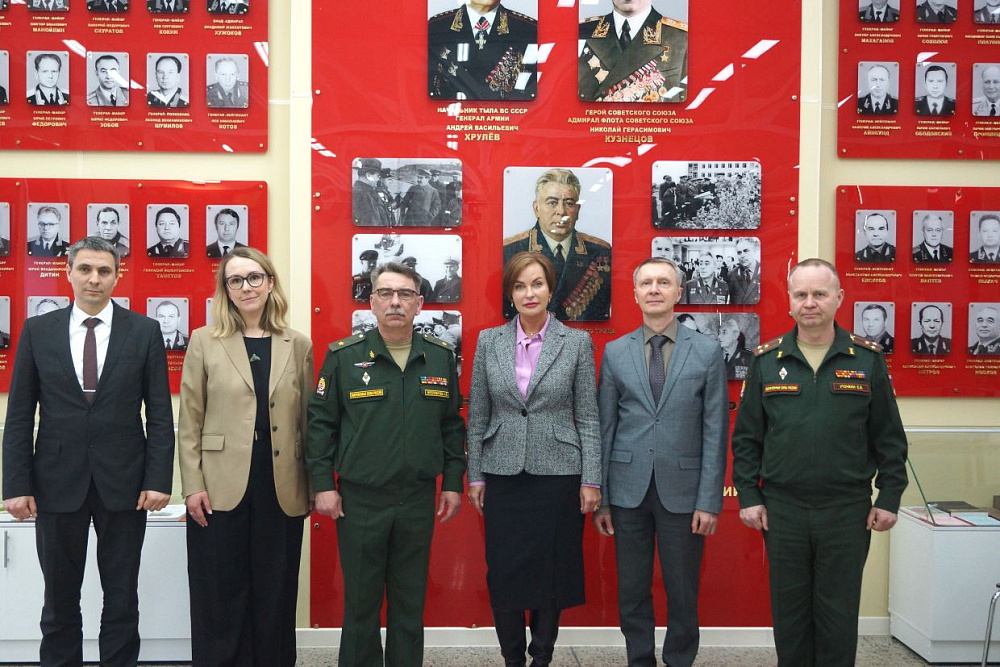
On behalf of SPbGASU, the signing ceremony was attended by First Vice-Rector Svetlana Golovina, Vice-Rector for Educational Activity Sergey Mikhailov, Vice-Rector for Continuing Education Viktoria Vinogradova, and Dean of the Faculty of Civil Engineering Andrey Nikulin.
A key area of collaboration will be developing competencies in the field of unmanned systems management. Furthermore, the partners are interested in training specialists in modern information modeling software, participating in joint research projects, seminars, conferences, and forums, and implementing solutions using artificial intelligence technologies.
As Andrey Nikulin, Dean of the SPbGASU Faculty of Civil Engineering, noted, the cooperation is mutually beneficial: "We are interested in developing the field of unmanned systems and their control. At the same time, our partners require support in training in information modeling and artificial intelligence. This forms the basis for sustainable and complementary collaboration."
One of the first practical steps under the agreement could be the creation of a joint training center. It is expected to operate on the premises of the partner organization, using its facilities and technical infrastructure, and SPbGASU students will be able to undergo regular training there, including for additional military specialties.
The agreement also provides for advanced training for teaching staff, participation in the development of programs and projects for socioeconomic development, support for talented youth, and dissemination of information on new scientific research and developments. This collaboration is free of charge and does not imply any financial obligations for the parties: each organization bears its own costs for the implementation of these activities.
Furthermore, the collaboration opens up additional opportunities for engaging students in applied projects and facilitates the partner's human resources needs. The university notes that developing collaboration in digital technologies, information modeling, and unmanned systems meets modern engineering training requirements and will contribute to the increased competitiveness of SPbGASU graduates.