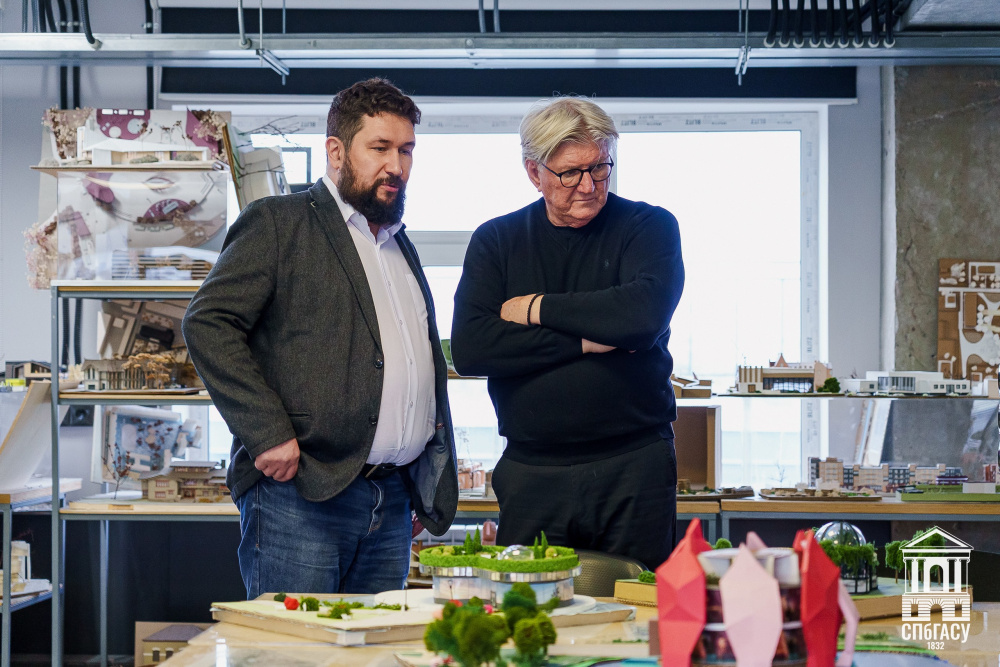
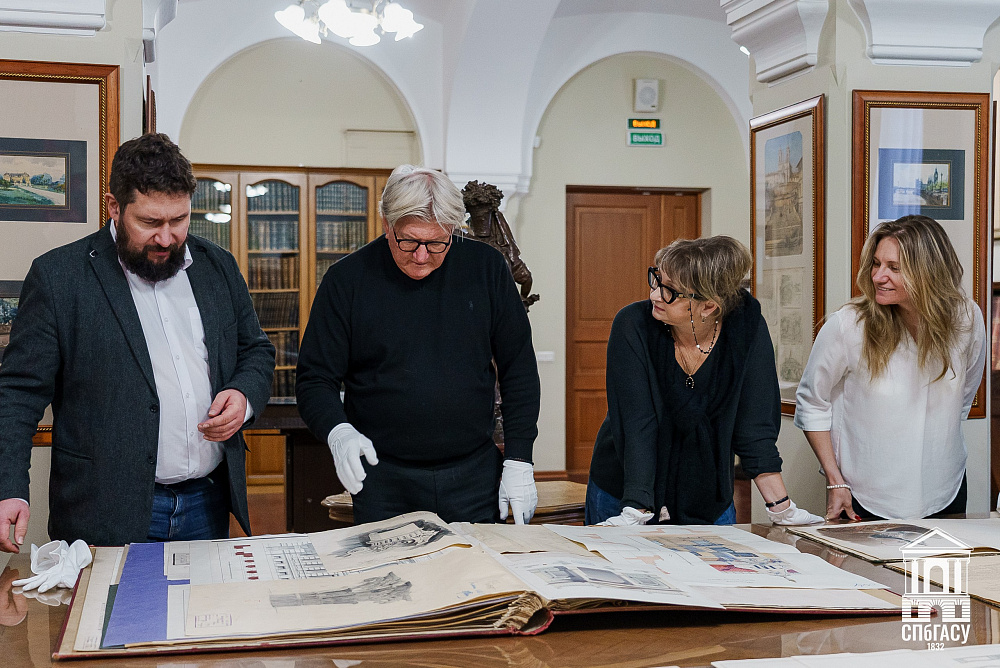
 Dean of the Faculty of Architecture Andrey Surovenkov and Dragan Radenović in the SPbGASU workshops
On 29 October, the Russian House in Belgrade hosted an international conference titled "Architectural and artistic avant-garde: Serbia and Russia." The event was attended by representatives from the Faculty of Architecture at the Saint Petersburg State University of Architecture and Civil Engineering: Svetlana Levoshko, PhD of Architecture, Associate Professor at the Department of Urban Planning, and Vera Ignatenkova, PhD of Architecture, Senior Lecturer at the same department. Their presentations focused on lesser-studied aspects of Soviet Constructivism and the specific ways in which it developed across various regions of Russia.
The conference, organized by the Union of Architects of Russia with the support of Russian government agencies, brought together around 20 participants—architects, artists, sculptors, educators, and researchers from Russia and Serbia. The program featured two thematic sessions dedicated to the mutual influence of the architectural and artistic avant-garde in the two countries.
Svetlana Levoshko presented a paper on Soviet wooden constructivism in the Russian North. In her research, she examined the architecture of Karelia and the Arkhangelsk and Vologda regions, demonstrating how the ideas of constructivism were manifested in wooden construction between the 1920s and the 1950s.
The researcher paid particular attention to lesser-known structures and entire architectural complexes preserved in the Northwestern region. These include the wooden architecture of the town of Segezha in Karelia, residential and public buildings in the settlement of Chagoda in the Vologda Region, and structures along the White Sea–Baltic Canal. Such examples demonstrate that, even amidst standardization and cost-cutting measures, architects continued to draw upon local traditions and national-romantic motifs.
"In the Russian North—the very place where the 'New Russian Style' emerged in the early 20th century—wooden architecture continued to evolve along its own unique path even after the revolution. Despite the push for the standardization and typification of construction in Soviet Russia during the 1920s and 1930s, a clear continuity of local traditions persisted. Even within the constructivist forms of the residential buildings in the settlement of Chagoda, one can detect a 'national-romantic' note, brought about by the material itself and the traditional pitch of the roofs. This is a little-studied and undervalued layer of the Russian North’s heritage that requires special attention today; such wooden structures are often dismissed as mere 'barracks' and are currently slated for imminent demolition," explained Svetlana Levoshko.
Vera Ignatenkova, a Senior Lecturer at the Department of Urban Planning, delivered a presentation on the specific characteristics of Constructivism in Irkutsk. In her talk, she highlighted the regional features of this architectural style, demonstrating how the climatic conditions of Siberia influenced architectural and urban planning decisions.
According to Vera Ignatenkova, the unique characteristics of Siberian architecture were of particular interest to the Serbian journalists. She gave two interviews, including one for the TV channel TV Pančevo. Furthermore, discussions with other conference participants touched upon the potential for future professional collaboration. Specifically, the Serbian colleagues were invited to take part in an event that the Union of Architects of Russia is planning to hold in Irkutsk in the summer of 2027.
An important part of the trip was exploring Serbia’s architectural and cultural heritage. The Russian guests were able to visit several architectural landmarks designed by Russian émigré architects, as well as two Orthodox monasteries and the Cathedral of Saint Sava in Belgrade—the interior of which features the work of approximately 70 Russian mosaic artists. The Serbian architect Ljubiša Folić, known for his designs of Orthodox churches in various countries, played a key role in organizing the program.
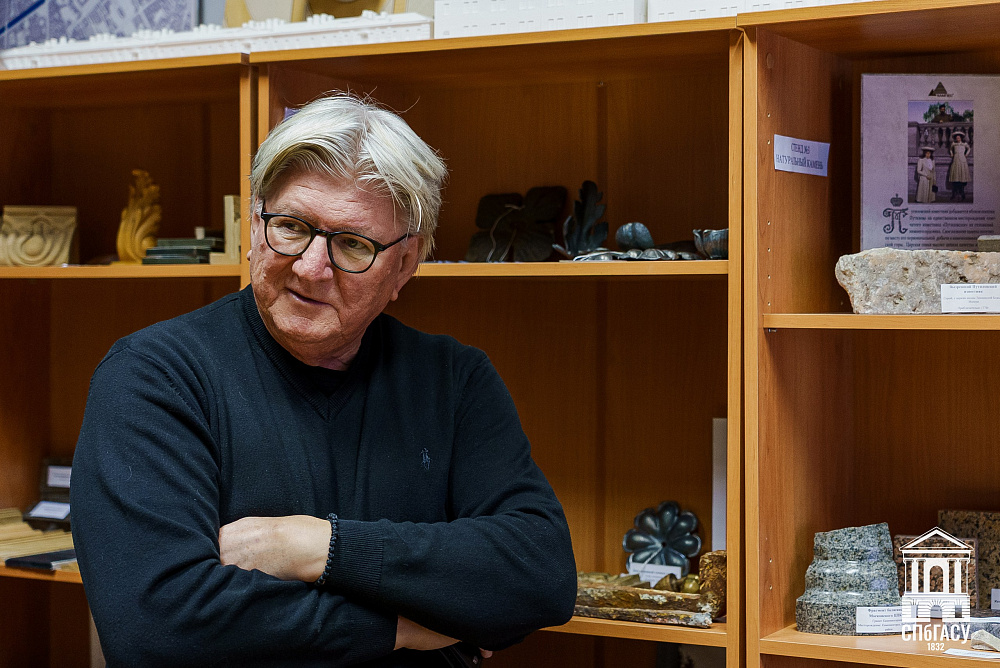
Following the meeting in Belgrade, a return visit to St Petersburg was made by Serbian representatives: sculptor and professor Dragan Radenović and a colleague arrived at SPbGASU. The guests were accompanied by university representatives, including the dean and faculty members from the Faculty of Architecture.
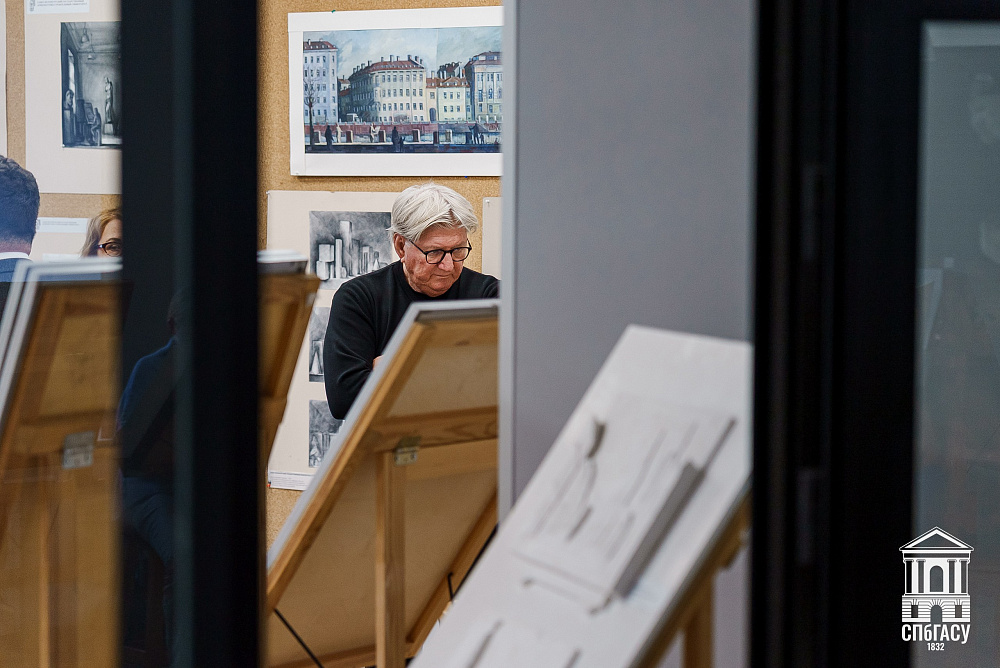
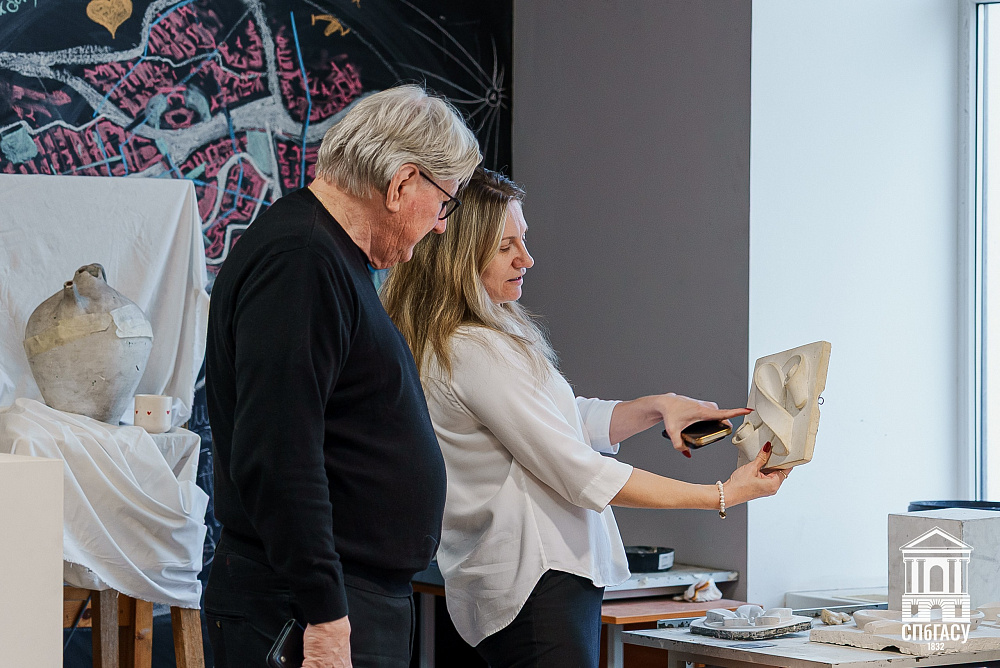
The Serbian colleagues were introduced to the history and educational activities of SPbGASU; they were given a tour of the Faculty of Architecture, art studios, and drawing and lithography classrooms, and were also shown the university’s scientific and technical library. Dragana Radenović took a particular interest in the students’ works and the facilities and equipment available in the creative studios.
According to Vera Ignatenkova, the Serbian sculptor spoke highly of the students' level of artistic training and the organization of the educational process. The guest examined the projects and works on display in detail, showing interest in the various aspects of the creative training provided to future architects.
"He was impressed both by the scale of the university and by how the work in our studios is organized. He was particularly interested in student projects, as well as the drawing and sculpture works. It is significant for us that someone with such extensive international experience has highly rated our school of architecture, recognizing it as one of the best in the world," shared Vera Ignatenkova.
During the meeting, the parties also discussed the possibility of further interaction and the conclusion of a memorandum of cooperation. Promising areas for collaboration include developing ties with the University of Belgrade, organizing joint scientific and cultural events, and exchanging professional expertise.
.jpg)
.jpg)
.jpg)
.jpg)


