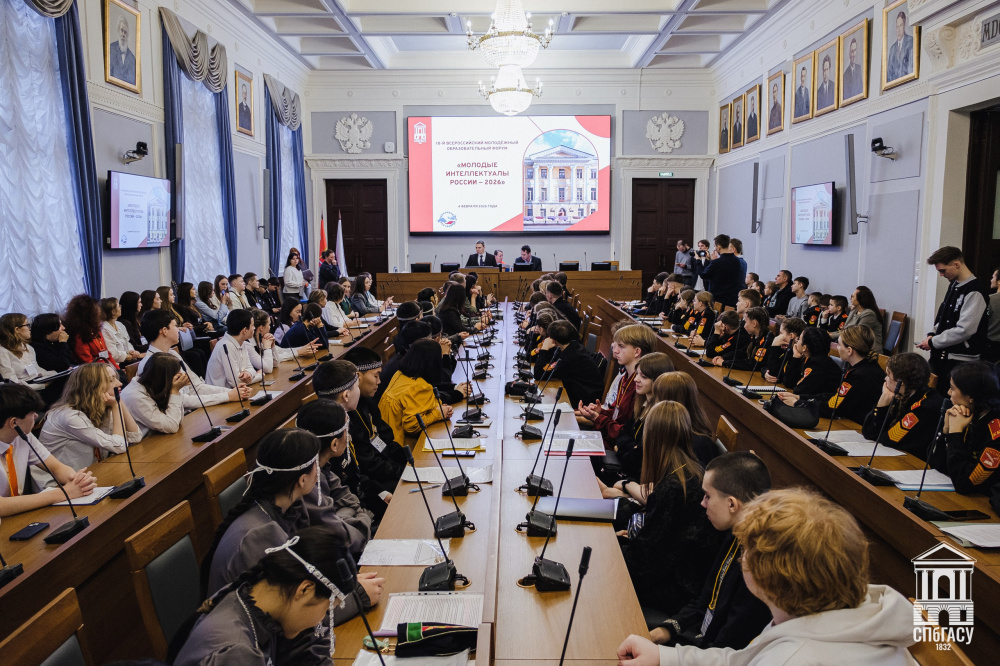
 Opening of the forum in the Academic Council Hall. Speech by Andrey Nikulin
On 4 February, the Saint Petersburg State University of Architecture and Civil Engineering hosted a career guidance event as part of the 18th All-Russian Youth Educational Forum "Young Intellectuals of Russia," dedicated to Russian Science Day. For several years, our university has hosted the forum, which brings together talented schoolchildren, teachers and representatives of the scientific community from across the country.
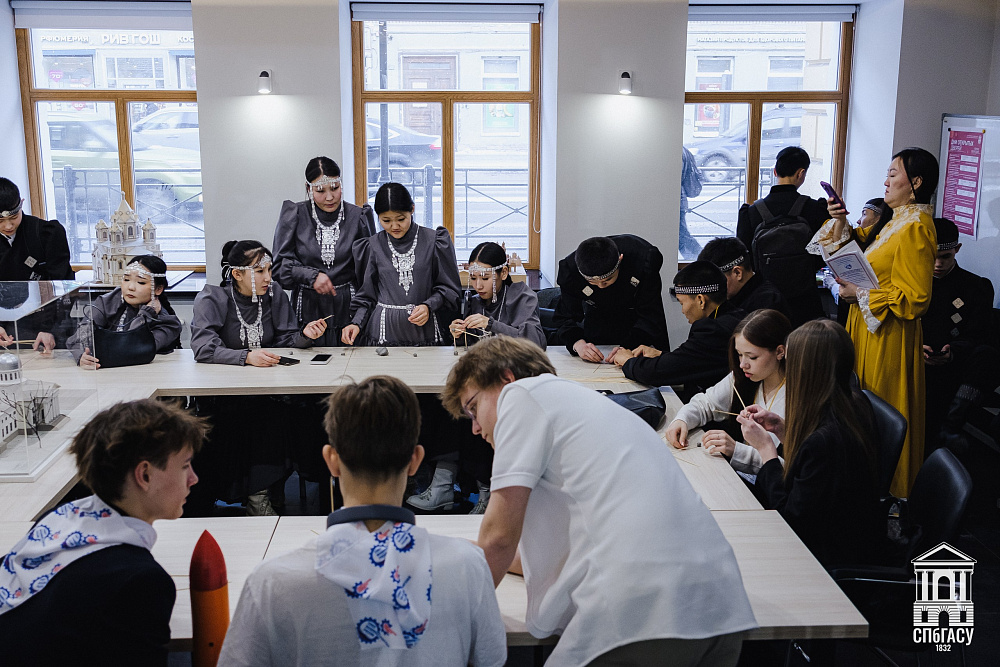
This year, the event focused on the Year of Unity of the Peoples of Russia. The forum was attended by schoolchildren from seven regions: the Republic of Bashkortostan, the Republic of Sakha (Yakutia), the Khanty-Mansi Autonomous Okrug – Yugra, the Vladimir, Moscow, and Sverdlovsk regions, and St Petersburg.
The sshoolchildren were warmly welcomed and told that SPbGASU was one of the oldest engineering universities in Russia, with a nearly two-hundred-year history, rich scientific and educational experience, and significant potential for training specialists in the engineering and construction industry.
Andrey Nikulin, Dean of the SPbGASU Faculty of Civil Engineering, addressed the participants with a welcoming speech. He particularly noted the students' early involvement in research and praised them for their conscious choice of challenging scientific topics: "We are glad that you are interested in scientific research and are choosing topics that help you develop and shape your future career path. Today, our university teachers will be working with you—they will ask questions, offer guidance, and help you find directions for further research. I wish you all successful and productive work."
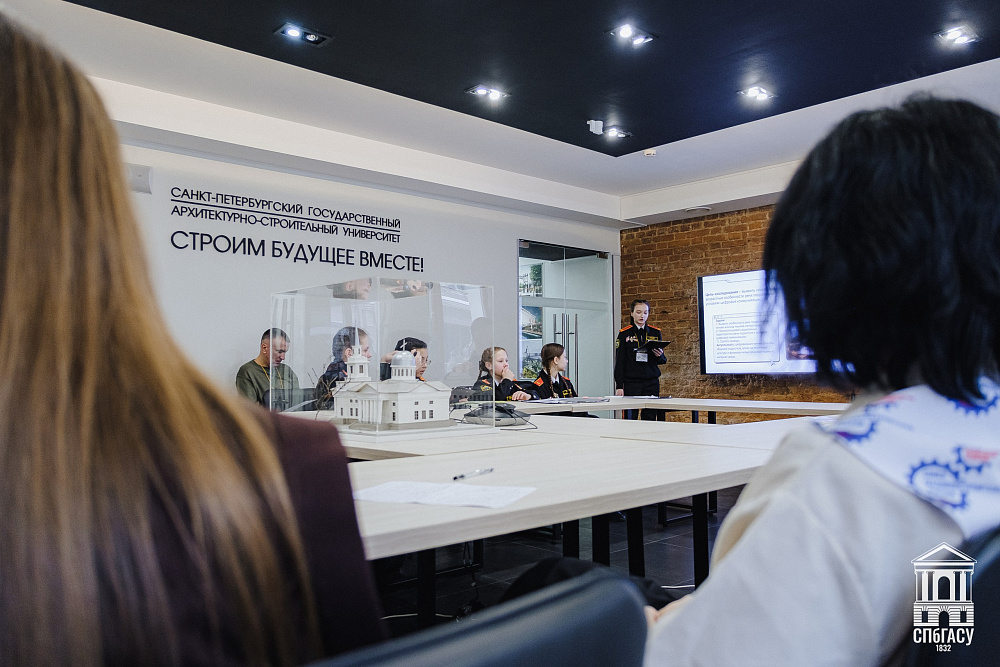
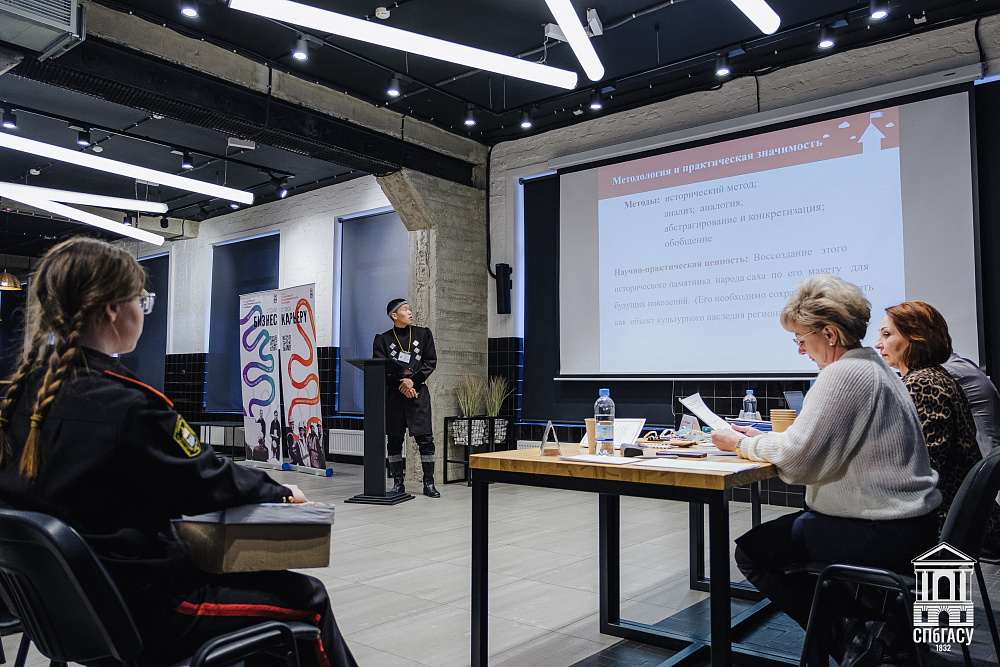
Following the welcome session, participants moved on to work in thematic sections, where they presented a total of 96 research and creative projects. The work covered several areas: engineering and technology, natural science, philology, history and arts.
In the engineering and technology section, students defended projects dedicated to modern technologies and current societal development issues. The presented works included research on the environmental safety of motor fuels, an analysis of demographic processes using mathematical statistics, projects on the application of digital tools and artificial intelligence, and developments aimed at improving the effectiveness of teaching mathematics and engineering subjects. Many projects were practical in nature and relied on real-life data and calculations.
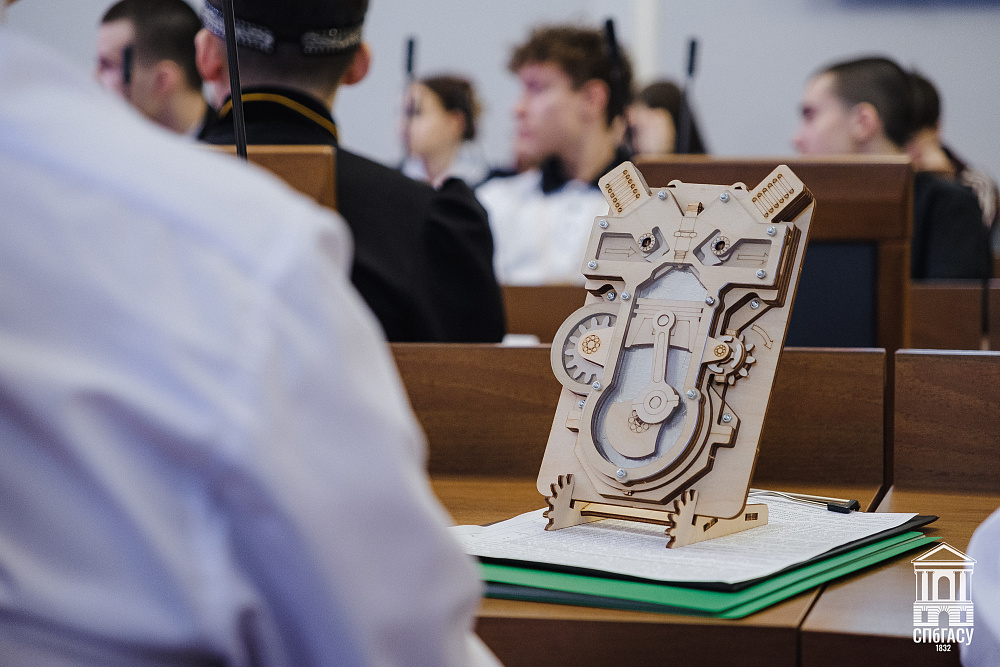
The arts section, which featured artistic and research works on traditional crafts, cultural heritage preservation, and the role of art in modern society, all executed in traditional arts and crafts techniques, was of particular interest. Experts noted the high level of works and the students' thoughtful approach to choosing their topics.
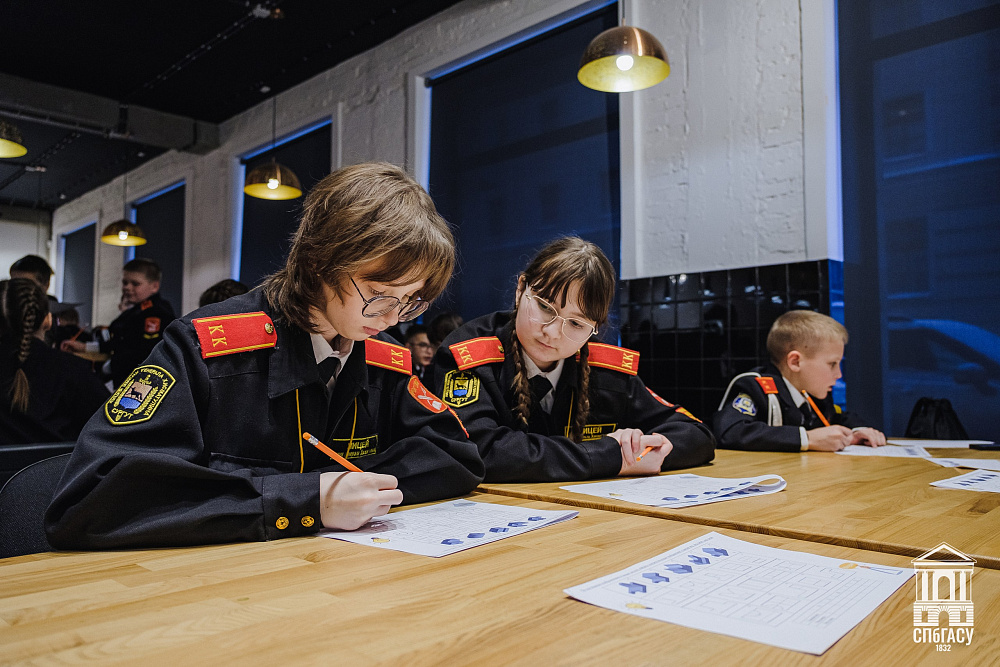
Thematic sections were followed by Olympiads: senior pupils took part in the St Petersburg State University of Architecture and Civil Engineering Olympiads in Transport Systems and Environmental Engineering, while students in grades 5–8 participated in the Russian State Hydrometeorological University Geography Olympiad.
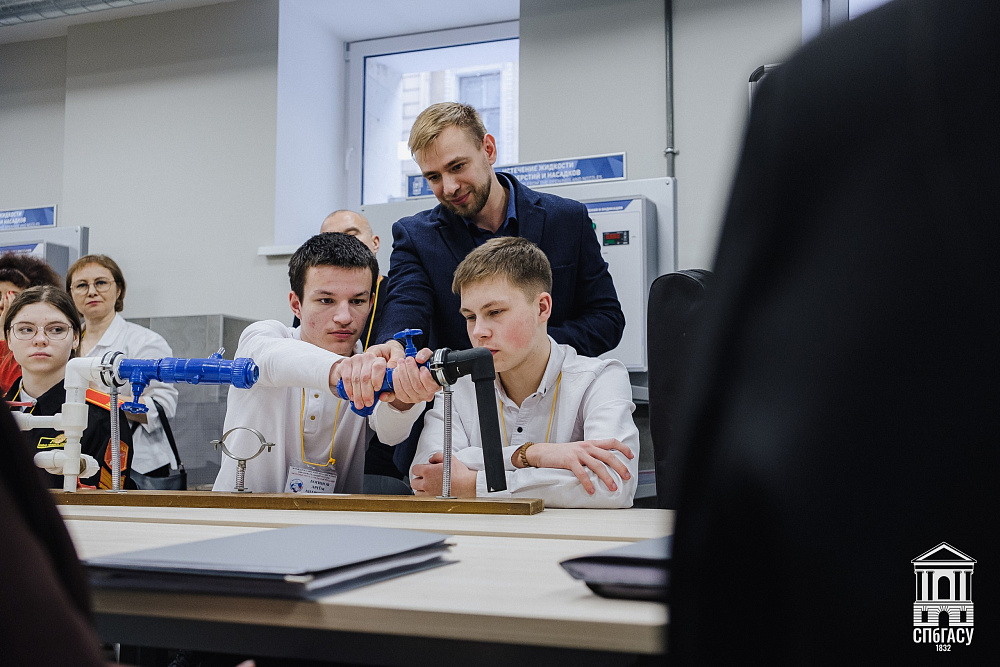
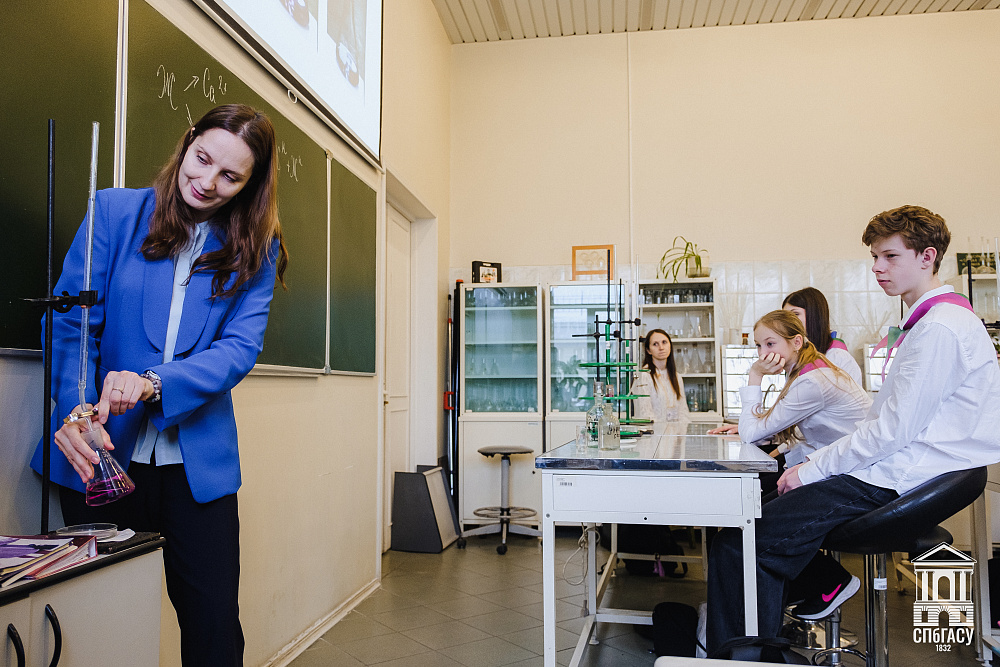
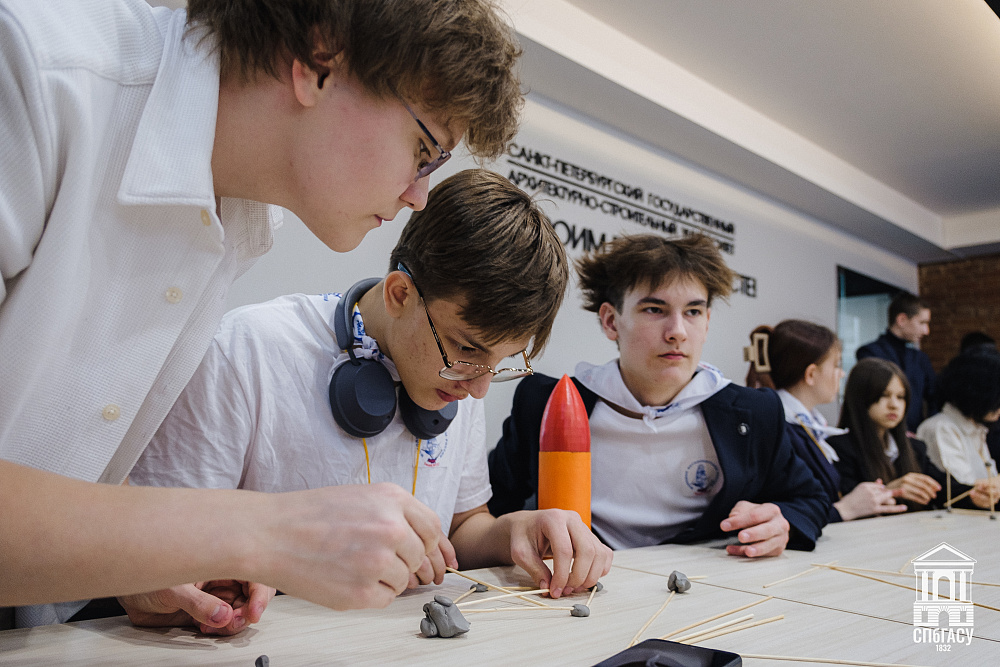
The final stage of the program included specialized master classes aimed at introducing pupils to the practical aspects of the engineering and technical fields of study at SPbGASU.
During the "Determining hardness in tap water" master class, participants learned about the importance of hardness in water supply systems and were introduced to practical methods for its determining.
At the master class "Pumping stations: design and main operating principles," schoolchildren learned about the design elements and operating principles of various water supply systems and their role in supporting the city's life.
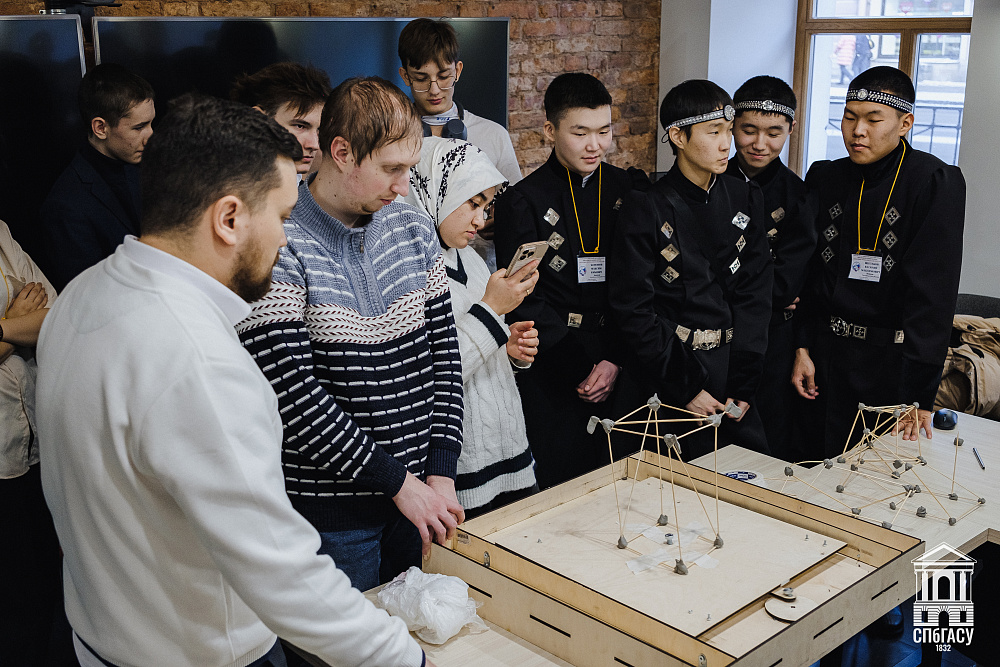
The master class "Seismic resistance of timber structures" generated considerable interest. The topic covered modern approaches to designing buildings in seismically prone areas, the behavior of timber structures under dynamic loads, and current engineering solutions in construction.
"Master classes, where students can not only hear but also see, touch, and try making something themselves, are one of the most important and useful types of our career guidance sessions," says Ilya Gladushevsky, Executive Secretary of the SPbGASU Admissions Committee. "This practice-oriented format allows students to better understand the specifics of engineering professions and the opportunities for studying at SPbGASU." He also noted that themed master classes are always held during our university's open days, the next of which will be held on Saturday, 7 February, at the Faculty of Architecture, the Faculty of Automobile and Road Building, and the Faculty of Forensics and Law in Construction and Transport.
The "Young Intellectuals of Russia 2026" forum held at SPbGASU once again confirmed the university's significant role as a center for career guidance, scientific education, and support for talented young people pursuing engineering, architecture, and scientific careers.