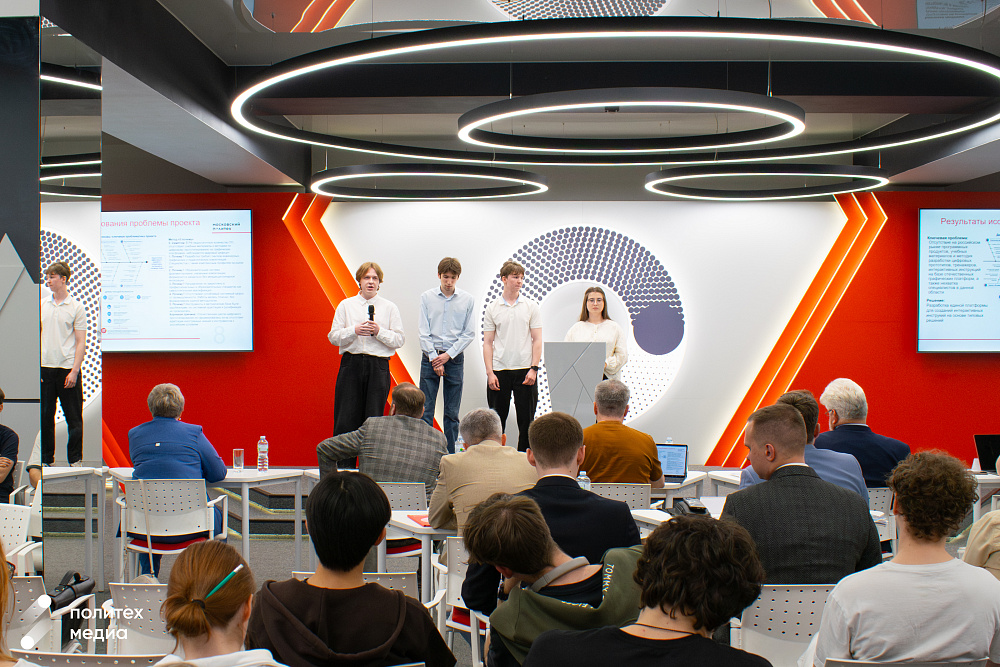
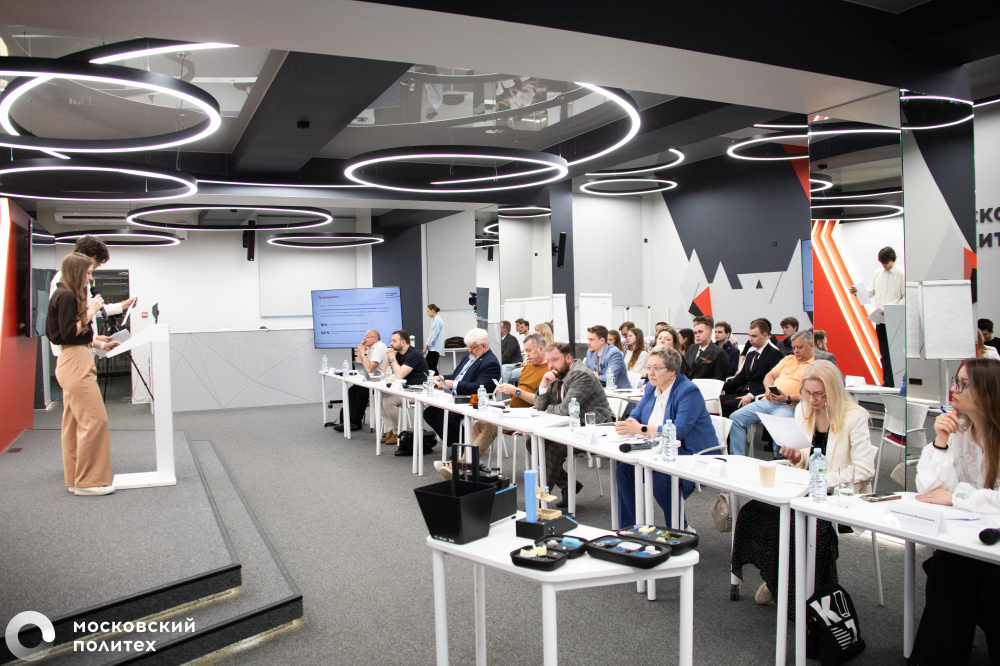
 The committee at the projects defense
Representatives of the SPbGASU Educational Center for Project-Based Learning participated as invited experts in the defense of student projects at Moscow Polytechnic University.
Sharing best practices
On this day, students from all years and fields of study presented the results of their work in ten project areas – from technological leadership and design to multimedia and transportation. The experts representing SPbGASU were Inna Sukhanova, Director of the Educational Center for Project-Based Learning; Natalia Zaitseva, Deputy Director; and Olga Svetlova, Lead Specialist.
Representatives from our university participated in an open panel showcasing the best projects in each area. Student team leaders shared their achievements, experiences interacting with industry partners, and plans for further development of their initiatives.
"It was an interesting experience, with a wide variety of projects presented. We were able to participate in active discussions, provide our comments, and receive engaging feedback from fellow experts. We also attended other sections and were able to appreciate the high level of training of Moscow Polytechnic University students. We thank the Moscow Polytechnic University Project Activity Center for the invitation," said Inna Sukhanova, Director of the SPbGASU Educational Center for Project-Based Learning.
Participation in such events allows us to share best practices in project-based learning and get to know about successful cases of student initiatives.
At SPbGASU, project-based work is actively developing within the framework of the elective course of the same name. Soon, students will be able to select a project of interest to them on the SPbGASU website in the "Project Showcase" section and join in on it during the fall semester.
What does project-based learning give to students?
Project-based learning allows students to work on real-world problems and apply theoretical knowledge in practice. Through project work, they learn to find solutions to complex problems, collaborate in a team, and take responsibility for the outcome.
Each successfully completed project becomes part of a professional portfolio, demonstrating to future employers not only the student's level of preparation, but also their initiative, ability to achieve goals, and work on practical tasks.
Furthermore, project work fosters the development of key competencies: critical thinking, communication skills, time management, presenting ideas, and adapting to changing conditions. These qualities are particularly in demand in the labor market today.
Close collaboration with industrial partners is also a key advantage. Many projects are carried out at the request of real companies, allowing students to gain insight into the industry, establish professional contacts, and secure internship or future employment opportunities even before graduation.