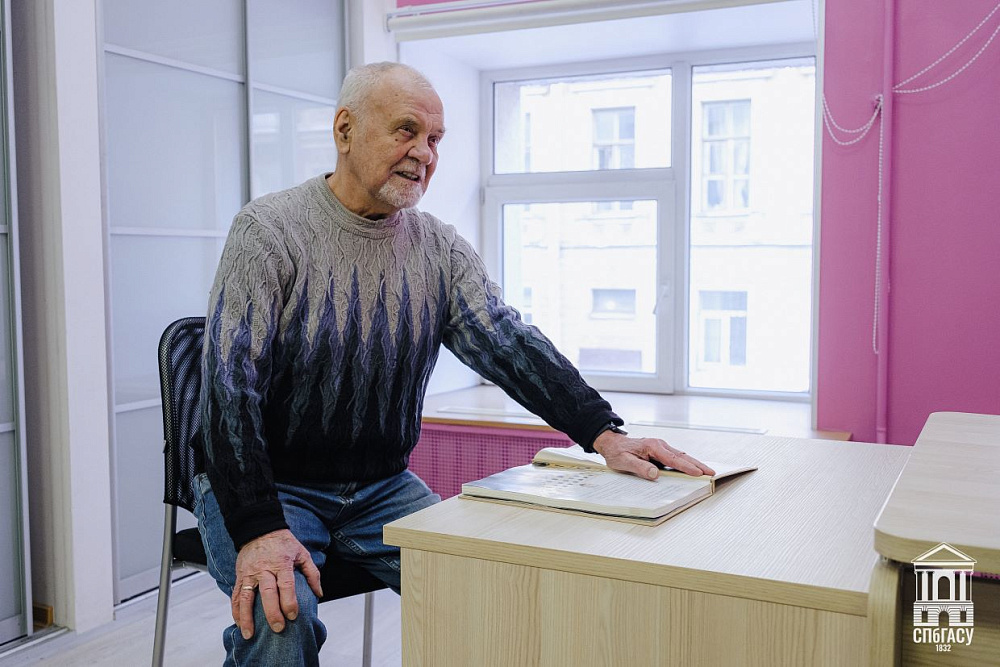
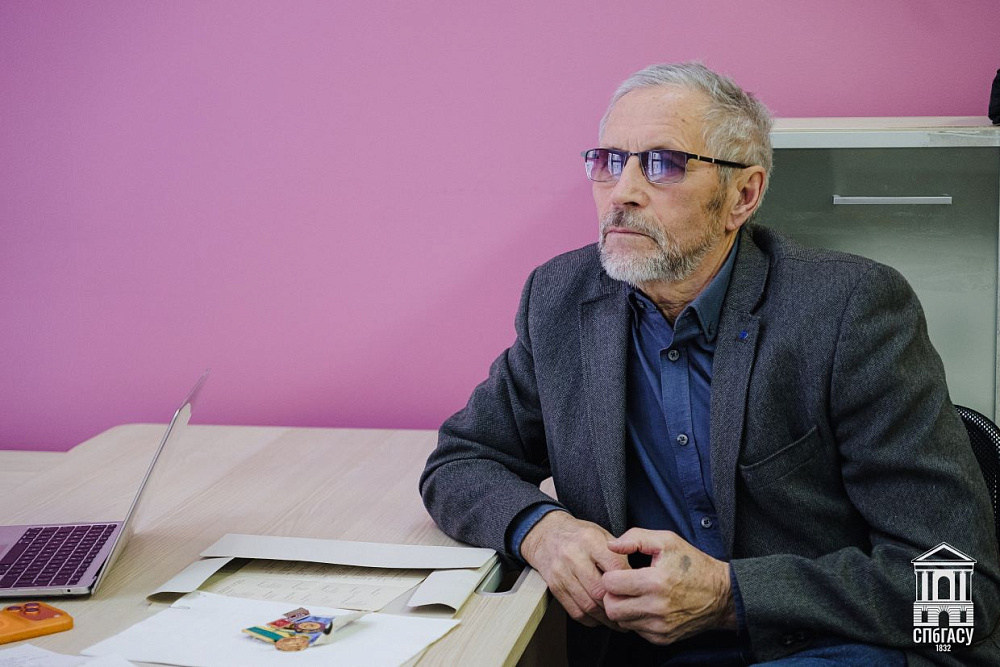
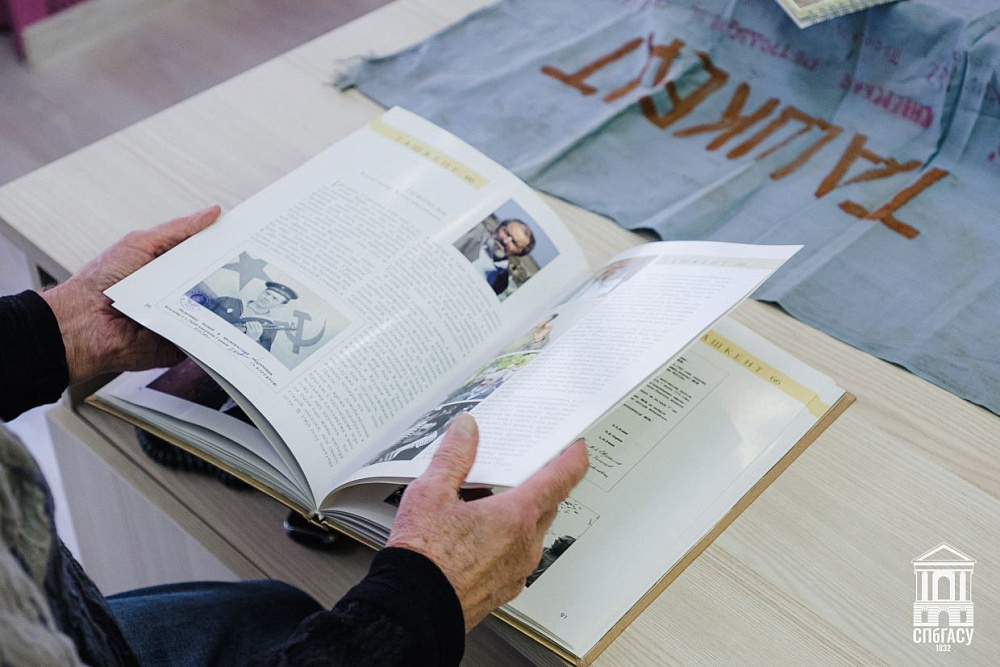
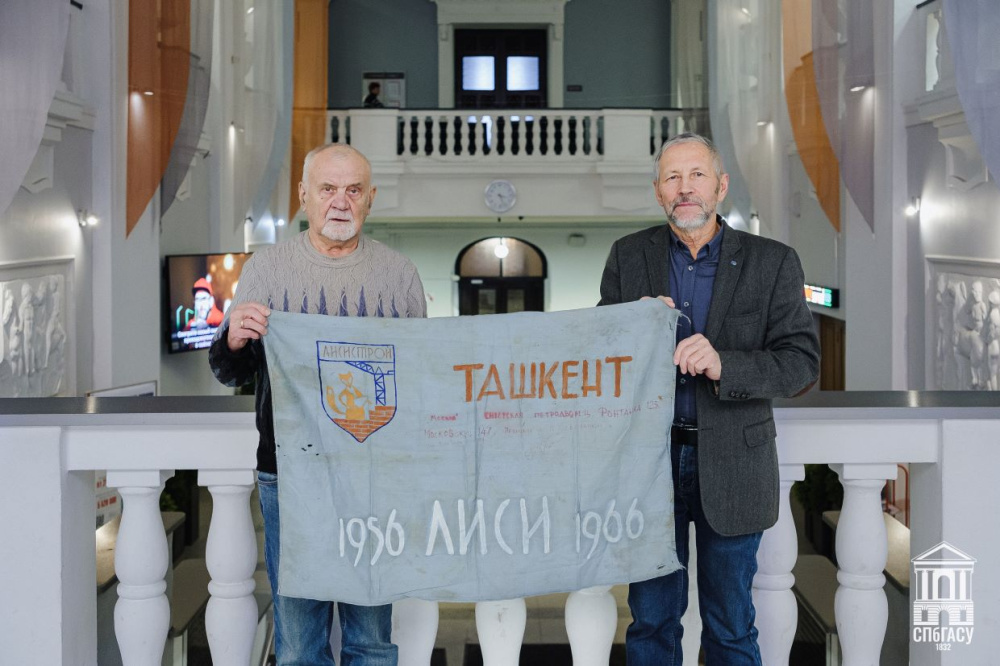
 Nikolay Tarbaev and Mikhail Frolov with the squad's banner
17 February marks Russian Student Squads Day, a holiday established in 2004 to commemorate the founding of the youth organization "Russian Student Squads." On this day, it's customary to speak about the traditions, continuity, and significance of the student movement for the country. However, behind these words lie real human destinies and stories, one of which is connected to the All-Union Student Squad "Druzhba" ("friendship"), which included students from the Leningrad Civil Engineering Institute (LISI, now SPbGASU).
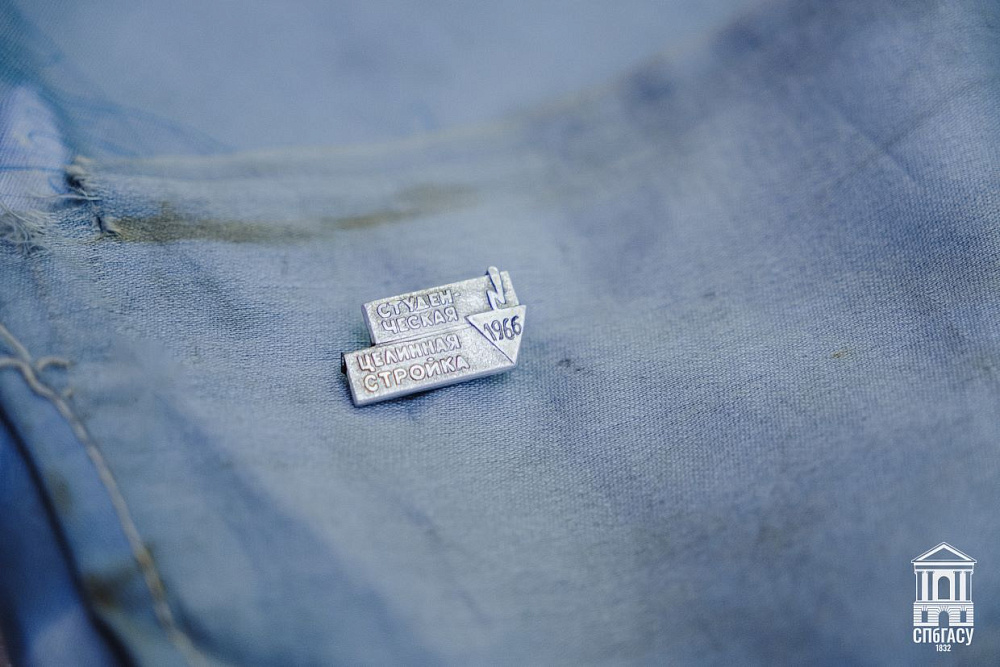
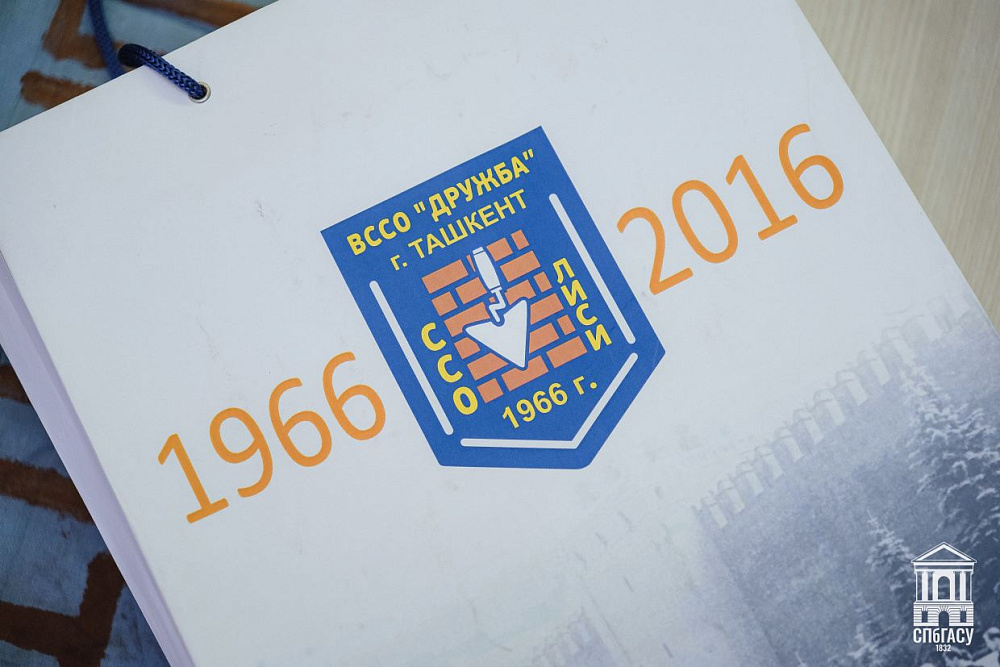
In the spring of 1966, Tashkent experienced one of the most devastating earthquakes in its history. The city was heavily destroyed: the center remained intact, while the adobe neighborhoods on the outskirts were completely ruined. The entire country rallied to rebuild the capital of the Uzbek SSR—student squads headed south alongside professional construction workers. Among them was a LISI squad "Tashkent 66."
Sixty years later, the squad members Mikhail Ivanovich Frolov and Nikolay Aleksandrovich Tarbaev returned to the walls of their native university to share their memories with current students.
From Leningrad to ruined Tashkent
Initially, the LISI student construction squad was formed for a trip to Kazakhstan, but after the Tashkent earthquake, the decision was changed. Through the Komsomol, the squad was urgently forwarded to reconstruction work in Central Asia.
"There were forty-three of us: thirty-seven boys and six girls," Nikolay Aleksandrovich recalls. "We lived in army tents in the area known as the Bulgarian Gardens. There was so much work that at first it was complete chaos."
Two months after the disaster, the students found themselves in a city where the destruction had not yet been fully cleared. In temperatures reaching 40 degrees Celsius, without established logistics or clear management, they were forced to literally rebuild their workflow from scratch.
Five meters by hand
The squad's main task was to construct earthquake-resistant foundations for five-story apartment buildings. These involved enormous pits up to five meters deep, initially dug by hand with crowbars and shovels.
"First we dug, then we installed formwork and rebar, and poured concrete layer by layer," says Nikolay Tarbaev. "When the equipment arrived, things became a little easier, but we had done the bulk of the work ourselves."
The work was hard, but it brought the squad together. The students insisted on changing the work organization system: instead of disjointed "quotas," they proposed assigning permanent teams to specific sites. This proved to be a turning point: the work became rhythmic, meaningful, and truly productive.
It was thanks to this that, in two months, the "Tashkentites" laid the foundations of a fifty-sixty-apartment building and completed a project that another squad had been unable to complete before them.
Heat, watermelons, and a feeling of a shoulder
Besides the grueling work, another side of that life remains in memory: evening bonfires, songs, trips to the oriental bazaar, watermelons from the merchants to the students in return for impromptu concerts.
"It wasn't just a job—it was a sense of celebration, youth, and being needed," says Mikhail Ivanovich. "You knew you were doing something important, and you were doing it with others."
When the mission ended, the squad was asked to stay for another two weeks to finish the foundations left behind by their neighbors. They stayed. Then they returned to Leningrad on a special flight, with thanks, banners, and a welcome at the airport that the participants still remember.
The squad that didn't fall apart
But the most important consequence of "Tashkent 66" became apparent later: for many, this trip became a defining moment in their professional lives. The forty-three fighters grew into distinguished builders, heads of major construction organizations, and bridge builders. Entire families of engineers, architects, and designers emerged.
"Tashkent taught us how to work with people and be responsible for a common cause," Nikolay Tarbaev emphasizes. "After such a hard-working summer, you enter the profession no longer as a 'young specialist,' but as someone with life experience."
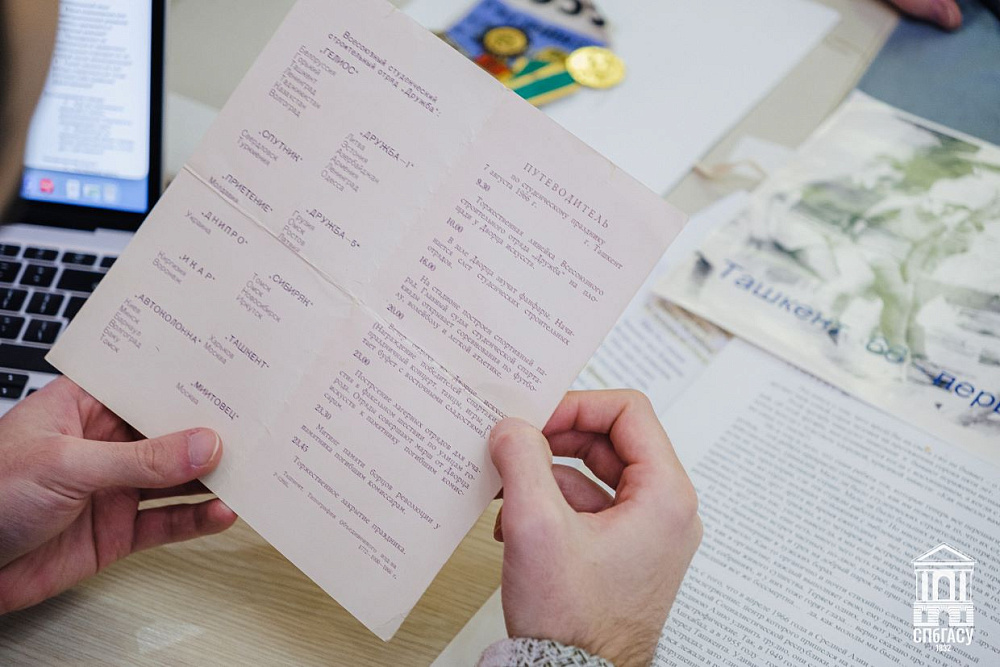
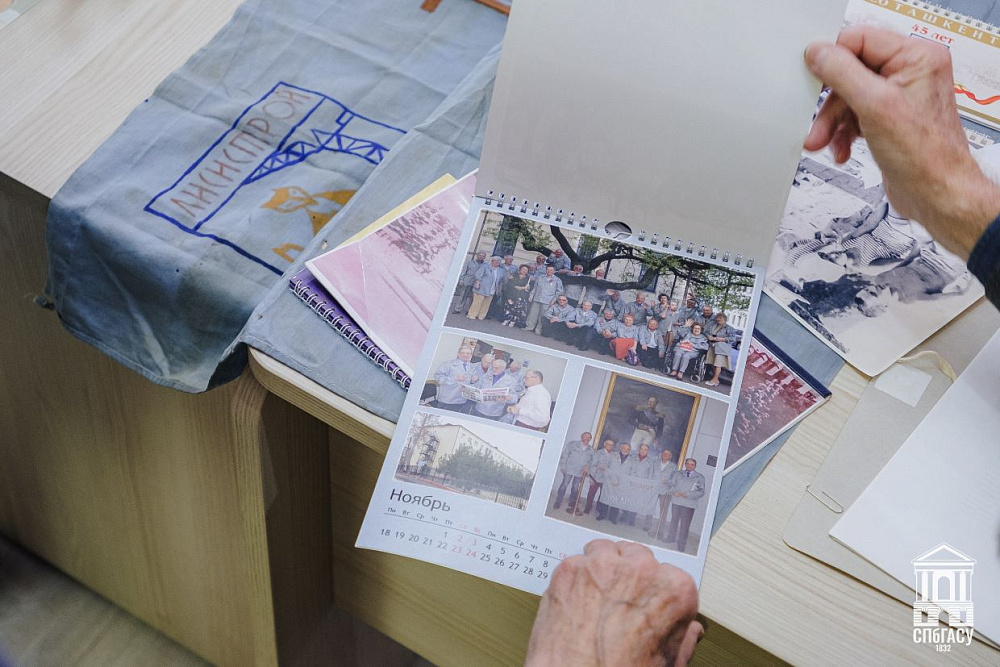
The squad didn't disband even after graduation. At first, meetings were infrequent, then became regular. Today, the participants of "Tashkent 66" gather at least twice a year, including every year on 9 May, the anniversary of the squads formation. They published their own book of memories and preserved photographs, emblems, and traditions.
Memory that the future needs
The story of "Tashkent 66" isn't just a piece of the past. It's a conversation with current students about choosing a profession, about the path that shapes their entire lives.
"You've chosen the right path," Nikolay Tarbaev tells the students. "I sometimes think: if I were working in a pizzeria somewhere, what would I remember today? But as I drive around the city, I know: these bridges, these roads, these buildings are my work. We've chosen a profession that allows us to leave a mark on the earth."
According to Mikhail Frolov, "Being a builder isn't just a profession, it's a responsibility. It's an opportunity to create something that will outlast you. And university is the first step toward this great endeavor."
"Tashkent 66" is more than just a post-earthquake construction project. It's an example of how choosing the right profession, an active student life, and working side by side can shape one's destiny and create lifelong friendships.