Modern timber construction is increasingly utilizing engineered wood—materials with properties suitable for use in mid- and high-rise building structures. One such material is LVL (Laminated Veneer Lumber), made from unidirectional glued veneer. Researchers at SPbGASU investigated the behavior of LVL structures under sustained loading and developed an approach to more accurately assess their load-bearing capacity, taking into account the material's specific characteristics.
The research project "Development of a method for assessing the load-bearing capacity of LVL structural elements and connections under long-term loading, accounting for anisotropy" was conducted by Pavel Koval, Associate Professor at the Department of Metal and Timber Constructions (PhD of Engineering Sciences), and Anna Kushnir, Assistant at the Department of Reinforced Concrete and Masonry Constructions.
Why it is important to consider LVL anisotropy
The design of LVL structures employs approaches used for solid and glued-laminated timber. However, LVL possesses specific characteristics that must be taken into account when evaluating its performance. In particular, the material's strength and deformation characteristics depend on the direction of the applied load relative to the grain.
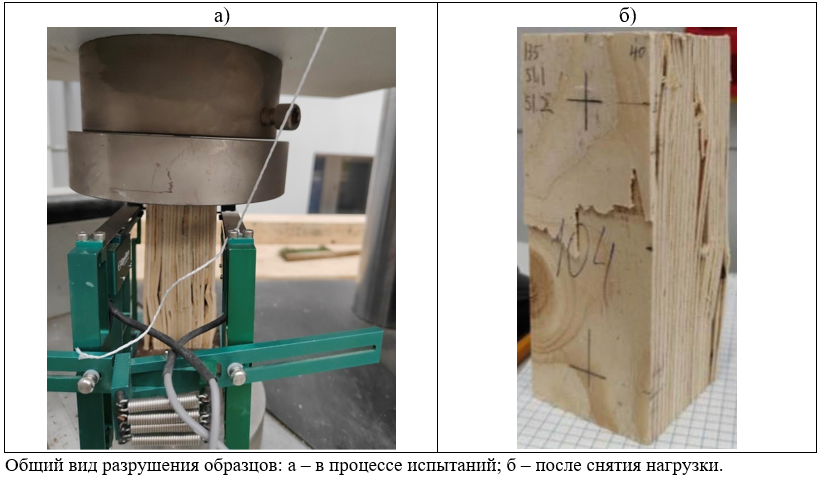
This characteristic—anisotropy—is particularly noticeable under sustained loading. Researchers have established that the behavior of LVL under compression differs significantly between the radial and tangential directions.
Under radial loading, significant high-elastic and irreversible creep deformations occur. In the tangential direction, failure is relatively more brittle and resembles, in nature, failure under compression parallel to the grain.
However, the boundary between the resistance regions on the diagram showing the dependence of LVL strength on the force inclination angle had not previously been identified. Determining this boundary became one of the key objectives of the study.
From theory to experiment
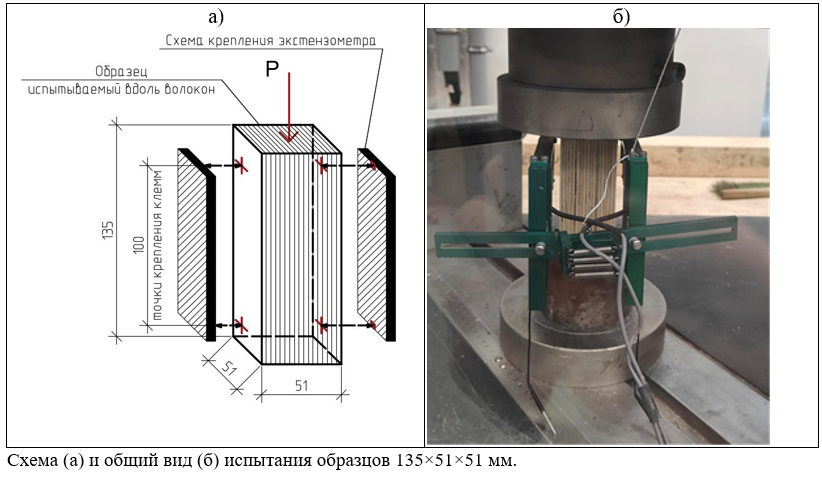
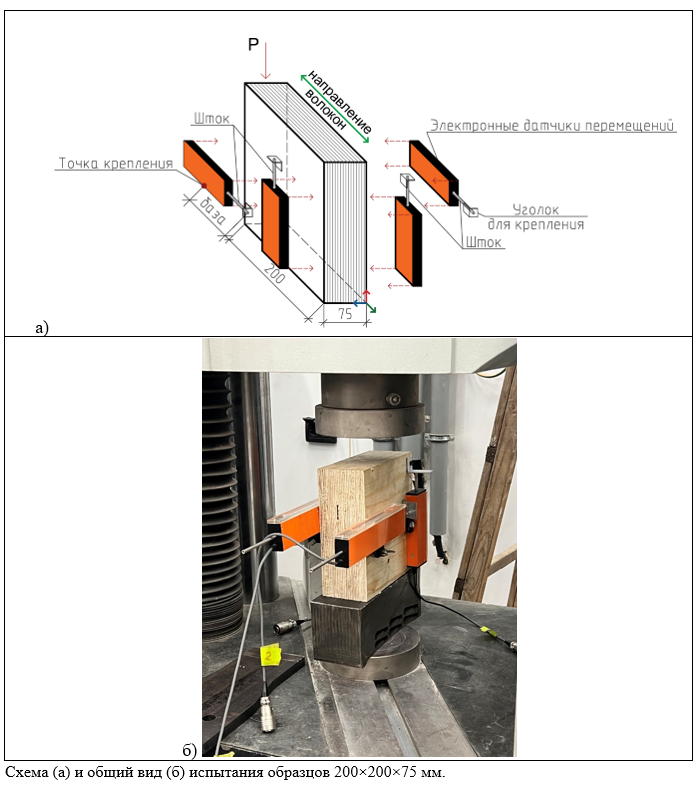
To address the objectives, researchers from SPbGASU combined theoretical calculations with experimental studies. The work resulted in the proposal of analytical relationships defining the limit of forced high-elastic deformation in LVL as a function of the angle between the applied compressive force and the grain direction.
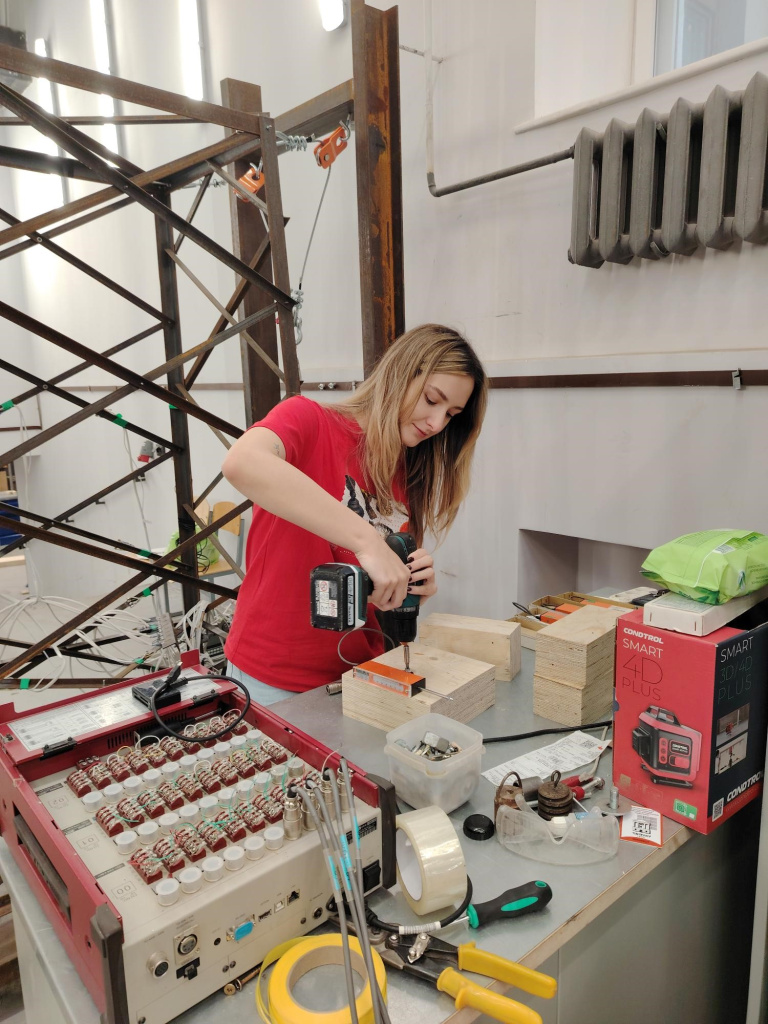 Sample preparation process for testing
In addition, the researchers obtained experimental relationships between the loading rate and the limits of forced high-elastic deformation under compression at various angles relative to the fibers.
Based on the data obtained, an experimental-theoretical method was developed to determine the position of the boundary between resistance zones on the diagram showing the dependence of LVL strength on the force inclination angle under long-term loading.
An additional outcome of the work consists of recommendations for the design of connection joints in structural LVL assemblies subjected to long-term loading, taking into account the material's anisotropy.
"We managed to approach the task comprehensively: theoretically describing LVL behavior using analytical relationships and experimentally validating them. It was precisely the combination of diagram-based calculations and full-scale test data that enabled us to determine the boundary between resistance zones. The results obtained represent a step toward a more reliable assessment of the load-bearing capacity of LVL structures under long-term loads," notes Anna Kushnir.
The practical significance of the study lies in the potential to improve the reliability of load-bearing capacity assessments for LVL structures. The proposed method can be applied in the design and inspection of buildings and structures, in the revision of current regulatory documents, and in the educational process.
The results obtained simultaneously demonstrate the need for further study of the anisotropy of LVL strength and deformation, as well as its influence on the behavior of structural elements and connections under sustained loads.
Based on the results of the research work, articles have been prepared for publication in journals included in the VAK list.
The project was implemented as part of a grant competition for research activities to be conducted by SPbGASU academic staff in 2026.