 Marina Malyutina
The St Petersburg State University of Architecture and Civil Engineering held a regular meeting of the STARTUP TALK business café—a series of sessions where students meet entrepreneurs and learn about how to create a startup.
The goal of these meetings is to show students that entrepreneurship is accessible to everyone, and that business skills can and should be developed during their academic years.
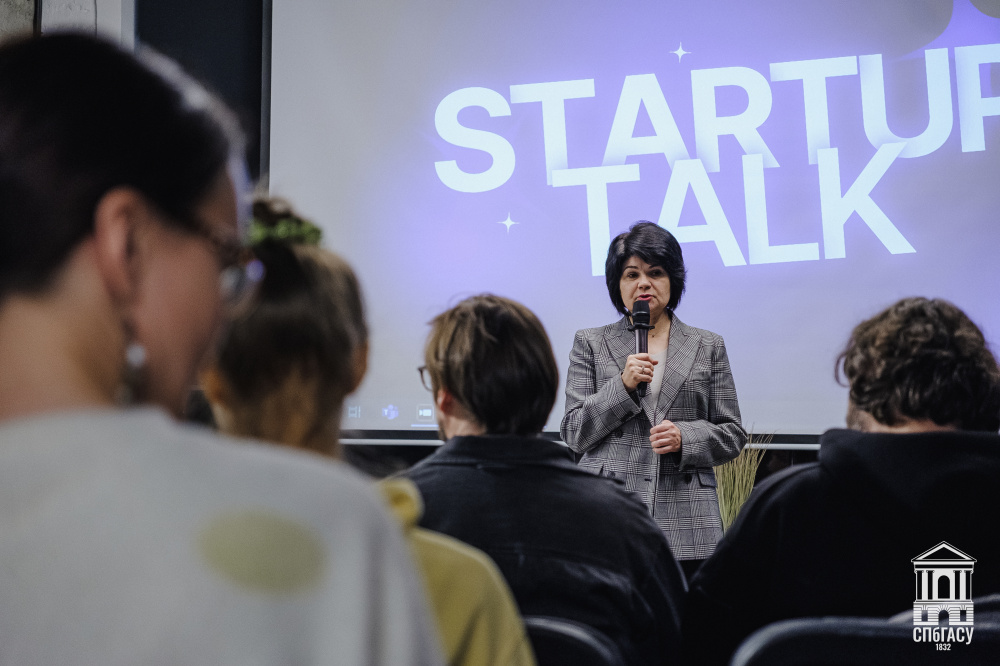
Vice-Rector for Youth Policy Marina Malyutina addressed the participants with a welcoming speech. She emphasized that SPbGASU has been actively developing student entrepreneurship for three years now. The university has established a system of acceleration programs, holds regular business cafe meetings, and hosts visiting mentors and experts.
The Vice-Rector noted the growing number of graduates completing their final qyalifying works as startups, as well as successful examples of students who have received grants to develop their projects. "Today, startups are a reality, and any skill can be developed, especially when the university supports it," she emphasized.
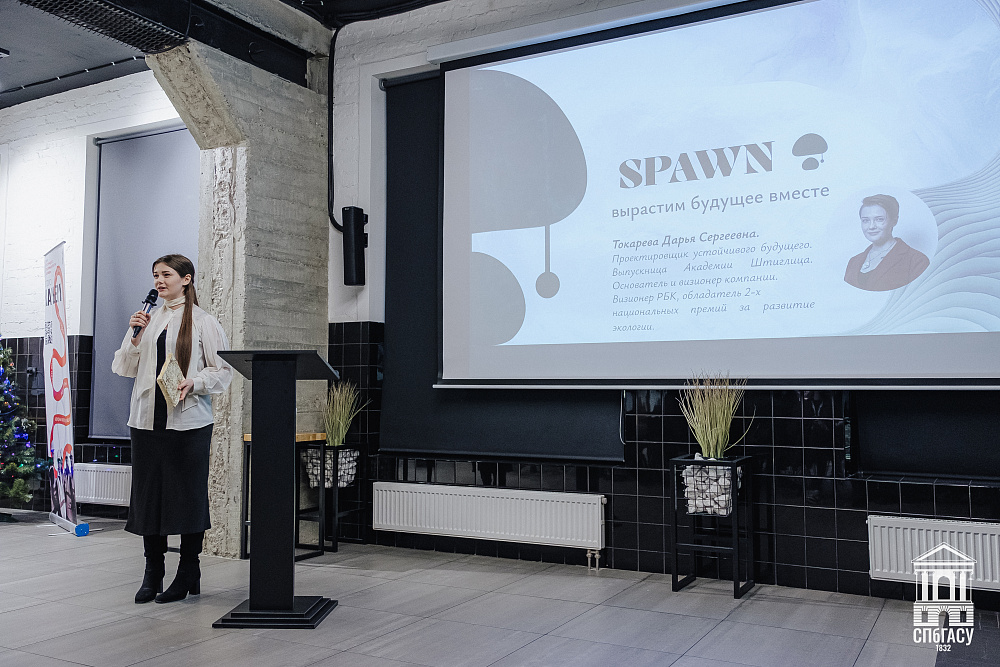
The first to talk about her business was Daria Tokareva, an industrial designer, winner of two national awards for her contribution to ecology, and founder of Spawn, a company that uses unique biotechnology to create interior items from mushroom mycelium and recycled materials. The company, which includes a laboratory and a full production cycle, operates in St Petersburg.
The students had real samples of the material in their hands, which they could touch and study.
The speaker shared a story that began with experiments in a communal apartment in 2020, when the initial research was conducted without a lab or equipment. Later, the team was able to rent a pilot facility, begin sales, and attract its first investor. Today, the company produces furniture and decorative items, develops building materials, and is preparing to launch new collections.
Daria Tokareva emphasized the importance of educational programs and accelerators, which helped the project secure investment and enter the market. Among the key partners, she cited Sber, the Agency for Strategic Initiatives, the technology entrepreneurship program, and the Russia – Land of Opportunity foundation.
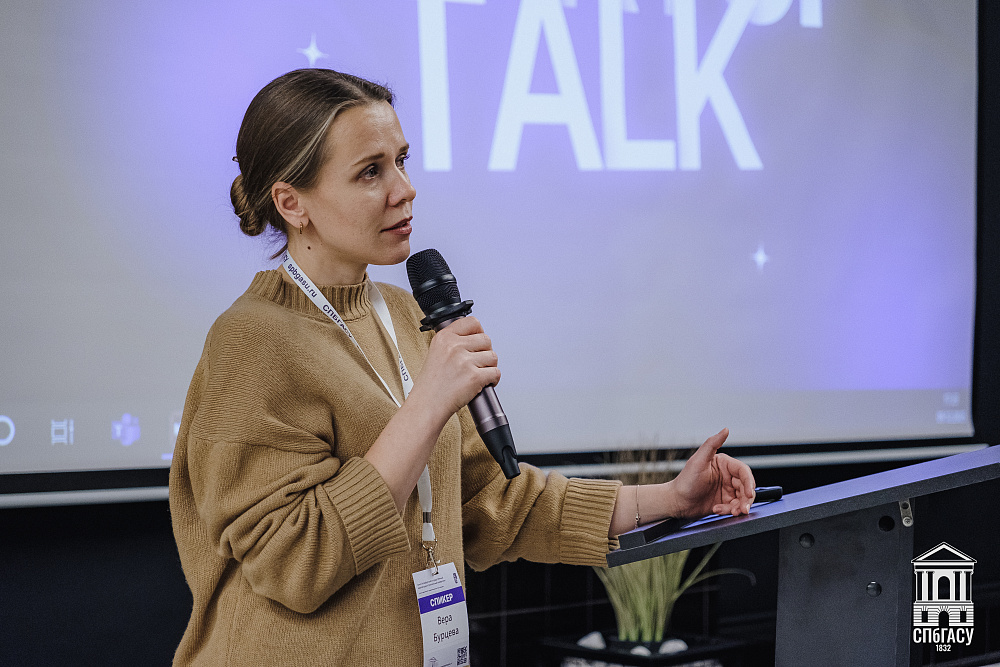
Vera Burtseva presented a digital energy twin project—a system that fully models the operation of a building or facility, enabling energy consumption analysis, load prediction, and process optimization without the risk of real-world errors. She discussed how digital models helped reduce costs, improve energy efficiency, and prevent emergencies.
The speaker detailed practical examples: how new solutions are tested, how digital twins are used in industry, construction, and urban management. She emphasized that the energy modeling market was growing rapidly, and specialists in this field will be in demand for decades to come.
The series of reports concluded with expert Evgeny Nesterov, who works on large international projects in architectural and engineering modeling. He discussed the development of the building information modeling (BIM) environment, why digital design tools are becoming mandatory worldwide, and what competencies students should develop to enter the global market.
Of particular interest were the real-life cases the speaker works with on a daily basis: large industrial sites, international team projects, data logistics, and the standards the global construction industry is striving for. He noted that SPbGASU students already have a sufficient foundation to join such teams in the future.
After the presentations, the organizers held a business bingo drawing—an interactive game in which students could win prizes by completing tasks related to communication and finding interesting facts about the event's guests.
STARTUP TALK concluded with an informal networking event featuring pizza, where participants continued to discuss ideas, ask questions of the speakers, and exchange contacts.
The organizers expressed confidence that such meetings help students see real-life examples of entrepreneurial paths and inspire them to develop their own projects.