SPbGASU is developing an electric vehicle powered by a proton-exchange membrane fuel cell (PEMFC) system. The research aims to identify solutions for freight transport that will reduce environmental impact and improve vehicle energy efficiency.
The research work is led and conducted by Sergey Vorobyov, PhD of Engineering Sciences, Associate Professor at the Department of Transport Maintenance.
The development is based on the use of hydrogen to generate electrical energy. An electrochemical reaction within the fuel cell produces electricity, which powers an electric motor. Water is produced as a direct result of the system's operation.
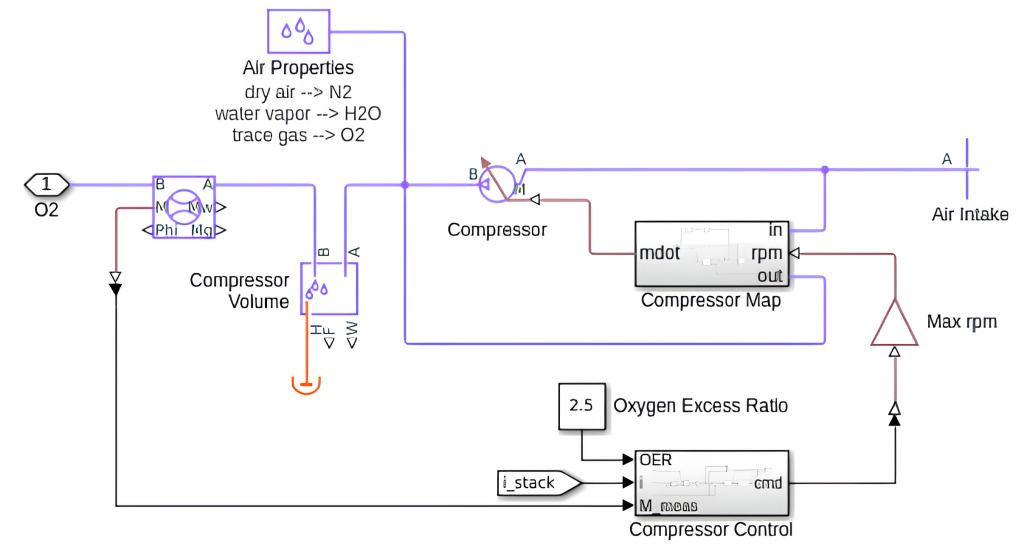 Oxygen supply scheme
This technology is of particular interest for freight transport due to the ability to combine electric propulsion with rapid refueling and high energy capacity. That is precisely why researchers view hydrogen fuel cells not as a universal alternative to batteries, but rather as another option for electric powertrains.
"We view hydrogen fuel cells not as a replacement for batteries, but as a complement to them—specifically for applications requiring long range and rapid refueling. Our goal is to develop a viable, scalable domestic technology for freight transport," notes Sergey Vorobyov.
The study begins with a digital model
A significant portion of the work is currently carried out using computer modeling. Within the ENGEE environment, specialists create models of automotive fuel cell systems, investigate electrochemical processes, and calculate mass and energy balances.
Researchers must determine the optimal configuration of the powertrain for effective operation within a truck. To this end, various layout options are being evaluated, and prototypes of vehicle modifications are being developed.
Another important task is to assess the environmental impact of switching to hydrogen fuel. To this end, an analytical model is being developed to determine changes in environmental impact associated with the use of fuel cells in wheeled vehicles, taking into account operating conditions in large cities.
Thus, the research integrates several areas—ranging from the study of processes within the fuel cell to vehicle design and the assessment of its operational characteristics.
From modeling to testing
Moving forward, the developers plan to proceed to the next stages of the project. In particular, they will develop fuel cell stack models for commercial vehicles and onboard storage systems for alternative fuels.
Particular attention will be paid to the operation of hydrogen systems in cold climates. Researchers plan to develop a method for regulating fuel systems using phase-change materials.
Based on the results of the work, it is also intended to develop scientific and methodological approaches to evaluating the operational characteristics of freight vehicles powered by alternative fuels and hybrid powertrain systems.
The final stage is to involve operational testing of fuel-cell-powered freight vehicles. The results obtained may be used in the future design of alternative-fuel trucks, the development of hybrid powertrains, and the creation of fuel storage systems.
The research continues SPbGASU’s work in the fields of modern transport technologies and alternative energy, combining scientific modeling, engineering design, and the prospect of developing domestic solutions for freight transport.
This news item is published based on the results of a 2026 SPbGASU grant project.