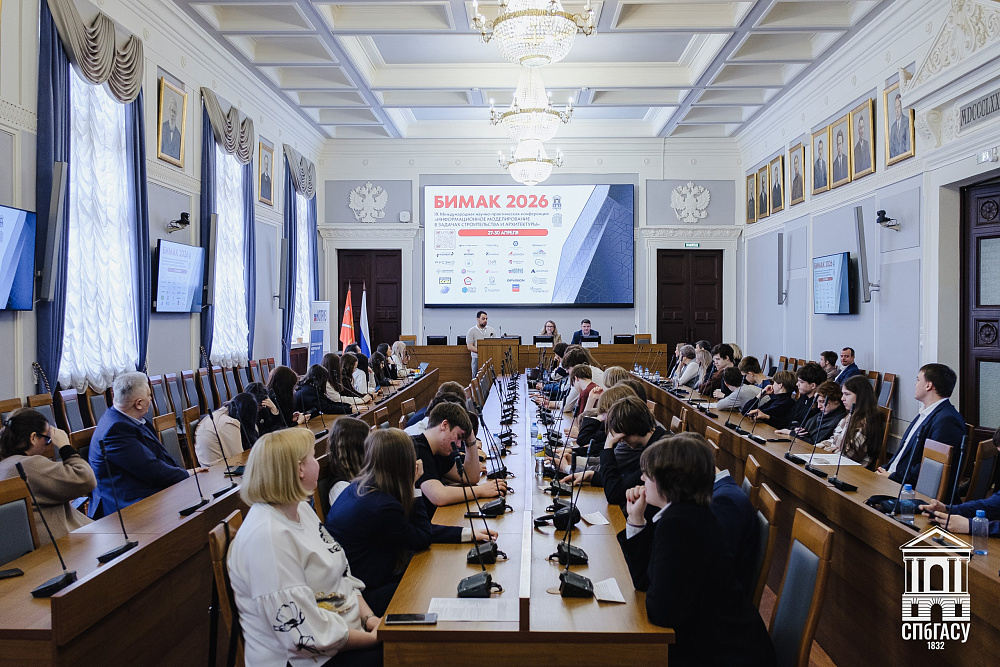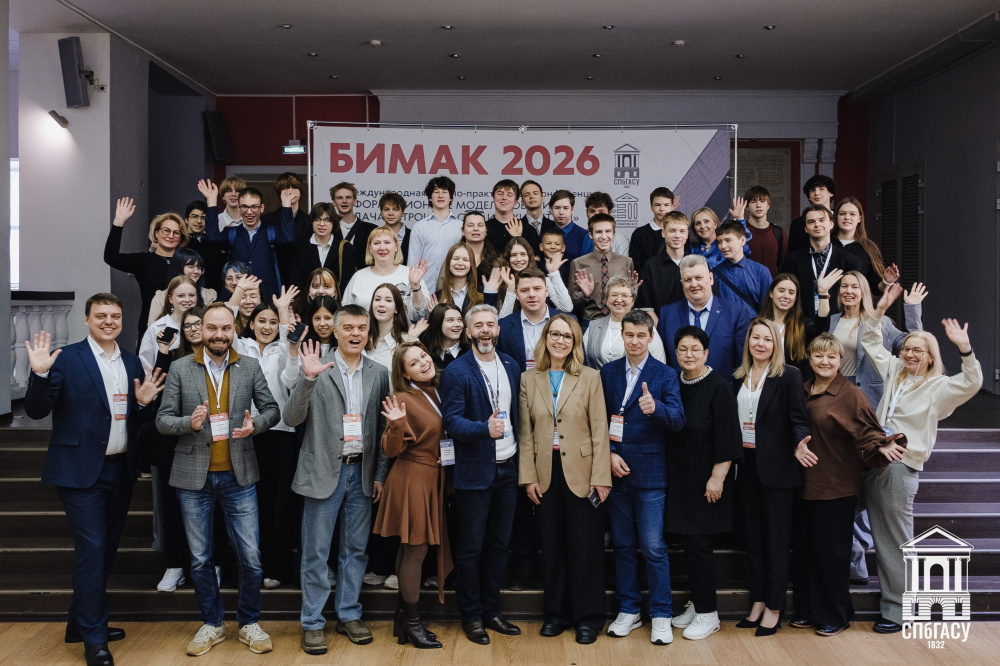
The Saint Petersburg State University of Architecture and Civil Engineering held the section "Seamless Education in Information Modeling Technologies (School – College – University – Employer)" as part of the BIMAC-2026 conference. Participants discussed how to build a continuous system for training specialists for the digital construction industry, from school to professional development.
The key issue was the development of a sustainable educational trajectory that would enable future specialists to consistently master competencies in the field of TIM and adapt to rapidly changing technological conditions.
Gapless education: from school to profession
Viktoria Vinogradova, SPbGASU Vice-Rector for Continuing Education, delivered the keynote address. She presented a model of "seamless" education, based on the integration of all levels of training—general, secondary vocational, higher, and continuing education—into a single system.
According to her, this model allows students not only to develop the necessary digital competencies, but also to build a clear career path from the first encounter with a profession to entering the job market.
A special role in this system is played by additional education, which acts as a link between the levels of training. It performs several functions at once: career guidance for schoolchildren, attracting applicants, developing competencies, and building interaction with industrial partners.
Engineering classes and early career guidance
One of the most important tools of the “seamless” model are engineering classes, implemented by SPbGASU together with schools and industrial partners. Within such classes, schoolchildren receive basic knowledge in the field of information modeling, master digital tools and perform practical tasks.
The training includes online lectures, practical exercises, testing, and project work supervised by university teachers and students. A key feature is the focus on real-world industry challenges, allowing students to immerse themselves in the professional environment early on. Furthermore, students have the opportunity to master their first working profession, making the career guidance not only introductory but also practical.
During the section, participants discussed various approaches to early career self-determination and the interaction of educational institutions with employers. Vladislav Ruzavin, representing MAVIS company, shared the industry's perspective on the key challenges of seamless education, and Anna Klimushina from the Center for Advanced Professional Training (CAPT) of St Petersburg spoke about the development of a vocational training system for schoolchildren in the city's construction industry.
Ekaterina Larionova (Atomenergoproekt) also shared her experience in implementing career guidance initiatives. She presented the TIM-Junior project, which aims to train future engineers.
Practical examples of integrating digital tools into school education were presented by Oleg Sukhorukov and Veronika Pryuts from School No. 347 in the Nevsky District of St Petersburg. They showed how the use of the Russian-made Renga system helped students to move from traditional drafting to modern TIM technologies.
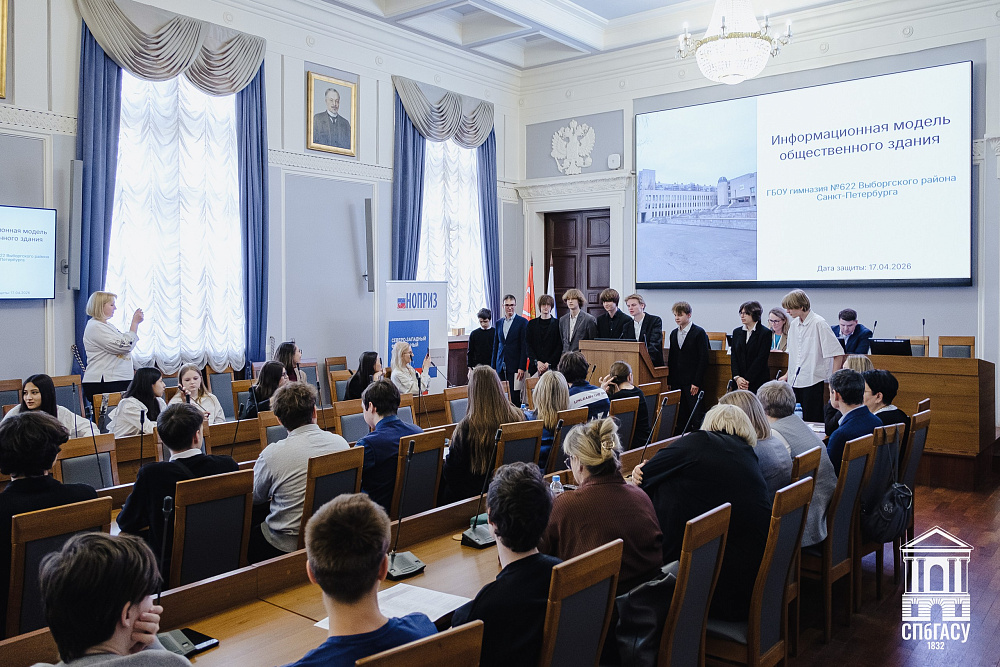
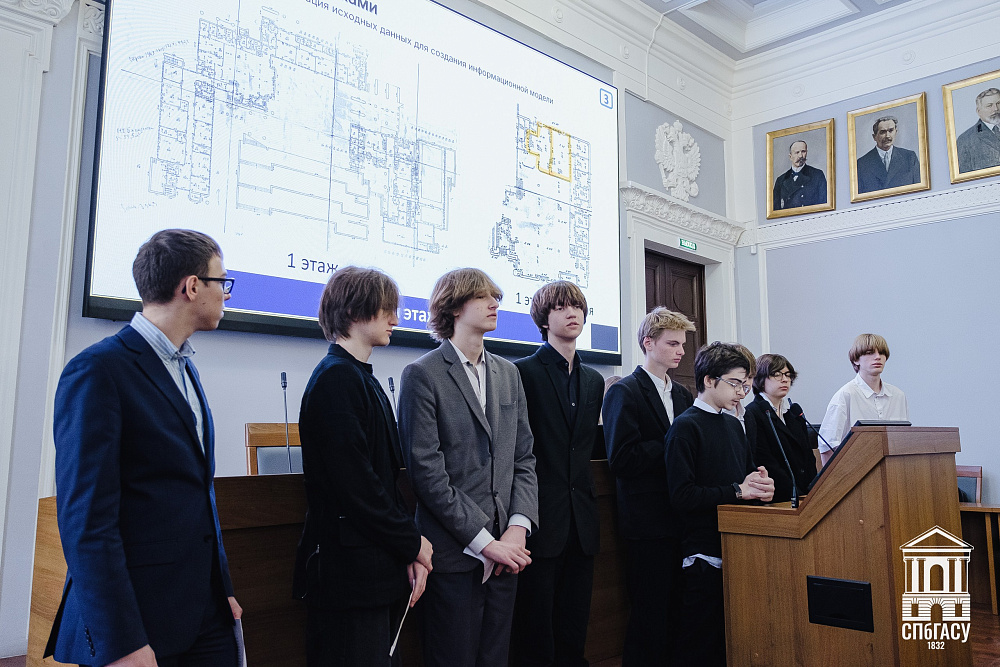
Students from Gymnasium No. 622 in the Vyborg District demonstrated a digital information model of their own school, created as part of a team project. This example showed that the level of training for students in the field of TIM could already be comparable to that of students.
Leonid Shelkovnikov (Kairos Engineering) and Svetlana Khachatryan (School No. 7, Feodosia, Republic of Crimea) spoke about the development of the project outside the Northern capital, presenting their experience in implementing digital construction classes in Crimea – a joint project of SPbGASU, Kairos Engineering, Renga Software and the school.
SPbGASU students Sofia Aleksandrova and Gleb Gorbunov shared their personal experiences participating in the university's educational initiatives. Sofia spoke about how she began her teaching career as a student, and Gleb described how studying in a digital construction class helped him master the university curriculum.
Practice, championships and interaction with the industry
Educational and competitive formats are becoming an important part of the system. As Viktoria Vinogradova noted, participation in TIM championships and Olympiads helped develop practical skills and identify and support talented students and schoolchildren.
Such events build additional motivation and provide an entry point into the profession through solving real-world engineering problems. They also serve as a tool for engaging with employers, giving them the opportunity to become involved in the educational process at an early stage.
The report placed significant emphasis on collaboration with industrial partners. They shape current requirements for specialist competencies and participate in the development of educational programs, ensuring their practical focus.
A separate section was devoted to issues of secondary vocational education and the role of employers in training personnel for the digital construction industry.
Polina Fedyuchek, Deputy Director for Development of the SRO "OsnovaProekt" Association and Director of the branch of the corporate department of the Ministry of Construction of Russia at St Petersburg State University of Architecture and Civil Engineering, noted that achieving digital sovereignty in construction is directly linked to the mass training of specialists who're confident in using domestic software.
According to her, one of the key tools for this training was the "TIM-Elective. SVE League" project. In 2026, over a thousand applications from 39 colleges across the country were received for participation in the program, and 165 teachers received advanced training.
The discussion also touched on the possibility of involving colleges participating in the project in developing digital construction classes in the regions. This approach allows for the creation of a unified educational ecosystem, from schools to employers.
Regional practices for implementing TIM in the secondary vocational education system were presented by Aleksandra Ryabenko (Rostov-on-Don), Alena Gatsenbiller (Novosibirsk), and Artur Erendzhenov (St Petersburg). The speakers discussed developing students' digital competencies, integrating TIM technologies into professional skills competitions, and increasing student motivation.
In addition, representatives of specialized companies, Alisa Bolshakova (Stratus) and Nikolay Samopal (WIZARDSOFT), also gave presentations.
A practical example of university-business collaboration was presented by SPbGASU students Sofia Biryulya and Eva Podyacheva, together with Dmitry Sergeev from the Setl City architectural bureau. They demonstrated a BIM design for a high-rise residential building in St Petersburg, completed in accordance with the requirements of the Setl Group holding company.
Career trajectory and training of next-level specialists
The report concluded that a "seamless" education model could address several challenges at once: narrowing the gap between education and market demands, increasing student motivation, and providing the industry with specialists prepared to work in a digital environment.
The system being developed gives students the opportunity to consistently progress through all stages of training, accumulating competencies and experience, and building an individual educational and professional trajectory.
Outcomes
The section demonstrated that training personnel for the digital construction industry required a comprehensive approach and close collaboration between schools, colleges, universities, and employers.
Participants agreed that seamless education is becoming a key condition for the successful digital transformation of the industry. By implementing this model, SPbGASU is developing a system for training specialists capable of working effectively in the context of information modeling technologies and developing the construction industry of the future.