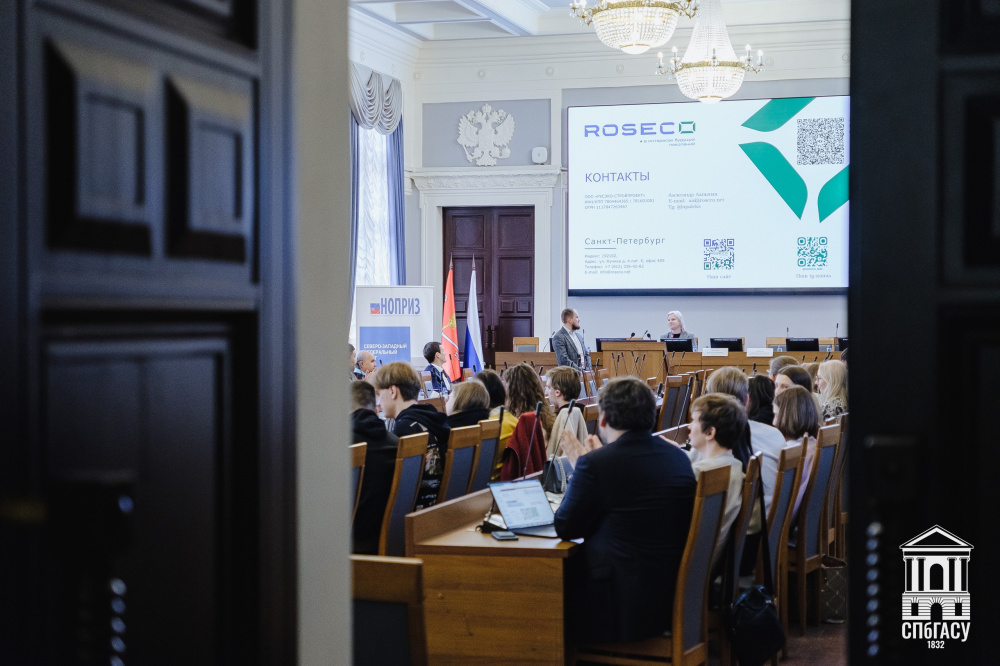
The "Digital Restoration of Cultural Heritage Sites" section was held at the St Petersburg State University of Architecture and Civil Engineering as part of the BIMAC-2026 conference. The topic covered the use of TIM technologies, laser scanning, and digital models in preserving the historical environment.
The moderators were Acting Head of the SPbGASU Department of Geodesy, Land Management and Cadastre Yana Volkova and General Director of RUSEKO-STROYPROEKT LLC Aleksandr Lapygin.
From data to knowledge: a systems approach to heritage
Aleksandr Lapygin delivered the keynote address, outlining one of the industry's key challenges: data loss at various stages of an asset's lifecycle. "We need to break the cycle of data loss and learn how to transfer it throughout the asset's lifecycle, creating digital archives accessible for future use," he noted.
According to the expert, despite the availability of modern technologies, the key barriers remain the lack of a regulatory framework for data transfer, a lack of infrastructure for storing large volumes of information, and insufficient interdepartmental cooperation.
Aleksandr Lapygin paid special attention to the problem of storing point clouds: since the volume of data for a single object can reach several terabytes, this requires significant computing resources and a systematic storage organization.
The speaker emphasized that the digital model of a cultural heritage site should be considered as a multi-layered system, including not only geometry, but also historical, legal, and operational context.
Practice: TIM modeling and real projects
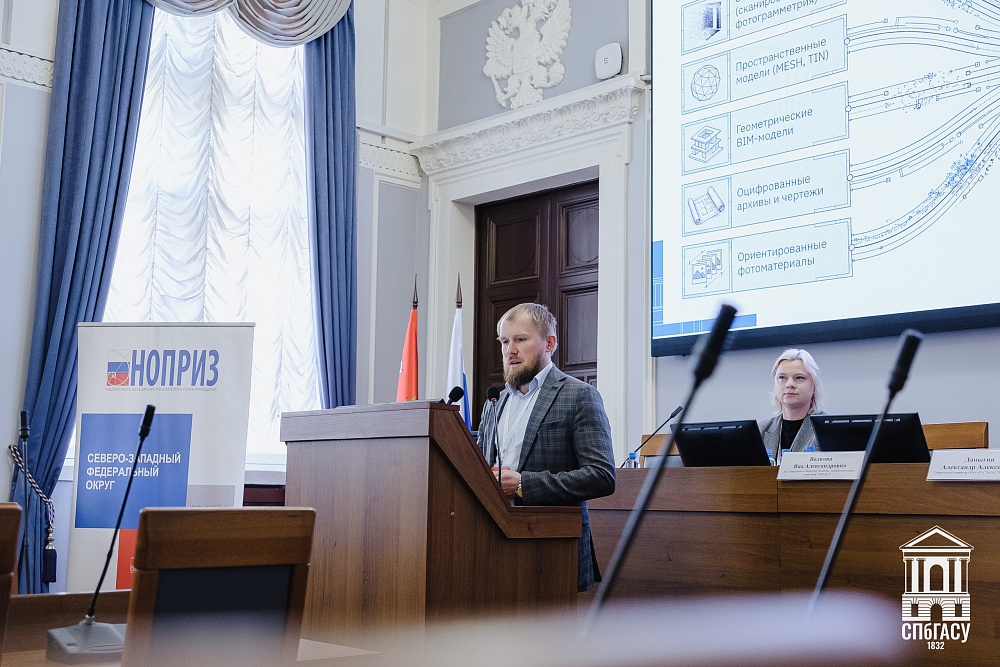
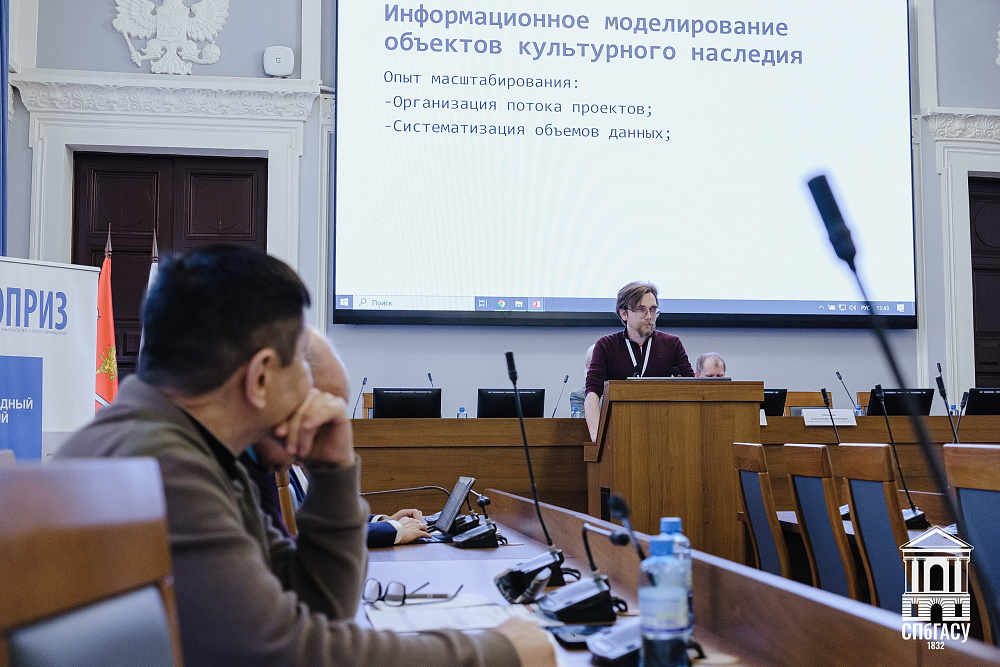
Ivan Krivorotenko, a representative of ASK-Nord LLC, spoke about the applied aspects of work, presenting a report entitled “BIM modeling algorithms and workflows using examples of objects.”
He discussed in detail the organization of project activities within the company and noted that key tasks include systematizing large volumes of data, establishing effective interaction between architects and modelers, and creating internal methods for working with unique objects.
The speaker noted the difficulties of modeling cultural heritage sites where standardization is lacking: “Each site is one-of-a-kind, and standard approaches don’t work here—processes have to be adapted to a specific project.”
As examples, he demonstrated digital models of the roof of the General Staff Building in St Petersburg, the Solovetsky Monastery hermitage, and the Alexander Metochion complex.
The speaker noted that in a number of cases, TIM modeling became the only way to collect disparate data into a single system and obtain a holistic view of the object.
Other speakers in the section
The following also took part in the section:
- Dmitry Chekhlov, computer graphics artist, publicist, expert in CAD and DCC solutions, with a report on the experience of reconstruction and visualization of historical objects;
- Oleg Chernetchenko, representative of B.C.C. LLC, reported on the topic of preserving documentation in paper and digital form;
- Aleksandr Vysotskiy (Vysotsiky consulting), who spoke about the implementation of projects for digital models of cultural heritage sites;
- Andrey Chumanov (SiSoft Development), whose report was devoted to the modeling of wooden architecture elements;
- Ivan Kushnir (LLC "RV"), who spoke about 3D scanning in the restoration of architectural monuments;
- Sharip Isaev (St Petersburg Polytechnic University), whose presentation was devoted to the TIM approach to the preservation of cultural heritage.
Outcomes
The section demonstrated that digital restoration was reaching a new level: technologies allowed for the creation of highly accurate models of cultural heritage sites, but their effective use required a systematic approach, a regulatory framework, and the development of a data storage infrastructure.
Participants emphasized that the integration of digital solutions into restoration practices would ensure the long-term preservation of historical heritage.
In 2026, SPbGASU will begin recruiting applicants for a new program, "Restoration of Buildings and Structures", within the 08.03.01 Civil engineering field of study. The program is aimed at training in-demand restoration engineers. The educational program for the Restoration of Buildings and Structures (RBS) relies on modern information modeling technologies in most disciplines, fully ensuring the acquisition of relevant competencies, including 3D modeling of restoration projects, information technology in design and calculation solutions, engineering and security life support systems for facilities, laboratory research, and in-kind surveys of cultural heritage sites.