 Andrey Surovenkov
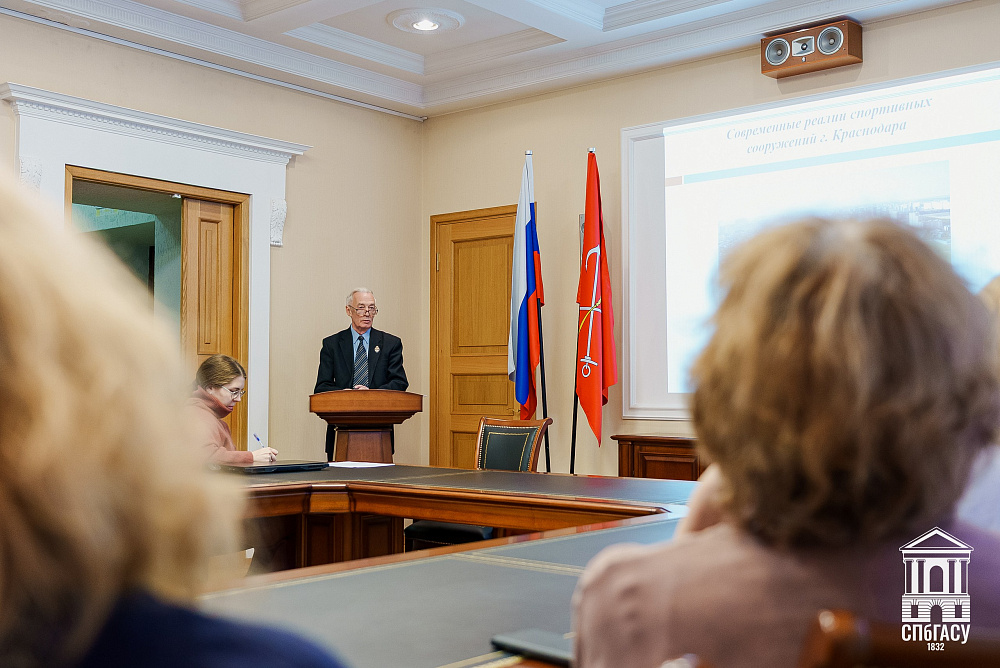
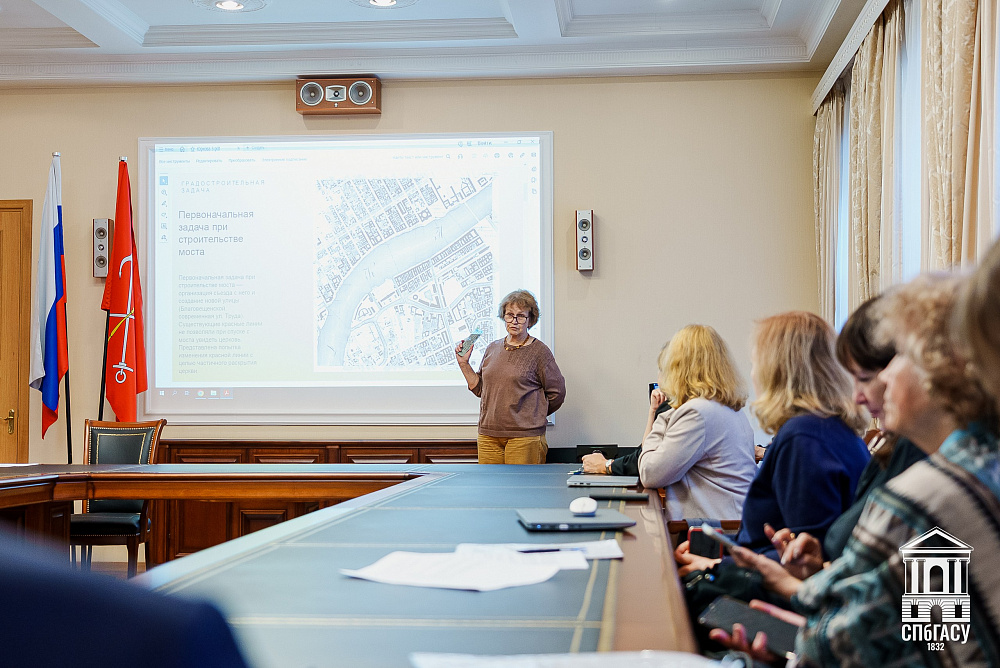
On 5 November, the XI National (All-Russian) Scientific and Practical Conference, "Current Issues in the History and Theory of Architecture," began at the Saint Petersburg State University of Architecture and Civil Engineering. The event is organized by the SPbGASU Department of the History and Theory of Architecture and will span two days.
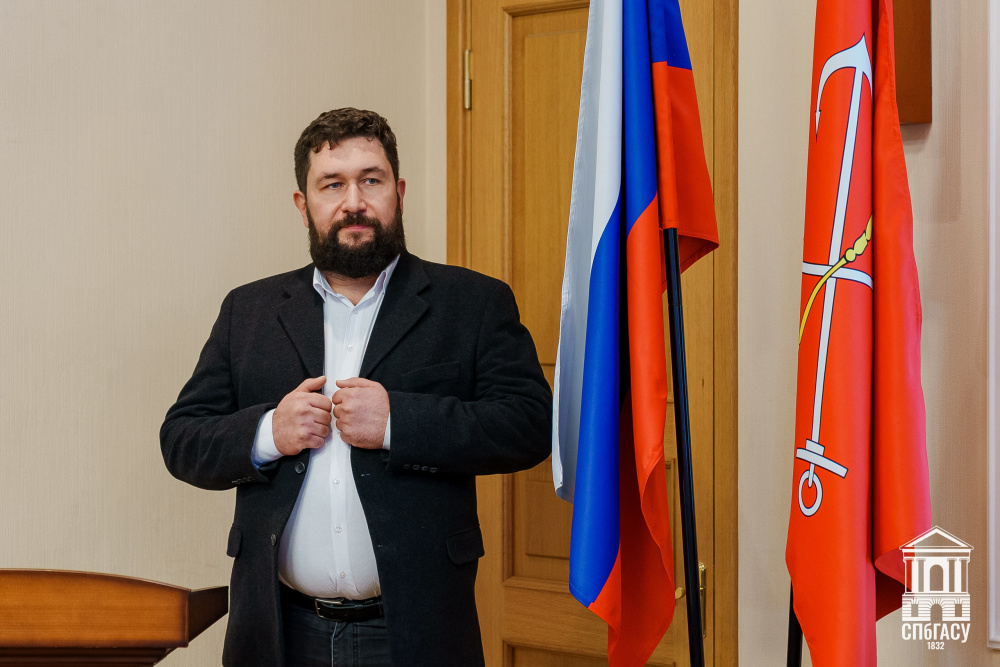
The conference was opened by the executive secretary of the organizing committee, Anastasia Bergman, PhD of Architecture, an associate professor at the Department of the History and Theory of Architecture. After welcoming the participants, she handed the floor to the chair of the organizing committee, Andrey Surovenkov, PhD of Architecture, Dean of the SPbGASU Faculty of Architecture.
In his remarks, Andrey Viktorovich thanked the organizers and participants for their interest in the conference, emphasizing that it is significant not only for the Department of History and Theory of Architecture and the Department of Architectural Heritage, but also for the university as a whole.
He noted that contemporary architecture is rapidly evolving under the influence of new technologies, such as digital and parametric modeling, the creation of digital building models, laser scanning of historical monuments, and the application of artificial intelligence. At the same time, the development of the professional field is impossible without an understanding of its historical and theoretical foundations.
According to the dean, it is important to understand why architectural monuments and entire cities were created in the way they were—what social and historical processes shaped the architectural and urban planning decisions, and how those very decisions, in turn, influenced society. The history of architecture reveals the interconnections between these processes, while architectural theory helps explain the forms that emerged and provides a basis for forecasting the future development of the built environment. In closing, he wished the participants a productive experience, the opportunity to forge new professional connections, engaging presentations, and substantive discussions.
Tatiana Zhukova, PhD of Architecture, Head of the SPbGASU Department of History and Theory of Architecture, served as Deputy Chair of the Organizing Committee.
The conference program covers a wide range of topics related to the history and theory of architecture, the preservation of architectural and urban heritage, and the development of the urban environment. Researchers will present papers on the evolution of historic areas, the characteristics of contemporary development in historic cities, reconstruction and renovation, the adaptation of cultural heritage sites for new functions, and the integration of modern architecture into an established urban fabric.
The topics of the presentations include the evolution of the historical environment in Vyborg, a sustainable development strategy and master plan for the Azov Sea region, the architecture of sports facilities in Krasnodar, the preservation of the Church of the Transfiguration at the Kizhi Pogost, the height profile of Krasnodar’s historic center, and the architectural reintegration of historic buildings in the Donetsk People’s Republic. Furthermore, participants are examining the architectural heritage of Magnitogorsk, the development of public spaces in St Petersburg, tourism-related architecture in Tyumen and Tobolsk, the preservation of Soviet modernism, and other pressing issues.
The conference brings together bachelor's, specialist's, and master’s students, doctoral candidates, young researchers, faculty members, academic staff, and representatives of the professional community. This interaction makes it possible to examine architectural issues from various research and practical perspectives, compare approaches to studying the historical environment, and discuss the potential for applying scientific findings to contemporary urban planning practice.
The participants’ focus is on the role of architectural, urban, historical, and cultural monuments in the modern world. The discussion encompasses not only the preservation of individual heritage sites but also the broader challenge of the sensitive development of historic cities—finding a balance between maintaining the existing urban fabric and the demands of contemporary construction. Equally important is the advancement of architectural science and education, as well as the training of professionals capable of drawing upon historical experience when shaping the future of the urban environment.
The conference continues on 6 November. Its scientific agenda reflects the importance of historical and theoretical knowledge for modern architectural and urban planning processes and emphasizes the role of SPbGASU as a platform for professional discussion of issues of preservation, study and development of architectural heritage.