6 July, 2026, marks the 230th anniversary of the birth of Russian Emperor Nicholas I. His reign (1825–1855) saw the beginning of the Industrial Revolution and unprecedented construction.
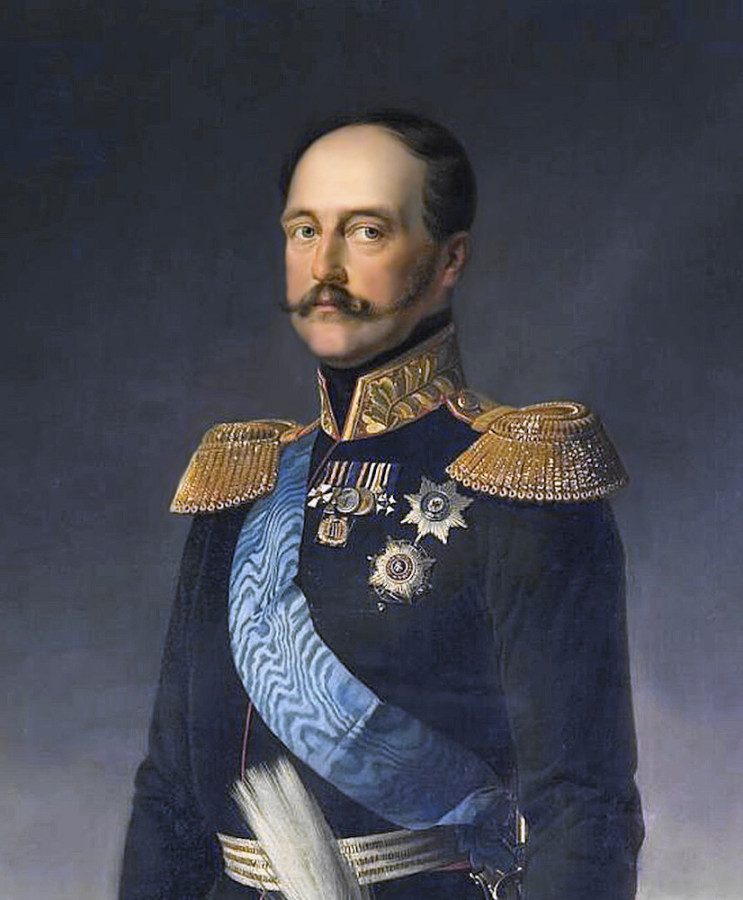 Nicholas I. Artist Egor Botman, 1856
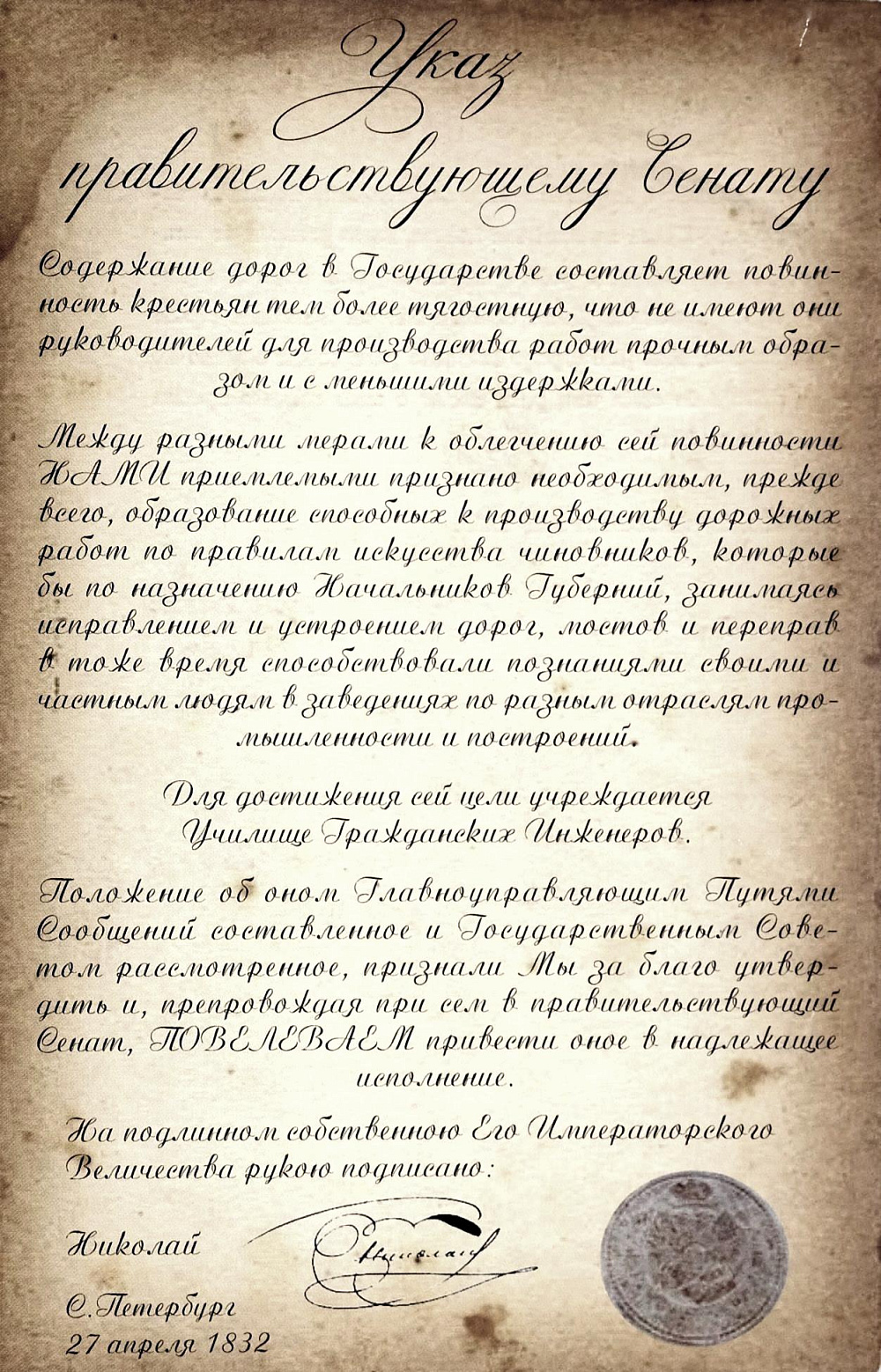
By the mid-19th century, significant development activity in the imperial capital and throughout Russia as a whole was underway, creating a pressing need to increase the number of architects and civil engineers. To train specialists in the art of construction, the School of Civil Engineers was established by imperial decree in 1832. Further, to improve the level of architectural training, in 1842 Emperor Nicholas I signed a decree establishing the Construction School, which merged two educational institutions: the School of Architecture, established in 1830, and the School of Civil Engineers.
The establishment of the Construction School integrated engineering and architectural approaches, laying the foundation for a powerful national school. Graduates of this educational institution possessed universal competencies unique for their time and designed and built most of the iconic structures that fueled the industrial and infrastructural advancement of the Russian Empire.
Having received a thorough military engineering education, Nicholas I personally oversaw the empire's key transportation and architectural projects. Under his direct supervision as Inspector General of Engineering, large-scale construction of major public structures aimed at strengthening state power began.
The Emperor meticulously maintained order in urban development—no significant project was approved without his signature. He always demanded the utmost precision, functionality, and structural strength. Under his supervision, a highly complex system of fortifications was erected. The most striking example is the construction of the mighty forts of Kronstadt, designed to reliably protect the sea approaches to the capital. Under his reign, the majestic architectural ensemble of St Petersburg was formed. The Emperor oversaw the construction of St Isaac's Cathedral (where the dome utilized cutting-edge engineering solutions for the time), the Mariinsky Palace, and the General Staff Building. Attention was also paid to the ancient capital, where the Grand Kremlin Palace, a symbol of the inviolability of Russian statehood, was built under the Emperor's personal supervision.
During the reign of Nicholas I, the construction industry was first codified and placed under strict state oversight. The foundation was laid by the Construction Code of 1832 and the Urban Development Decree of 1836, which established strict regulations and defined the unique appearance of development. The Order on Mandatory Facade Approval of 1851 formalized the practice of mandating the use of state-approved "model" (standard) designs for the construction of residential and public buildings in cities. The emperor also reorganized the industry's governance, creating the Main Directorate of Communications and Public Buildings, which centrally managed all architectural, road, and hydraulic engineering work in the country. The first railways, totaling approximately 1,000 km, and thousands of kilometers of modern highways were built. This laid the foundation for the country's large-scale modernization.
And the first higher educational institution in Russia specializing in architecture and civil engineering, founded by the Emperor-Engineer, now the Saint Petersburg State University of Architecture and Civil Engineering, successfully continues to train architects, builders, restorers, road builders, and engineers who will be tasked with preserving Russia's historical heritage and shaping its future.