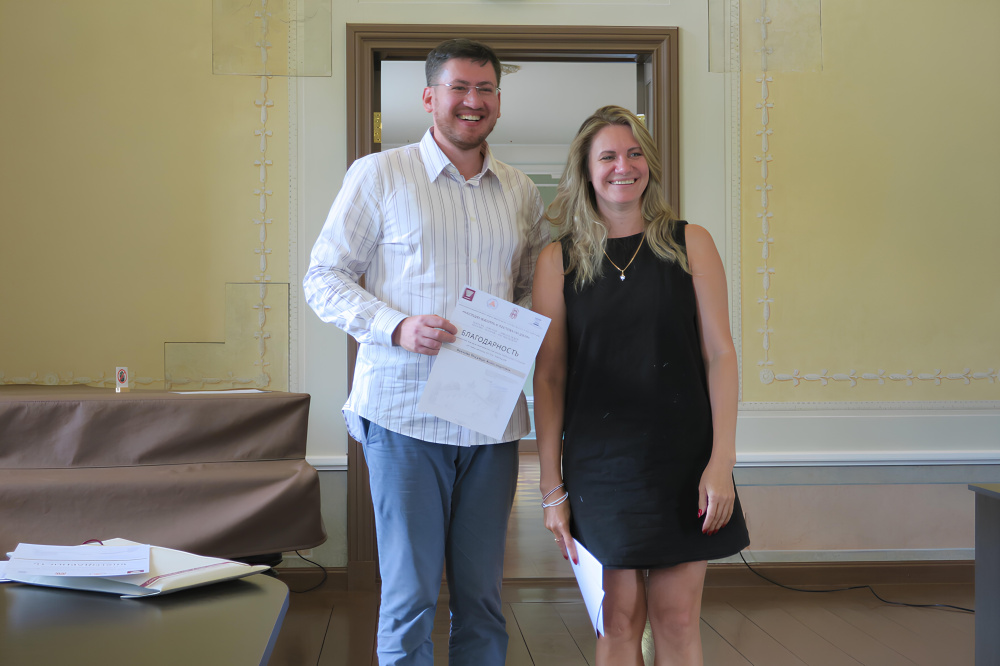
 School leaders Grigory Shapiro (SFedU) and Nadezhda Akulova (SPbGASU)
The St Petersburg stage of the International Summer Scientific and Educational School of Restoration “Heritage of Vyborg and Rostov-on-Don” has ended at the St Petersburg State University of Architecture and Civil Engineering. From 6 to 14 August, participants studied the architectural and urban heritage of St Petersburg and Vyborg and worked on design proposals for the historical territory.
Students from SPbGASU and Southern Federal University (SFedU, Rostov-on-Don), as well as international participants, took part in the school. Nadezhda Akulova, Head of the SPbGASU Department of Architectural and Urban-Planning Heritage, noted that international participants showed great interest in the program, and the collaboration proved productive. "Both the process and the outcome exceeded expectations: the students showed tremendous interest, and there was 100% engagement from everyone involved," she said.
Exchange of experience between schools
One of the program's primary objectives was the professional and methodological exchange between the Leningrad (St Petersburg) and Rostov (Southern) schools of restoration.
Participants familiarized themselves with the approaches used in St Petersburg for managing architectural and urban planning heritage, while also having the opportunity to exchange experience with representatives of the southern school.
According to Nadezhda Akulova, this plan was realized. In particular, a representative of the restoration department of the Academy of Architecture and Arts of the Southern Federal University noted that during the school he received new professional and methodological knowledge, which he plans to apply in his educational work.
"The program aimed, among other things, to facilitate an exchange of methodological skills and approaches between two schools of restoration: the southern school and our own—the Leningrad, or, of course, now the St Petersburg school. And that was achieved," noted Nadezhda Aleksandrovna.
The formation of mixed teams was also a significant outcome. Students from different years of study, cities, and countries worked together, supported one another, and united around shared project tasks.
Principles of the Leningrad School
A significant part of the program was dedicated to exploring the principles of the Leningrad School. Participants studied cultural heritage sites of regional and federal significance—including those undergoing restoration—as well as objects of decorative and applied art that may form part of protected historical sites.
Particular attention was paid to the contextual approach and the preservation of the integrity of historically significant areas. As part of the program, participants examined the interrelationship between the historic center and the suburban zone, as well as the specific aspects of working with both individual structures and the historic urban environment as a whole.
"The core component involves immersing oneself in the specifics of the Leningrad school of restoration. This encompasses cultural heritage sites of regional and federal significance, distinct approaches and areas of focus, and the connections between the city, its historic center, and the suburban areas—such as Vyborg and Rozhdestveno," explained Nadezhda Akulova.
Participants immediately applied the knowledge they gained to their project work. Within a limited timeframe, they had to immerse themselves in the material, study the site, and prepare proposals based on the data collected.
Four concepts for Vyborg
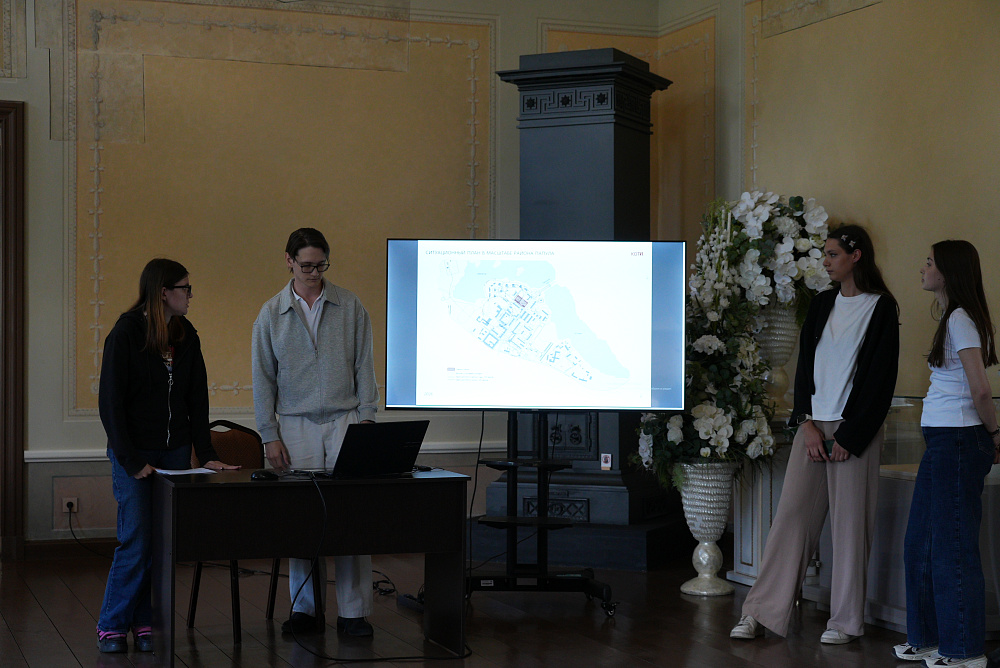
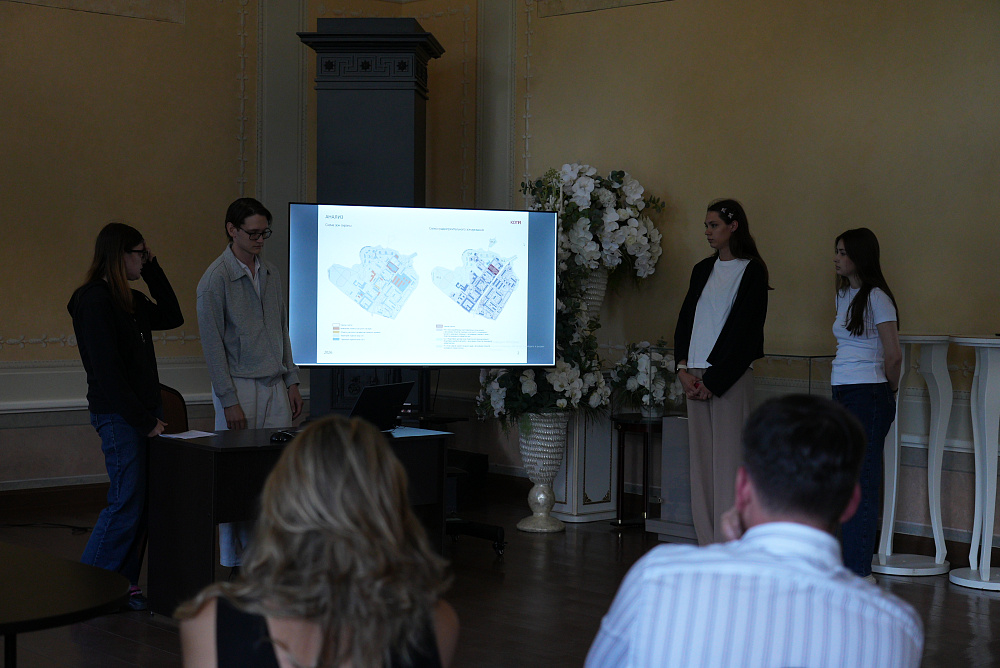
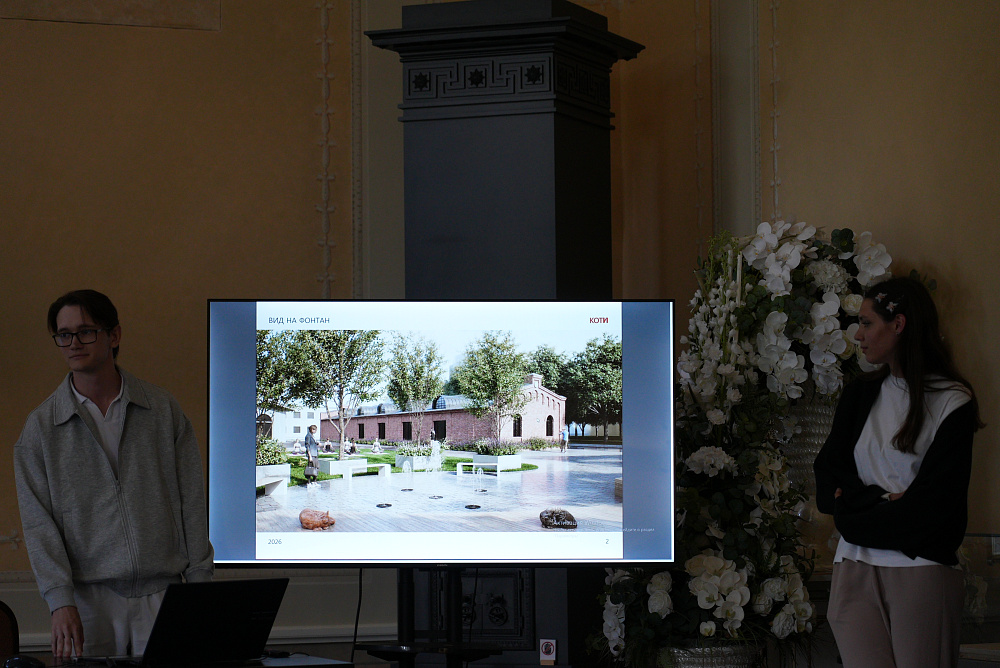
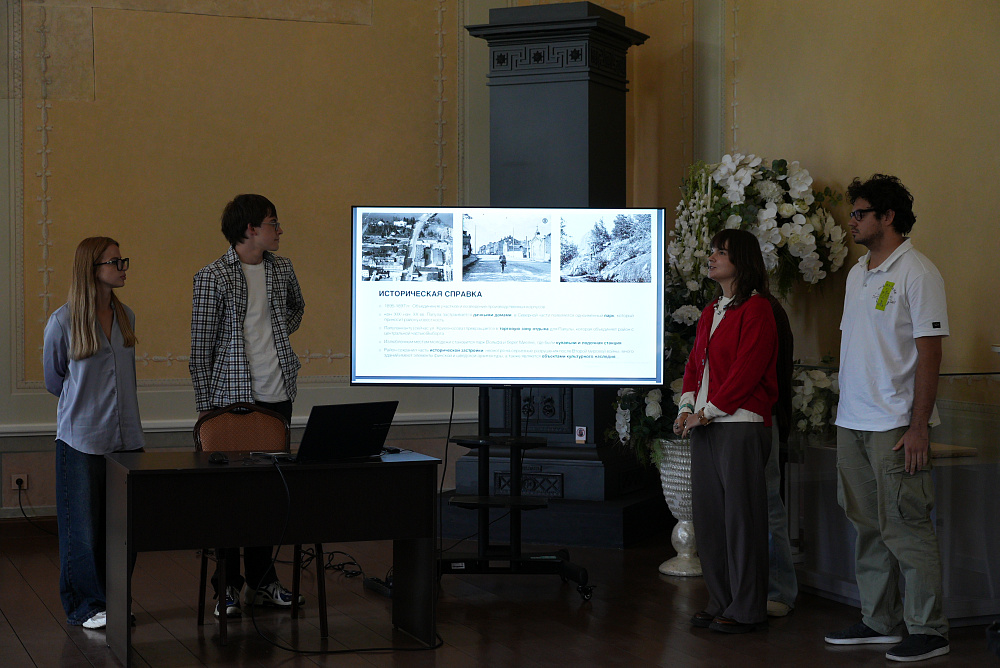
The St Petersburg stage of the school culminated in mixed teams working on a conceptual reimagining of Vyborg’s historic territory.
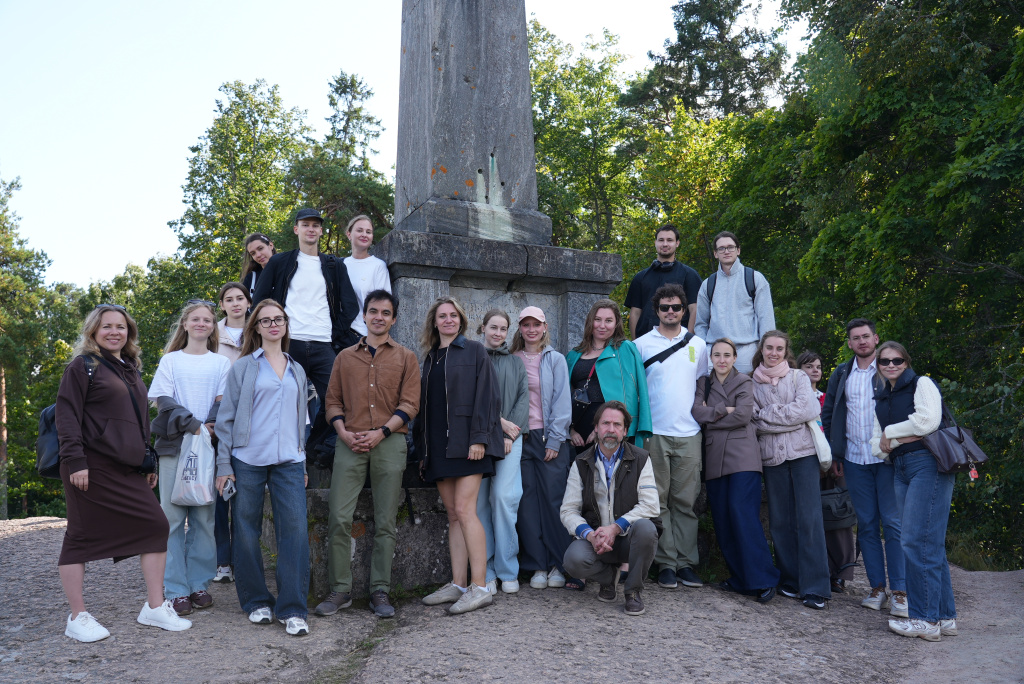 School participants in Vyborg
Four groups presented four different approaches to developing the space. The first team proposed the most modern and radical solution, featuring the active introduction of new elements. The second developed a more open public space. The third focused on public space and family values. The fourth presented the most restrained and delicate option, involving minimal intervention in the historical setting.
Thus, the participants proposed various scenarios for approaching the site—ranging from a bolder, contemporary reinterpretation to a maximally sensitive approach.
Representatives of the Vyborg city administration took part in the work, helping to select the site for the design project. Grigory Svetnik, Chief Architect of the Vyborg Municipal District, noted that the participants managed to gain a deep understanding of the subject matter in a short time and prepare substantive design proposals.
Upon completion of the project work, plans are in place to compile an album showcasing the proposed concepts. According to Nadezhda Akulova, this material will enable discussions on the territory's future development to move beyond general ideas and focus instead on concrete design solutions. "These conceptual solutions are precisely what should be discussed—not merely in abstract terms, but in a substantive manner, grounded in the specific environment and based on concrete proposals," she emphasized.
To be continued in Rostov-on-Don
The St Petersburg stage marked the first part of the school. In late September or early October, the participants will gather again, this time in Rostov-on-Don.
Work will continue in the same mixed teams. This time, the project tasks will be prepared by instructors from the Southern School of Restoration at Southern Federal University, under the guidance of Natalia Chemerisova and Grigory Shapiro.
Participants will immerse themselves in the architectural and urban environment of Rostov-on-Don and its surrounding areas. One of the project tasks will involve working on a site in Novocherkassk, near Cathedral Square.
Summarizing the St Petersburg leg of the event, Nadezhda Akulova noted that the participants not only gained new professional knowledge but also established genuine teamwork: "Mutual exchange and 'cross-pollination' represent the future of a high-quality professional sector. By the time they parted ways, the participants were no longer just separate groups but cohesive teams; they supported and helped one another. The feedback we received shows they are grateful for this exchange and the experience."
Other materials on the International Summer School on Restoration