Researchers at Saint Petersburg State University of Architecture and Civil Engineering have proposed a new approach to assessing road safety that takes into account the emergence of highly automated vehicles (HAVs). The study was authored by Alyona Kolomeets, a Senior Lecturer at the SPbGASU Department of Land Transport and Technological Machines.
The work is based on the "RU–HAV–R–E" dynamic system, which integrates the road user, the highly automated vehicle, the road, and the environment. This approach makes it possible to account for changes in the risk of hazardous situations during the transfer of control between the automated system and the human driver, as well as changes in road and weather conditions, traffic intensity, and other factors.
A key stage of the study was an experiment involving 170 participants—driving school students from St Petersburg and novice drivers with experience operating highly automated vehicles. On a closed course, participants performed tasks simulating typical traffic scenarios: navigating intersections and pedestrian crossings, changing lanes, and taking over control from the automated system.
Researchers recorded reaction and control-takeover times, error patterns, movement trajectories, and other metrics. The data obtained made it possible to identify the factors most frequently leading to hazardous situations, as well as the differences between driving school students and novice drivers.
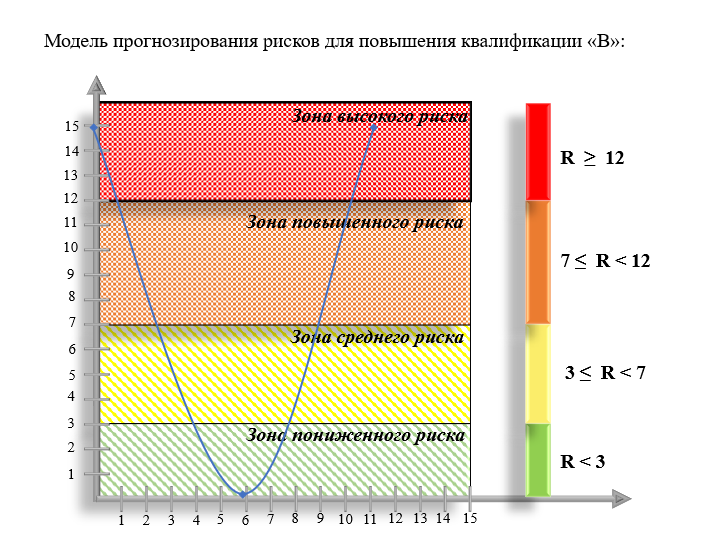
Based on the results of the experiment, a "risk prediction model for driver skills enhancement" was developed and tested. It enables the identification of skills requiring further practice and the creation of an individualized training pathway. Following targeted training, the number of errors made by the experiment participants decreased by 27%.
"The advent of highly automated vehicles does not absolve the human of responsibility for safety; rather, it changes the nature of their involvement in traffic. Our task is to learn how to assess road safety by taking into account exactly how the driver interacts with the automated systems, and—based on this—to prepare drivers for these new conditions," says Alyona Kolomeets.
The study results can be applied to road design and safety audits, as well as to the development of driver training and professional development programs. Future plans include expanding the participant sample, supplementing the system with data from vehicle onboard systems, and developing a software tool for the practical application of the model.
The study was conducted under a grant for research activities to be carried out by academic staff of SPbGASU in 2026.