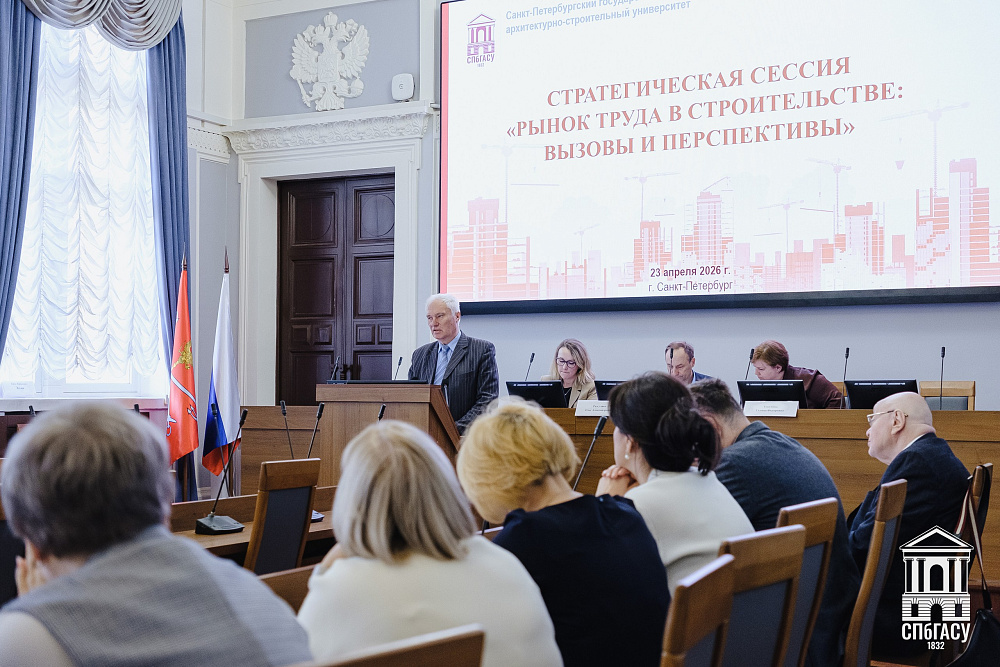
 Speech by Viktoria Vinogradova
On 23 April, the Saint Petersburg State University of Architecture and Civil Engineering opened the IV National (All-Russian) Scientific and Practical Conference with International Participation, "Current Issues of Economics and Management in Construction". The event brought together representatives from government agencies, the construction industry, educational institutions, and the scientific community.
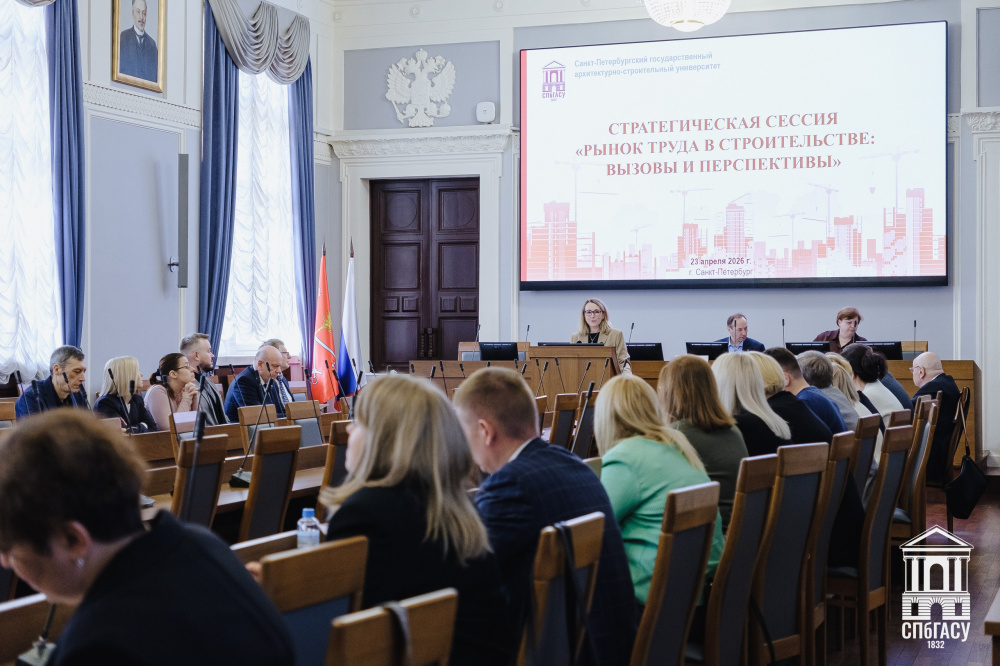
The key event of the first day of the conference was the strategic session "The Construction Labor Market: Challenges and Prospects."
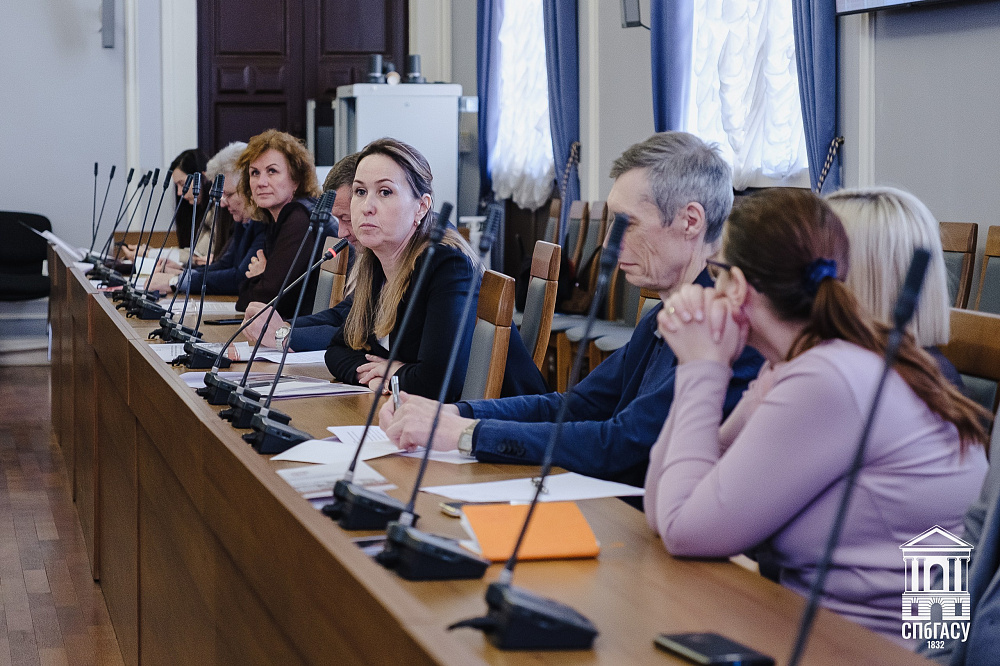
The presidium included the SPbGASU Vice-Rector for Continuing Education, PhD of Economic Sciences, Associate Professor at the Department of Construction Economics and Housing and Utility Infrastructure Viktoria Vinogradova, Dean of the SPbGASU Faculty of Economics and Management, DSc in Economics, Professor Galina Tokunova, as well as the Chairman of the Subcommittee on Construction Materials of the Committee on Engineering of Architectural and Construction Design of the National Association of Designers and Surveyors (NOPRIZ), Vice-President of the Non-Profit Partnership "Association of Manufacturers of Construction Materials" Oleg Razgulyaev.
Viktoria Vinogradova addressed the participants with a welcoming speech. She noted that the topic under discussion required an interdisciplinary approach and the combined efforts of all industry participants: "The construction labor market is currently undergoing a major transformation, and sustainable development directly depends on our decisions. Our task is to develop comprehensive solutions that define strategic directions for the industry's development, taking into account modern challenges and national priorities."
Viktoria Vinogradova emphasized that the key objectives of the strategic session were to improve coordination between the government, business, and the education system, develop mechanisms for forecasting labor needs, and enhance the attractiveness of construction professions. A final resolution outlining specific initiatives and steps was proposed as a practical outcome of the session.
A comprehensive view of the HR agenda
The strategic session focused on several areas: analysis of the current state of the labor market, the impact of technological and institutional factors, the HR policies of construction organizations, and the development of the education system.
Participants noted that the industry was facing conflicting trends. On the one hand, there is intense competition among job seekers, particularly among management personnel. On the other hand, there remains an acute labor shortage, which, according to expert estimates, reaches 20-30 percent of construction organizations' needs.
Labor shortages and the role of migration
One of the central topics of discussion was the shortage of skilled workers. Representatives of educational institutions emphasized that employers are increasingly requesting skilled workers, while the secondary vocational education system is primarily focused on training mid-level specialists.
A significant portion of the labor shortage is compensated for by foreign labor. However, employers are faced with stricter immigration policies and the need to formally employ and adapt foreign workers.
Particular attention was paid to issues of language and cultural adaptation, as well as risks associated with the organization of work on construction sites.
The problem of professional prestige
The discussion participants agreed that one of the key reasons for the labor shortage was the low attractiveness of construction professions among young people. Despite high salaries in some specialties, graduates are often unprepared for work on construction sites and prefer more comfortable working conditions.
Career guidance and youth work
Particular attention was paid to early career guidance. Participants discussed the development of specialized classes, the collaboration between schools, colleges, and universities, and employer participation in educational projects.
During the discussion, career guidance programs and excursions, student participation in practical activities, promotion of the profession through modern formats, including social media, and, as a result, the formation of a positive image of the builder as a creator were recognized as effective ways to engage young people in the profession.
Experts also highlighted the need to work with parents as an important factor in choosing a profession.
Demand for practice-oriented education
Representatives of educational institutions identified the need to attract practicing teachers and develop internships at enterprises. This is necessary to update educational programs and improve the quality of specialist training.
Employers, in turn, are interested in closer cooperation with universities and colleges, including participation in personnel training and the development of educational trajectories.
Need for systemic solutions
During the discussion, it was noted that existing problems required a comprehensive approach. Key areas include:
-
development of a system for forecasting personnel needs;
-
strengthening interaction between government, business and education;
-
increasing the prestige of construction professions;
-
creating conditions for retaining young specialists in the industry.
Following the strategic session, it is planned to prepare a resolution that will set out key agreements and areas for further work.
Participants expressed confidence that the solutions developed would contribute to the development of human resources in the construction industry and strengthen its role as an economic driver.