Yury Tsvetkov, PhD of Economic Sciences, Associate Professor at the Department of Construction Economics and Housing and Utility Infrastructure, has completed a study on reducing information asymmetry in the public construction procurement market through digital technologies. The project was carried out with the support of an internal SPbGASU research grant.
The problem of information asymmetry arises when a public client is unable to fully assess a contractor's actual capabilities. Consequently, reputable companies may lose out in competitive bidding processes, and the selection of a contractor does not always ensure the minimization of risks during the execution of a construction project.
According to the study, 19.4% of government construction contracts were terminated in 2025 for various reasons, while approximately 10% of procurement procedures failed due to a lack of bids. Moreover, in about 80% of cases, the auction winner is determined solely based on the lowest price, without a comprehensive assessment of their qualifications and capabilities.
How to identify a reliable contractor
As part of the research project, Yury Tsvetkov analyzed a dataset on contracting organizations for 2024. Using machine learning methods, a predictive model was developed to identify the factors influencing the likelihood of the successful execution of a government contract.
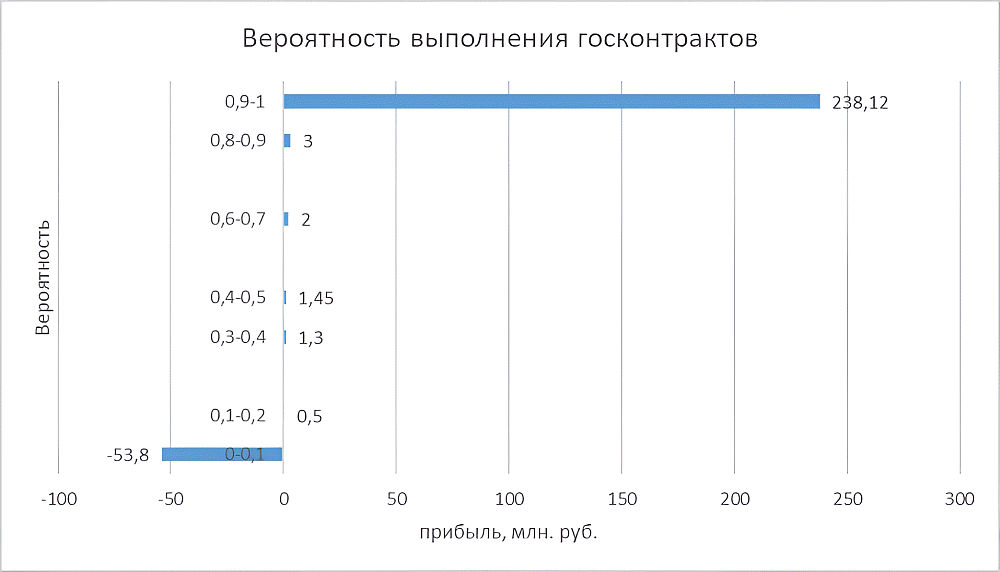
The organization's profit emerged as one of the key indicators. In the sample studied, the probability of successful contract performance approaches zero for companies operating at a loss. The average loss for such organizations amounted to 53.8 million rubles. Meanwhile, the model established an average profit of 238.12 million rubles as the threshold value for reliability.
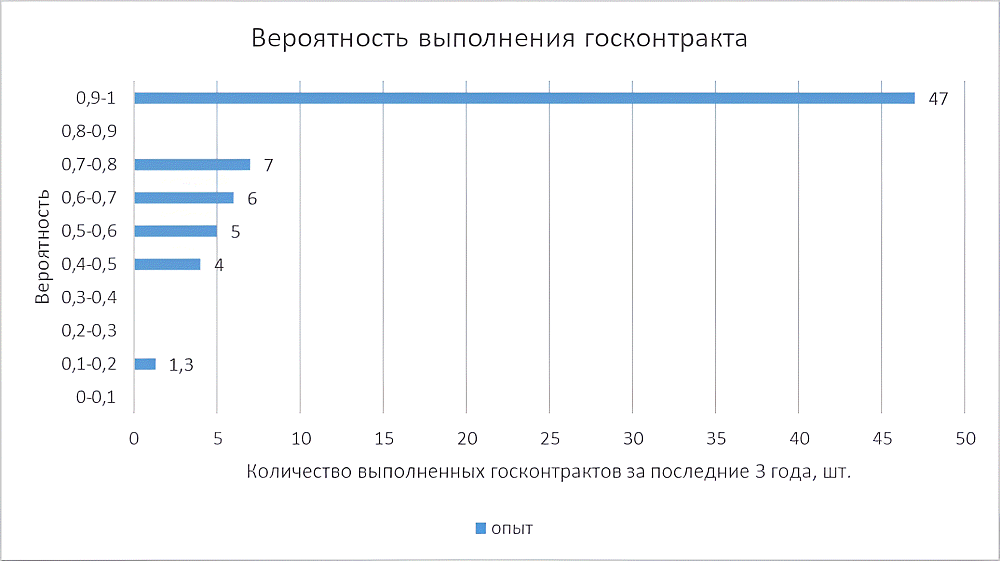
Another significant factor was experience in executing construction projects. The highest probability of successful contract performance was observed among contractors who had completed an average of 47 projects over the past three years. For organizations with experience in only one project, the probability of success is 10–20%.
The model separately takes into account the company's financial standing. If an organization is undergoing bankruptcy proceedings, the probability of contract termination reaches its maximum. In the sample studied, 44% of the non-compliant contractors were in a state of bankruptcy.
From price assessment to a contractor’s digital profile
The study systematized theoretical approaches to markets characterized by information asymmetry and examined government regulatory measures aimed at enhancing the transparency of such markets. These include the Russian "Chestny Znak" system and international experience with "Open Banking" technologies.
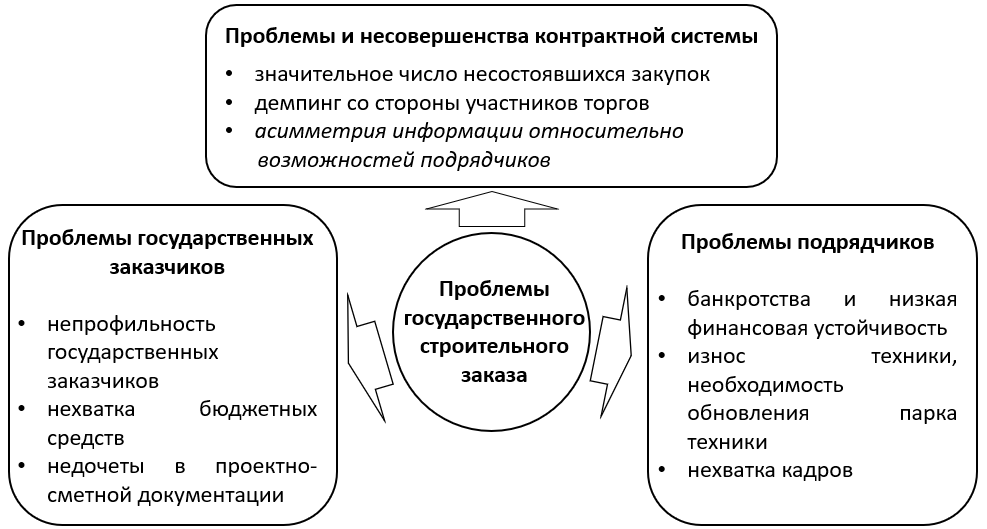
Three main clusters of systemic problems in the market for state construction contracts were also identified: financial and staffing difficulties faced by contracting organizations, a lack of competence among public sector clients, and flaws in the contracting system—including price dumping and the perfunctory application of non-price criteria.
Based on the data obtained, a methodology for the preliminary assessment of bidders has been developed. It enables the creation of a digital profile for an organization, taking into account not only the proposed price but also financial stability, experience, resource base, reputation, and other characteristics.
The scientific novelty of the work lies in the proposed algorithm for integrating predictive analytics directly into procurement procedures. This approach enables a shift from a primary focus on contract cost to a comprehensive digital assessment of a potential contractor's reliability.
UIS new capabilities
The practical significance of the study lies in the potential for its results to be applied by state customers and government authorities within the contract system.
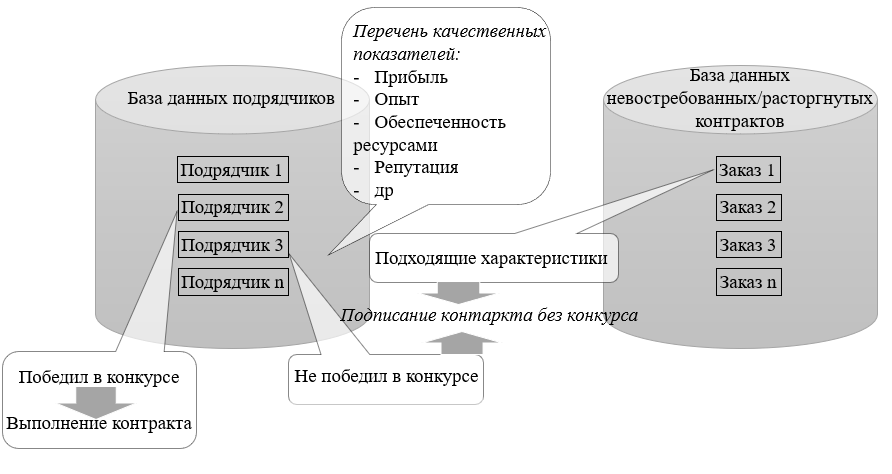
Yury Tsvetkov proposes adding new digital modules to the Unified Information System in the field of procurement. One of these is a "Contractor Database" featuring an automated reliability index calculation based on an organization's economic indicators, resource capacity, experience, reputation, and other characteristics.
The second module is the "Database of Unclaimed Lots." It will enable the re-offering of suitable contracts to companies that did not succeed in the main tender but possess the necessary capacity to execute them. This could help reduce the number of failed procurements and more effectively identify contractors for complex construction projects.
The proposed model focuses on a more in-depth assessment of the qualitative characteristics of bidders and aims to reduce the reliance of procurement outcomes solely on the lowest price. According to the study's findings, its implementation will help mitigate the risk of selecting an unreliable contractor and reduce the number of unfinished construction projects.
.png)


.png)