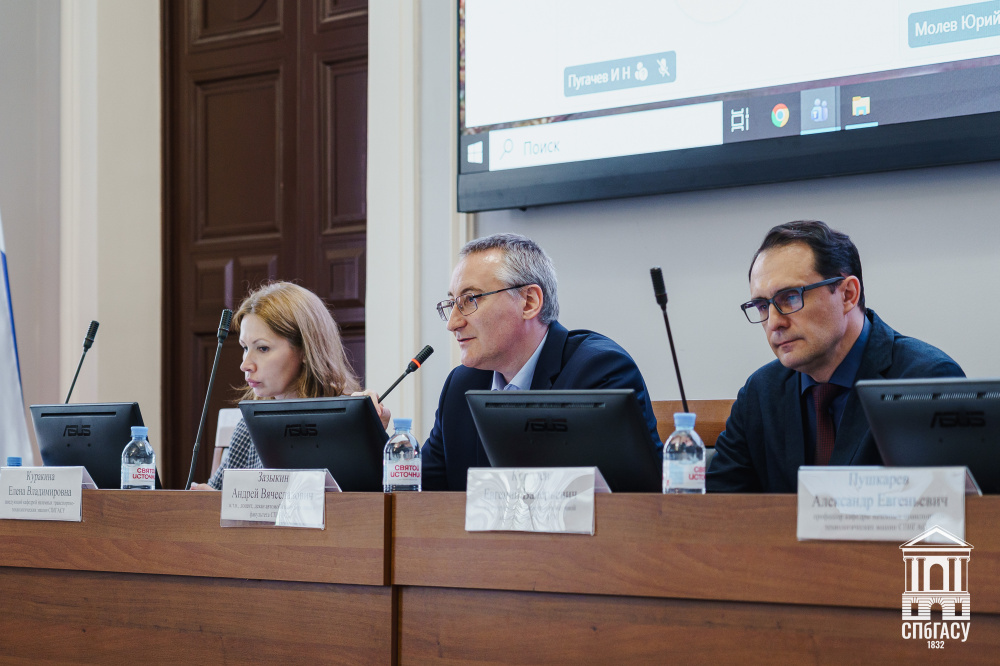
 Elena Kurakina, Andrey Zazykin and Evgeny Korolev
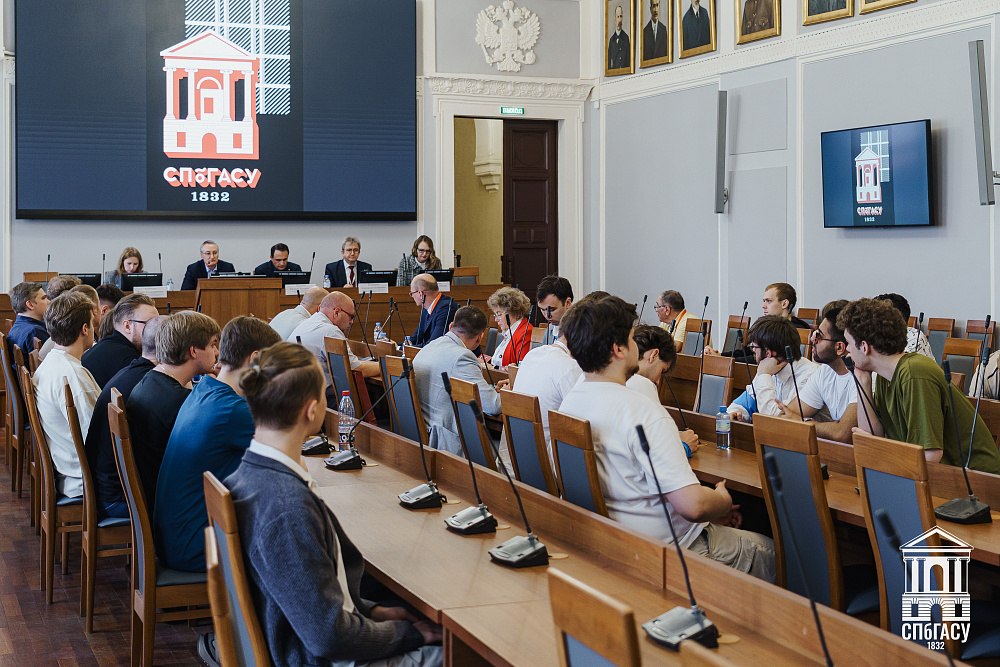
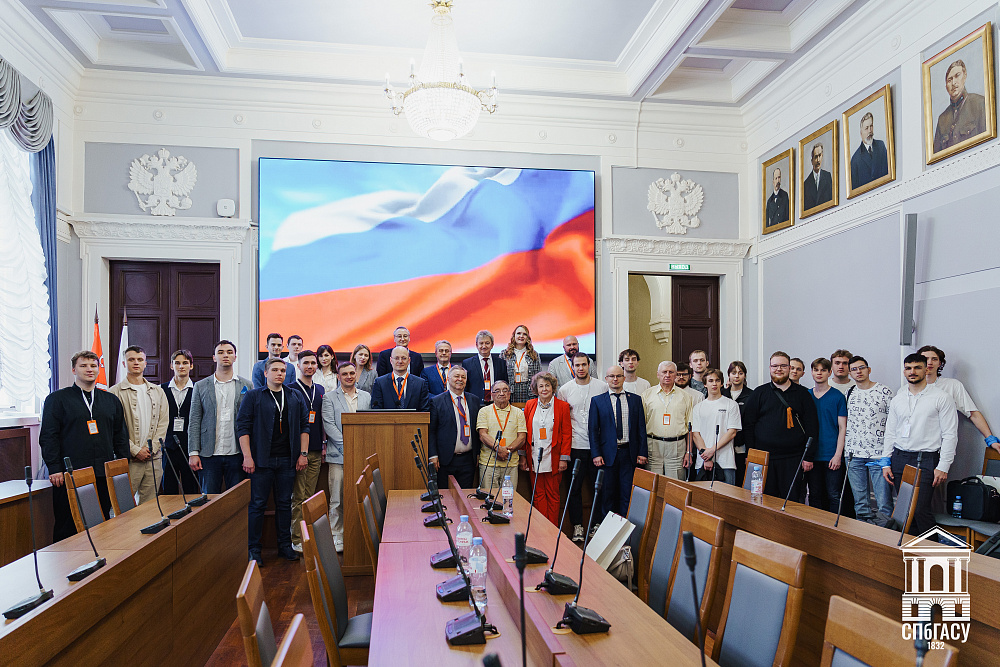
On 10–11 June, the SPbGASU held the IV International Scientific and Practical Conference "Transport Accessibility of the Arctic: Networks and Systems". The conference focused on the development of transport infrastructure, engineering technologies, and human resources in the Arctic territories.
Joining efforts to develop the Arctic
The conference was organized by the Ministry of Science and Higher Education of the Russian Federation, the Saint Petersburg State University of Architecture and Civil Engineering, and the SPbGASU Institute for Traffic Safety.
The main goal of the conference was to find solutions to pressing development issues in the Arctic zone, unite the efforts of the scientific community and practitioners, and share research results on improving transport accessibility in Arctic regions and developing climate-resilient transport networks and systems. Key objectives of the forum included transport support for mineral deposit development, Arctic infrastructure development, the implementation of innovative technologies and equipment, personnel training for work in northern regions, the development of international cooperation, and consideration of the economic aspects of Arctic development.
The conference's organizing committee was chaired by Andrey Zazykin, Dean of the SPbGASU Faculty of Automobile and Road Building. Elena Kurakina, Head of the SPbGASU Department of Land Transport and Technological Machines, served as deputy chair of the organizing committee. Evgeny Korolev, SPbGASU Vice-Rector for Research, Sergey Evtyukov, Director of the SPbGASU Institute for Traffic Safety, and other university representatives participated in the work of the scientific and honorary committees.
Transport development requires an integrated approach
During the plenary session, participants discussed current trends in the development of the Arctic transport system. Reports presented the results of research on the development of the Northern Sea Route, transport support for remote areas, the organization of northern deliveries, the improvement of transport and logistics systems, and the implementation of new technologies for operating equipment in extreme climatic conditions.
Particular attention was paid to the integrated development of transport infrastructure. Participants noted that further Arctic development was impossible without effective cooperation between maritime, river, air, rail, and road transport. The discussion focused on approaches to developing a trans-Arctic transport corridor, which should ensure sustainable connections between the Arctic regions and the country's main industrial centers.
A separate section of presentations was devoted to issues of northern deliveries. Speakers presented modern approaches to organizing multimodal transportation, which involved using multiple modes of transport to deliver cargo to hard-to-reach areas. The need for digital logistics management tools to improve the reliability of transportation systems and reduce the risk of delivery disruptions was emphasized.
Innovation and personnel
The presentations on specialized equipment for use in the Far North generated considerable interest among the participants. The conference explored the potential of all-terrain vehicles capable of operating in swampy areas, virgin snow, and areas with poor road infrastructure. Discussions also focused on improving vehicle reliability, adapting them to low temperatures, and expanding their potential for use in improving transport accessibility in remote areas.
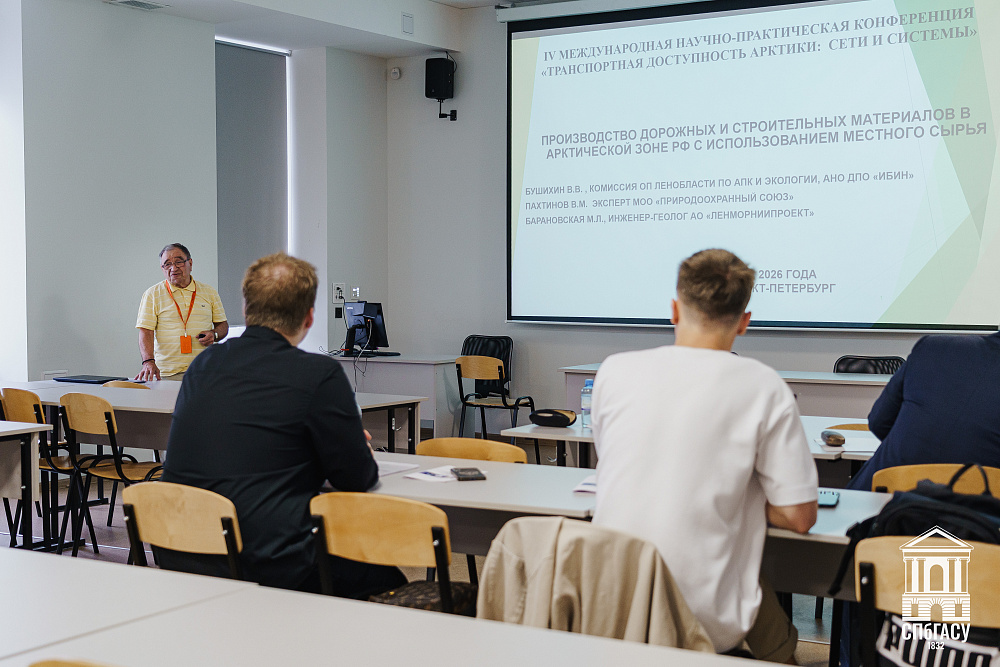
The conference featured three thematic sections: "Increasing accessibility to Arctic regions," "Innovative technologies and equipment," and "Training personnel for the Arctic." This format brought together representatives from various scientific fields and explored Arctic development issues in an interdisciplinary context.
The section on innovative technologies and equipment presented research related to ensuring the reliability of equipment and infrastructure in low-temperature conditions. Young researchers and postgraduate students presented their works in geotechnical engineering, powertrain diagnostics, machine readiness analysis, reducing vibration loads on equipment operators, and improving construction equipment maintenance technologies.
One promising area is the development of acoustic diagnostic methods for road construction machinery engines. The proposed approach allows for assessing the technical condition of power units based on the characteristics of their sound signals and can be used directly in the field, which is especially important for remote Arctic regions.
Special attention was paid to the operation of construction equipment and utilities in the northern regions. Participants discussed methods for improving the cleaning efficiency of concrete mixing equipment, as well as modern pipeline maintenance technologies aimed at increasing reliability and reducing operating costs.
Speakers at the panels noted that exploration of the Arctic requires not only the development of transport infrastructure, but also the creation of new engineering solutions to ensure the reliable operation of equipment, buildings, and structures in permafrost conditions, low temperatures, and significant distances from industrial centers.
Following the conference, participants confirmed the high relevance of Arctic transport accessibility issues and the need for further scientific research in this area. The presented papers and research results will be published in a conference proceedings indexed in the Russian Science Citation Index (RSCI), and the best papers will be recommended for publication in leading peer-reviewed scientific journals.