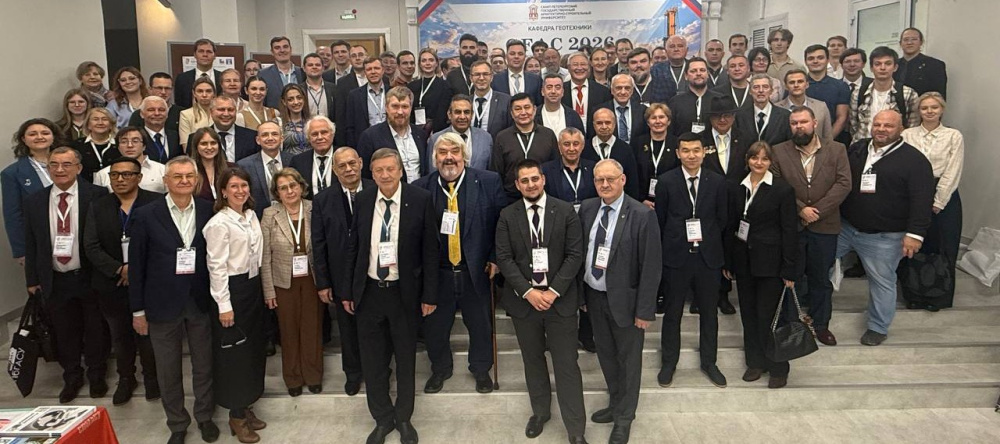
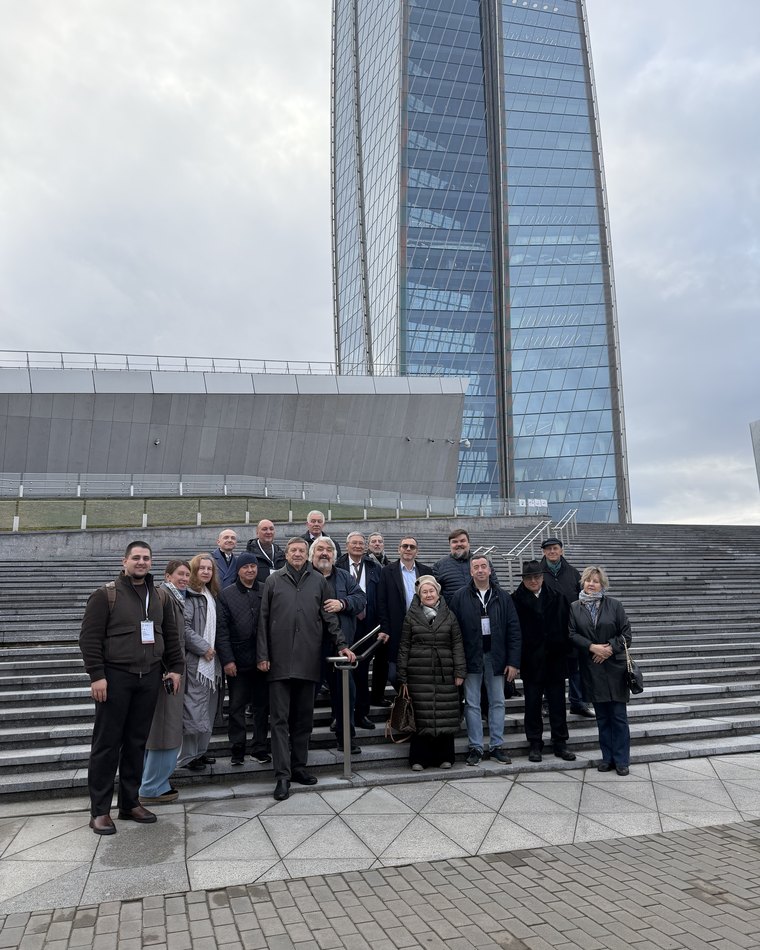
 Conference participants
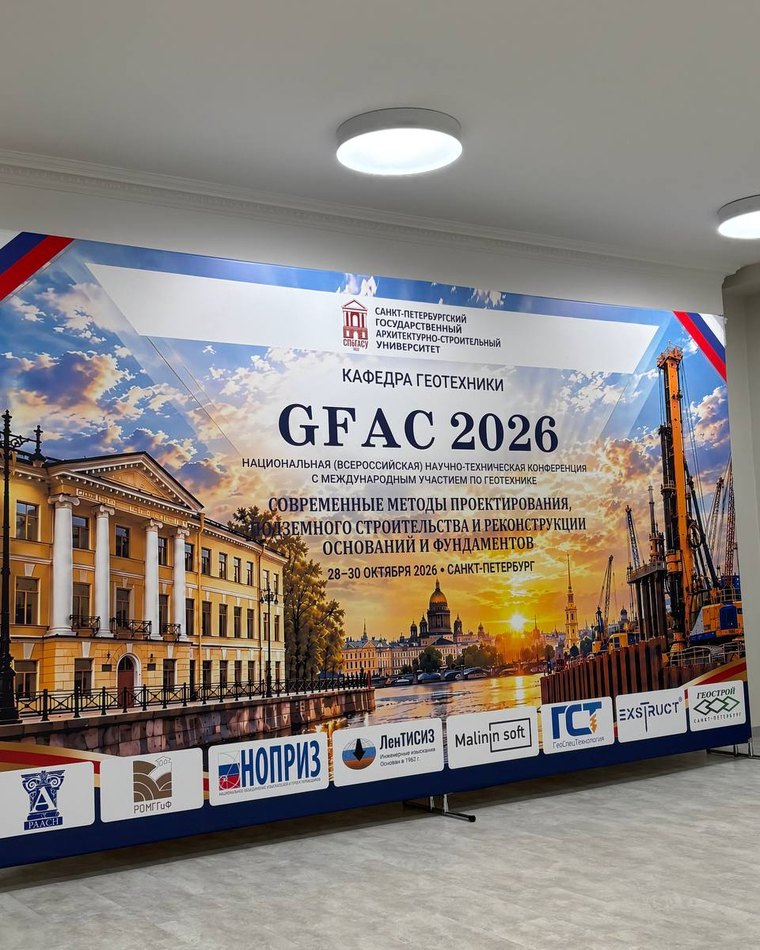
The National (All-Russian) Scientific and Technical Conference on Geotechnics, titled "Modern Methods of Design, Underground Construction, and Reconstruction of Bases and Foundations" (GFAC-2026), took place at the Saint Petersburg State University of Architecture and Civil Engineering (SPbGASU) from 28 to 30 October. The conference was organized by the SPbGASU Department of Geotechnics, with the support of the Russian Academy of Architecture and Construction Sciences (RAACS) and the Russian Society for Soil Mechanics, Geotechnics, and Foundation Engineering (RSSMGFE).
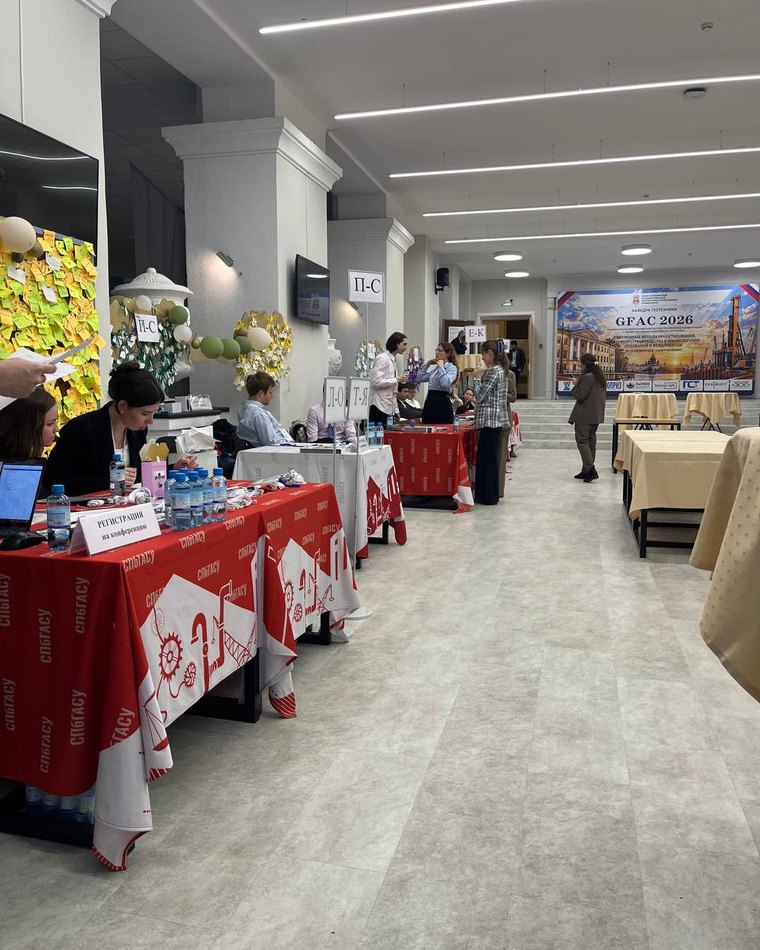
Plenary and sectional sessions took place on 28 and 29 October in the SPbGASU assembly hall, while a poster session and an exhibition of works by the Department of Geotechnics were hosted on the balustrade of the Main Building. On 30 October, participants set off on technical excursions.
The 330 registered participants represented over 110 organizations, including universities, research institutes, design, surveying, and construction firms, as well as expert review and construction oversight bodies. Attendees arrived from 24 cities across Russia, as well as from the Republic of Belarus, Kazakhstan, Azerbaijan, and Syria. Consequently, the presentations covered a diverse range of engineering-geological conditions, such as permafrost (including degrading permafrost) in the Far East and the Arctic zone, structurally unstable and weak clayey soils, karst-prone areas, and sites subject to seismic or dynamic impacts.
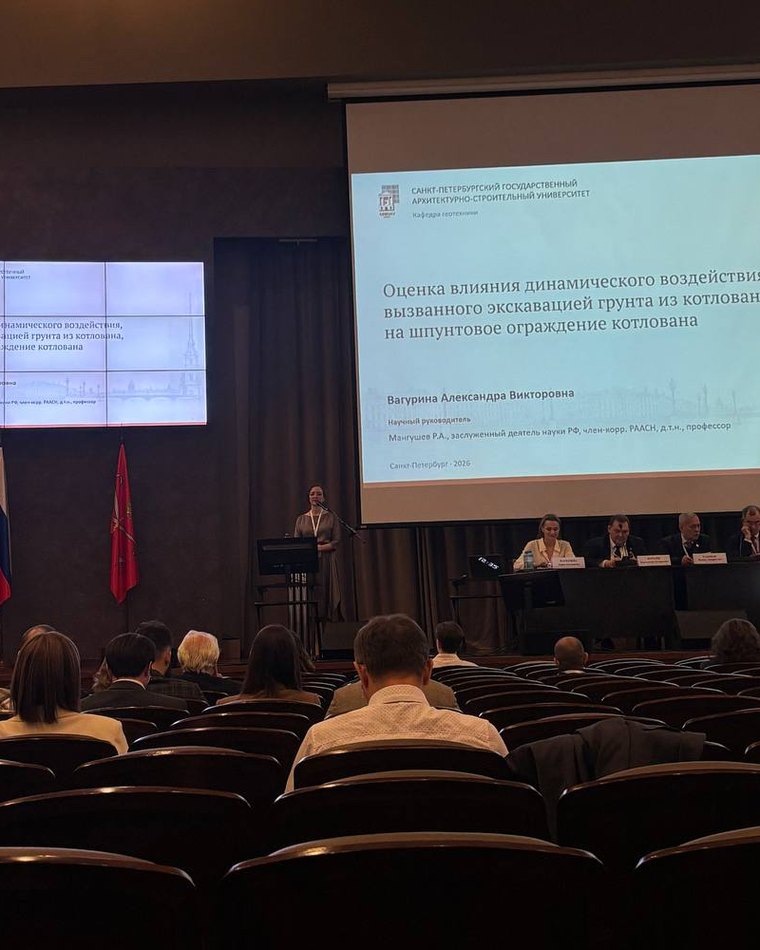
Following a selection process, the program included 110 presentations by 162 authors from over 50 organizations: 64 oral presentations (including nine plenary talks) and 46 poster presentations. During the sessions, 58 oral presentations were delivered, and 42 posters were displayed (totaling 100 presentations).
Opening, plenary and sectional sessions
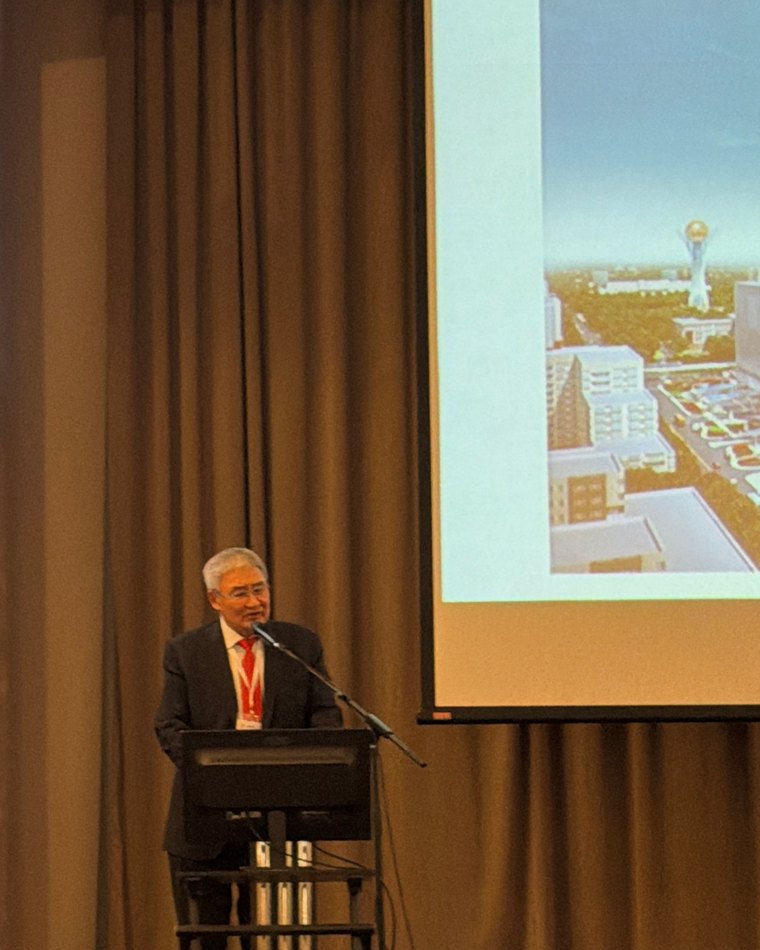
The plenary session on 28 October opened with a presentation by the chair of the conference organizing committee, Rashid Mangushev, DSc in Engineering, a Corresponding Member of the Russian Academy of Architecture and Construction Sciences (RAACS), Professor at the SPbGASU Department of Geotechnics.
On 29 October, the conference proceedings opened with a presentation by Anatoly Osokin, DSc in Engineering, Head of the Department of Geotechnics, who discussed the experience and future development of the geotechnics research school at SPbGASU. Alfred Gotman, DSc in Engineering (the N. M. Gersevanov Research Institute of Foundations and Underground Structures, NIIOSP), presented a method for calculating the vertical and horizontal load-bearing capacity of long bored piles. Ilshat Mirsayapov, DSc in Engineering (Kazan State University of Architecture and Engineering), evaluated the load-bearing capacity and settlement of piled-raft foundations under long-term loading, accounting for the rheological properties of both soil and concrete. Andrey Ponomarev, DSc in Engineering (Saint Petersburg Mining University), examined soil reinforcement as a tool for sustainable development. Other presentations focused on scientific and technical support in geotechnics—delivered by Rafael Sharafutdinov (Director of NIIOSP) and by Aleksey and Konstantin Shashkin (of the firm Georekonstruktsiya LLC)—as well as construction in exceptionally complex engineering-geological conditions (presented by Anatoly Polishchuk and Maksim Marinichev, both Doctors of Engineering Sciences from Kuban State Agrarian University) and the dynamics of piled foundations (presented by Leonid Nuzhdin, PhD of Engineering Sciences, from Novosibirsk State University of Architecture and Civil Engineering, Sibstrin). The overarching theme of the plenary session was the shift from analyzing individual structural elements to evaluating the performance of the entire "soil–foundation–structure" system over time and under dynamic loading conditions.
Work in sections
The section program comprised four sessions. On 28 October, the topics addressed included the stress state and computational models of soil masses, pile and underground structures, soil stabilization and reinforcement, numerical modeling, geotechnical monitoring, and hydraulic structures. On 29 October, discussions focused on piles and pile foundations, the theory of analysis and soil dynamics, soil testing, frozen and structurally unstable soils, reinforced soil structures, and soil research and modeling.
The program focused on three objectives common to various regions: predicting deformations and load-bearing capacity (managing the stress-strain state of a soil mass by altering pore pressure, calculating settlements during reconstruction involving the development of underground space, and accounting for the non-linear behavior of structures); the performance of foundations under specific, challenging conditions (degradation of permafrost and thermal stabilization in the context of climate change, negative skin friction in structurally unstable soils, and exposure to vibration or seismic activity); and technologies for foundation construction and quality control (jet grouting, deep-mixing soil-cement, rigid injected elements, composite and jacked-in piles, pipe-sheet piles, and seismo-acoustic monitoring methods).
Poster exhibition
The poster exhibition remained open throughout both days of the sessions. During the concluding session on 29 October, the moderators—Maksim Paramonov and Ivan Bashmakov, both PhDs of Engineering Sciences, and Associate Professors at the SPbGASU Department of Geotechnics—provided an overview of the poster presentations, followed by a summary of the conference outcomes. Of the 46 poster presentations featured in the program, 29 involved the participation of postgraduate, master’s, or undergraduate students (compared to 13 out of 55 in the oral presentation sessions). Consequently, the exhibition served as a primary platform for young researchers, and the authors of the poster presentations were honored with certificates for "Best Poster Presentation" in their respective categories. Personalized certificates were prepared for all 162 authors of the presentations included in the program.
Following the conference, a collection of its proceedings will be published and indexed in the Russian Science Citation Index (RSCI). The collection will be available for viewing on the SPbGASU website under the section "Science – Conference Proceedings and Monographs."
Technical tours
On 30 October, the participants visited sites where solutions discussed during the meetings had been implemented in practice. At the reconstruction site of the Opera Hall of the People’s House of Emperor Nicholas II (later the Music Hall, now the F. I. Shalyapin Music Theatre), they were able to observe the construction of an underground level beneath the existing building, as well as the transfer of load-bearing columns onto a new foundation using drilled-injection piles and jet-grouted piles. In addition, the group’s tour included the Peter and Paul Fortress.
Another group visited the Lakhta Center, a multifunctional complex featuring a 462-meter-tall tower that rests on a box-type foundation supported by bored piles with a diameter of 2 meters.
Vote of thanks
The conference was held with no registration fee, thanks to the support of its sponsors. The organizing committee extends its gratitude to the conference’s official partners: GeoSpetsTekhnologiya LLC, Malinin soft (InzhProektStroy LLC), LenTISIZ CJSC, Geostroy, the National Association of Surveyors and Designers (NOPRIZ), and EXSTRUCT. The organizing committee also acknowledges the support provided by the Russian Academy of Architecture and Construction Sciences (RAACS) and the Russian Society for Soil Mechanics, Geotechnics and Foundation Engineering (ROMGGiF), and thanks PSB Zhilstroy LLC, the State Museum of the History of Saint Petersburg, and PJSC Gazprom for hosting groups during the technical site visits.
In addition, the organizing committee expresses its gratitude to the members of the scientific council, session moderators, presenters, and attendees, as well as to the staff and students of the Department of Geotechnics, for their assistance in conducting the conference.
.jpg)


.jpg)
