The SPbGASU Department of Intercultural Communication held its traditional annual festival, "Dialogue of Cultures." This event concludes the Russian language course for international students in the Preparatory Department.
The colorful presentations alternated between stories about national and wedding clothing, tea ceremonies, safaris and football, the Amazons, painting, and traditional cuisine. Students from Benin and Mali attended the festival in national costumes. Students from Indonesia treated the audience to bakwan, a type of street food. Festival participants not only prepared bright presentations but also danced, recited poetry, played the flute, and held quizzes with prizes. As a result, the festival of cultures became a vibrant, captivatingly diverse event that will be long remembered.International students from 18 countries prepared and presented projects about their countries and cultures. Each presentation was a journey into the world of national traditions, history, and art.
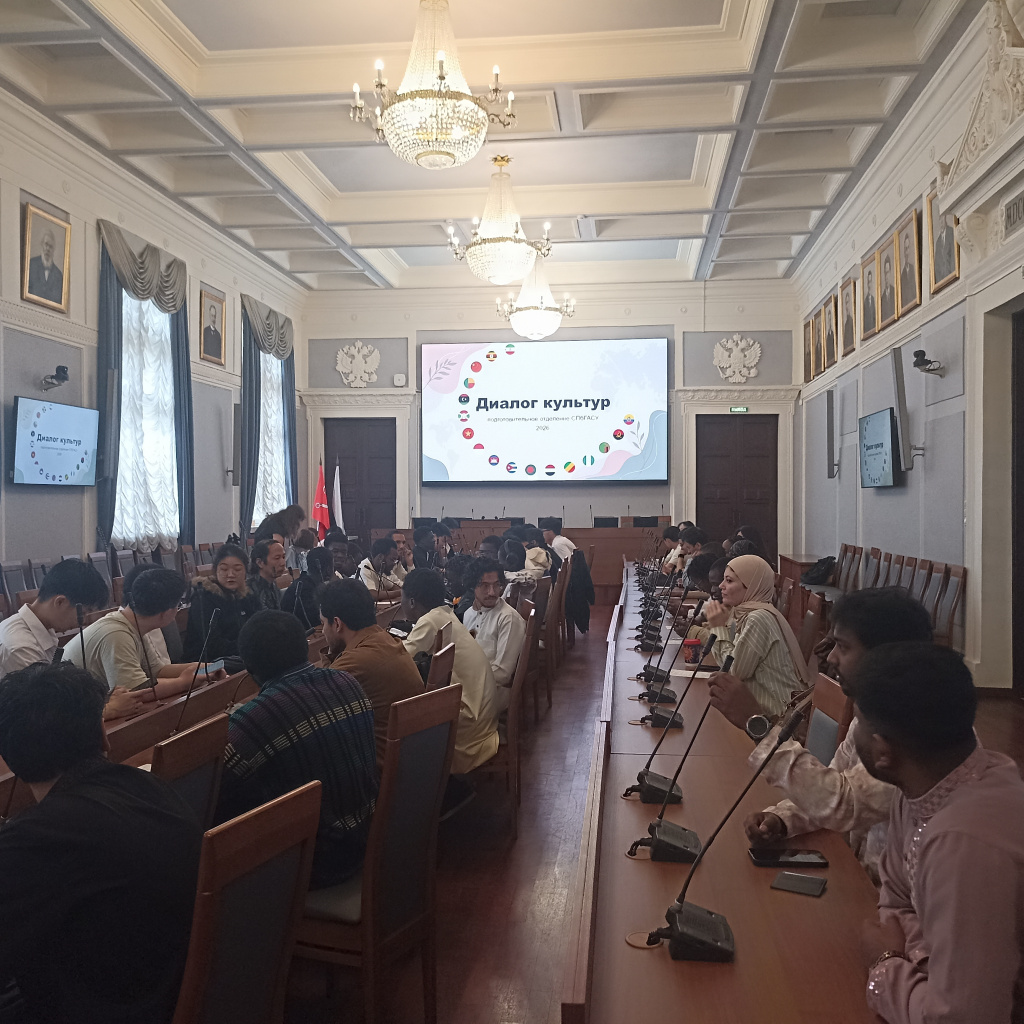 The "Dialogue of Cultures" Festival in the SPbGASU Academic Council Hall
Ernest Niyonkuru (Burundi) captivated guests with a tale of the "land of a thousand and one hills." He showed them Burundi's geography and rich history—from kingdom to independence—and introduced them to its national symbols and famous traditional drums. Ernest paid special attention to Lake Tanganyika, the source of the Nile, and the Karera Falls, emphasizing the unique natural beauty and tourism potential of his homeland.
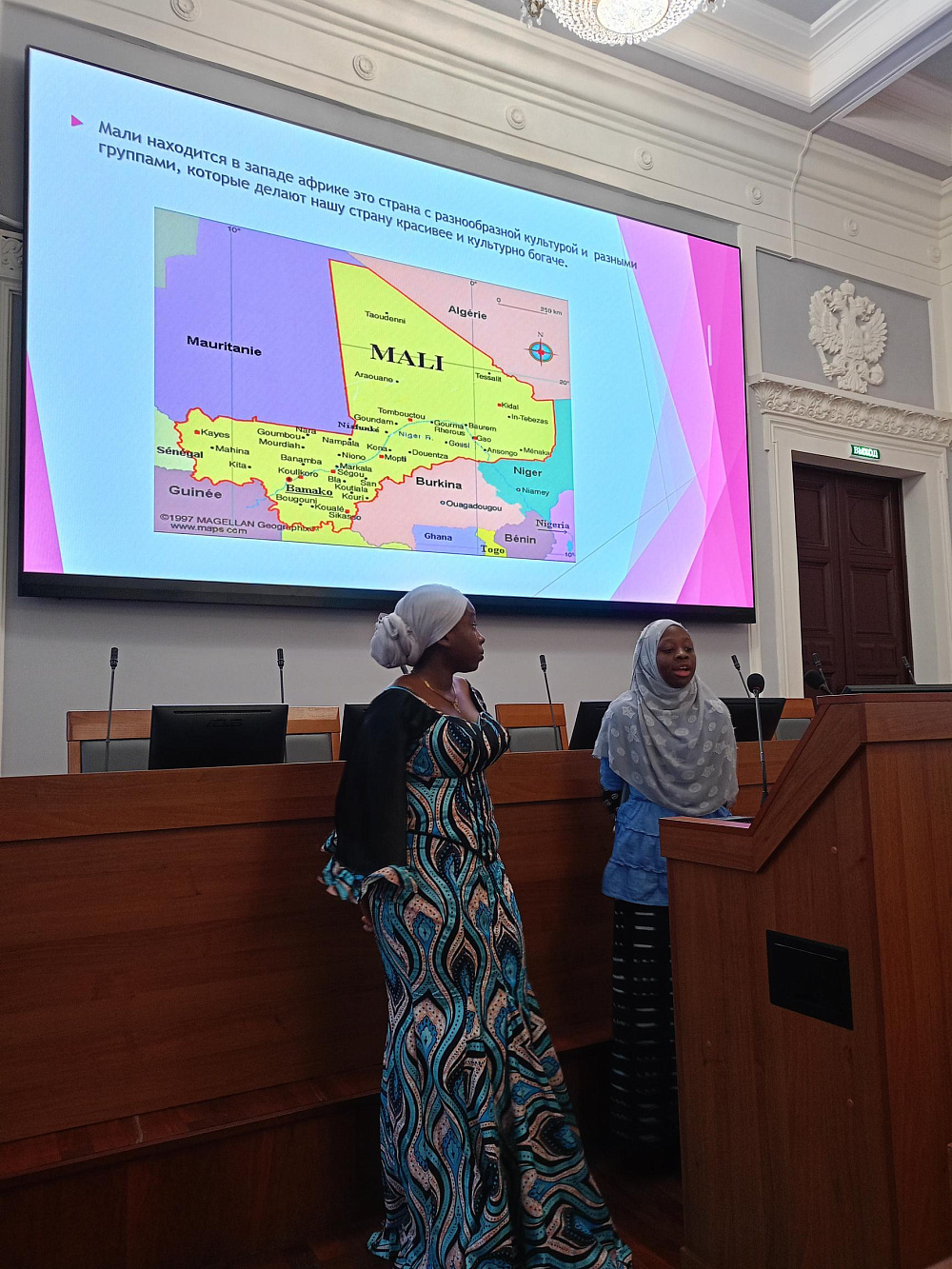
Tenine Keita and Djenebou Diarra (Mali) dedicated their performance to the ethnic diversity of their country. They spoke about the five peoples—Bambara, Fulani, Bozo, Tuareg, and Malinke—their occupations, typical surnames, and vibrant traditional clothing. The women demonstrated how patterns and masks on their costumes reflected a connection with ancestors and nature, and also showcased examples of hand-sewn traditional clothing.
Li Hongbo (China) immersed the audience in the refined world of wenwan—traditional objects for contemplation and self-improvement. He demonstrated bottle gourds, nuts, and "Star and Moon" bodhi seeds, explaining their symbolism and how to handle them. Of particular interest was the second part of the talk, dedicated to the Chinese culture of fragrances, the "Four Treasures of the Scholar's Study"—brush, ink, paper, and inkwell—as well as the art of qingong, where the beauty of nature and spirituality merge in exquisite interior objects.
Hoang Ngoc Hu and Pham Xuan Dong (Vietnam) introduced their country as the "heart of Southeast Asia." After describing its geography and thousand-year history of independence, the speakers moved on to the economic miracle following the Doi Moi reforms, illustrating GDP growth and poverty reduction. Hu also spoke about rice field culture, ancestor worship, and the legend of the Vietnamese people's descent from a dragon and a fairy, and concluded by emphasizing the long-standing friendship between Vietnam and Russia. Dong concluded his speech with a brilliant flute performance. He performed traditional Vietnamese music, "Moscow Nights," and the famous "Katyusha," drawing heartfelt applause from the audience.
Li Shuo and Liu Jiale (China) presented a project on Chinese cuisine, one of the oldest and most diverse in the world. The students discussed not only the four major Chinese cuisines (Liuzai, Sichuan, Yuezai, and Huayan) but also how to properly eat with chopsticks.
Li Mingke and Wang Kexin (China) introduced the event participants to Chinese tea culture, talking about the history of tea, its importance in everyday life and types of tea (green tea (xihu longjing, dongting biluochun); black tea (qimen huncha, dianhong); oolong (anxi tieguanyin, wuyi dahunpao)).
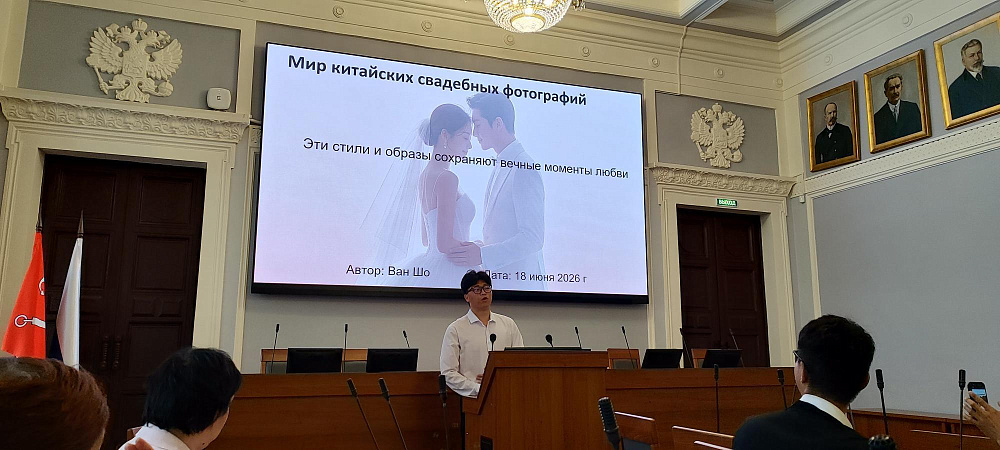
Wang Shuo (China) discussed four main wedding photography styles: Chinese traditional style, retro style, Western style, and outdoor style. For each style, Wang Shuo described the main colors, typical clothing, and atmosphere.
Wana Musumadi (Zambia) gave a presentation and showed off his native Zambia. He talked about waterfalls, animals, delicious food, and his favorite sport, football.
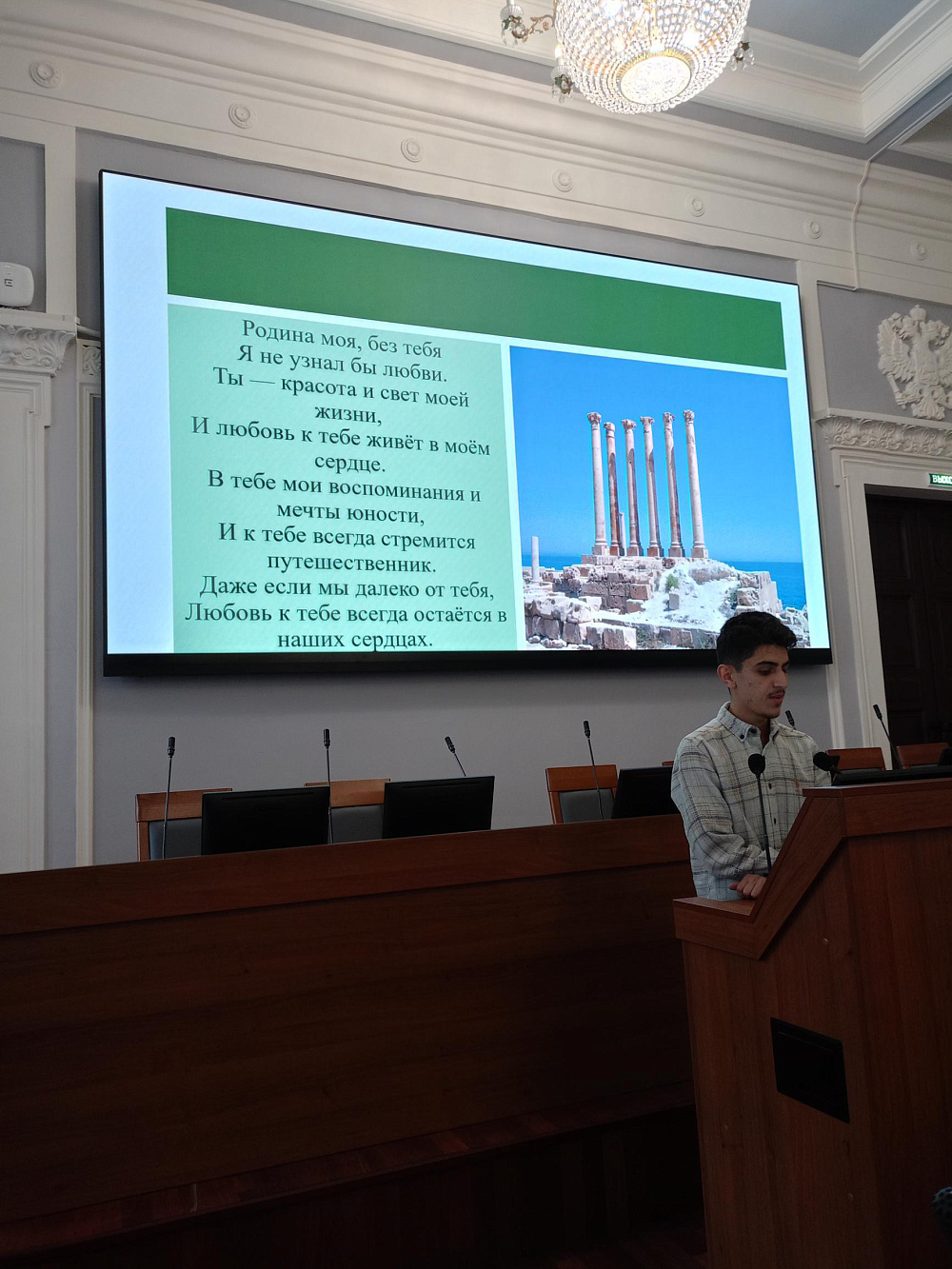
Ebrahim Mareh (Yemen) showed the beautiful nature of his country, and also shared an interesting fact: the word "mocha" comes from the name of the Yemeni city of Mocha, through which coffee was sent to different countries of the world.
Sestut Ibala Mish Jorel (Republic of Congo) spoke about the history of his country, the capital Brazzaville, as well as about its sights, traditional music and food.
Mari Teatangream (Cambodia) spoke about the uniqueness of her country's flag, as Cambodia is the only country whose national symbol depicts a building – the Angkor Wat temple.
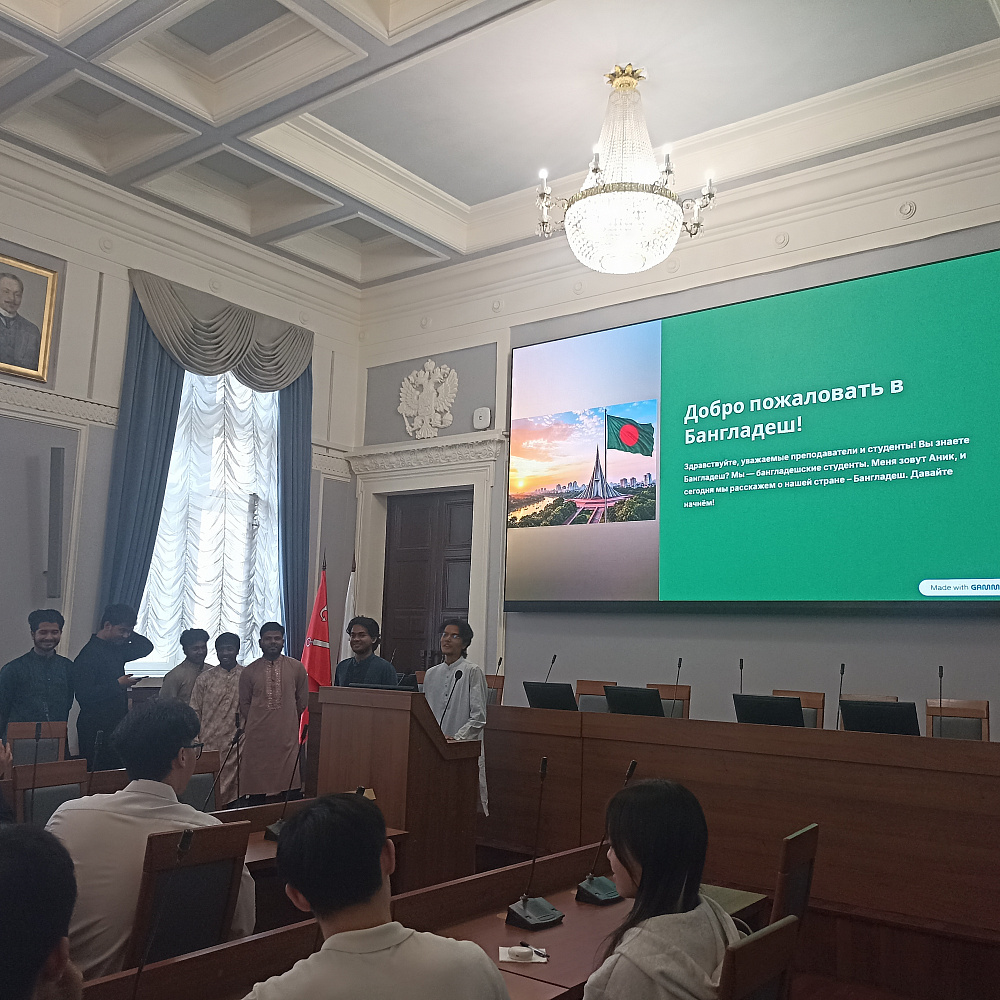
Md Sovrov Mia, Md Munnaf Hossen Anik, Ahmed Raihan, Md Mostafizur Rahma, Devonat Shochin, Hossen Pranto Shahadat, Md Rakebul Islam Razbe (Bangladesh) explained that in 1947 Bangladesh became a part of Pakistan and in 1971 the Liberation War began, after which Bangladesh became an independent country. The students also presented Bangladeshi dishes (biryani, khichuri, fuchka and chotpoti).
Antonio Huet Crespo (Cuba) recited an excerpt from a letter by the famous Cuban political and public figure José Martí, leader of the movement for the liberation of Cuba from Spanish rule.
Joaquim Katumua, Jose Josué, Santos Claret Diandra (Angola) spoke about the traditions of their country and demonstrated fiery dances.
Juan Ndong Ebang Bapiye (Equatorial Guinea) spoke about the climatic features of his country.
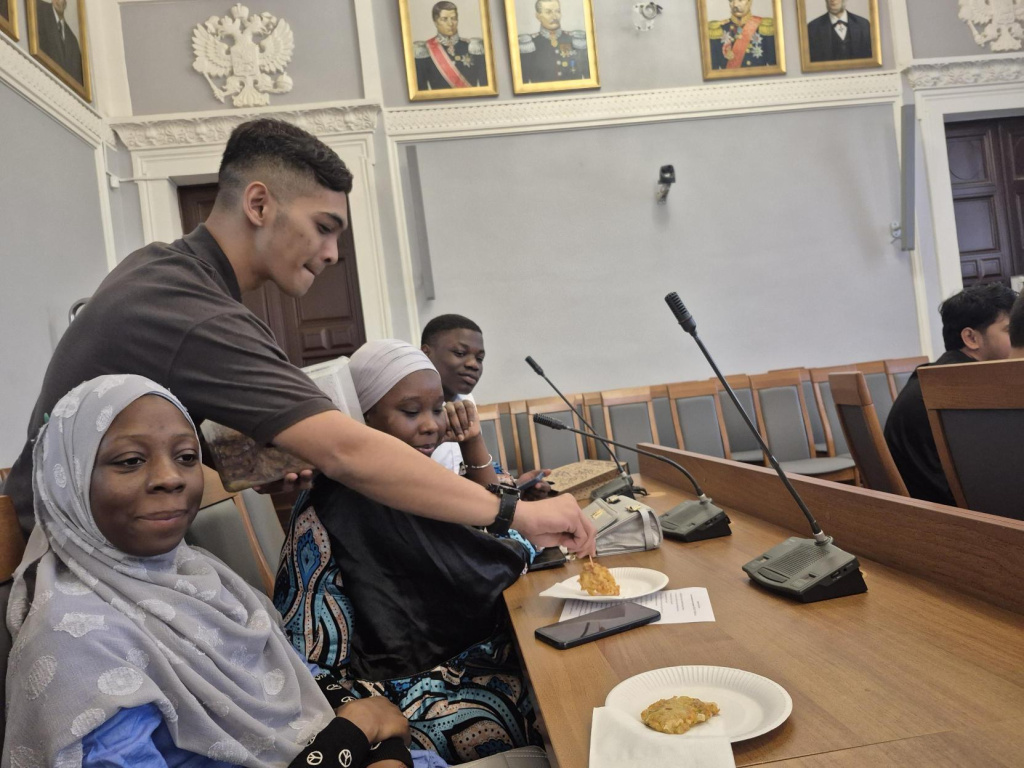 Setyo Purnomo Putro (Indonesia) treats guests to a national dish
Each presentation provided a vivid window into the world of a particular country, and the Russian language served as a bridge that allowed for thinking beyond barriers, uniting people and emphasizing the value of each nation. The "Dialogue of Cultures" festival once again confirmed that knowledge of language and respect for the multi-ethnic world are the foundation of true friendship and mutual understanding.
Representatives of our university's International Relations Division attended the festival. After the event, they shared their thoughts. "I would like to thank the teachers of the Department of Intercultural Communication for organizing such a wonderful event: in a friendly, almost family-like atmosphere, I gained new knowledge and impressions. The vibrant presentations, colorful stories, and amazing facts about 18 countries around the world were presented at the highest level. I can't help but note the level of Russian language proficiency among the Preparatory Department students, which is improving every week," noted Karina Surkova, Head of the Preparatory Department for Foreign Applicants.
.jpg)
.jpg)
.jpg)
.jpg)
.jpg)
.jpg)
.jpg)
.jpg)
.jpg)
.jpg)
.jpg)
_1.jpg)
.jpg)


.jpg)

.jpg)
.jpg)
.jpg)
.jpg)
.jpg)
.jpg)
.jpg)
.jpg)
.jpg)
_1.jpg)