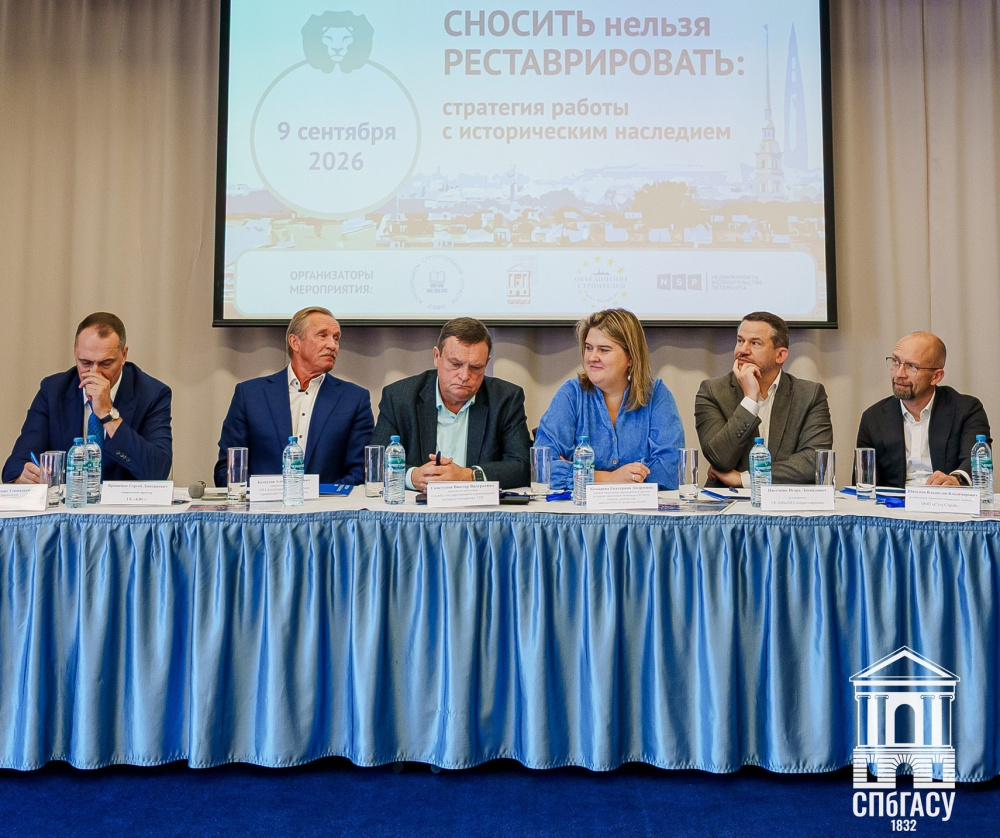
 Sergey Yaroshenko, Aleksey Belousov, Viktor Svistunov, Ekaterina Kozyreva, Igor Pasechnik, and Vladislav Shipunov
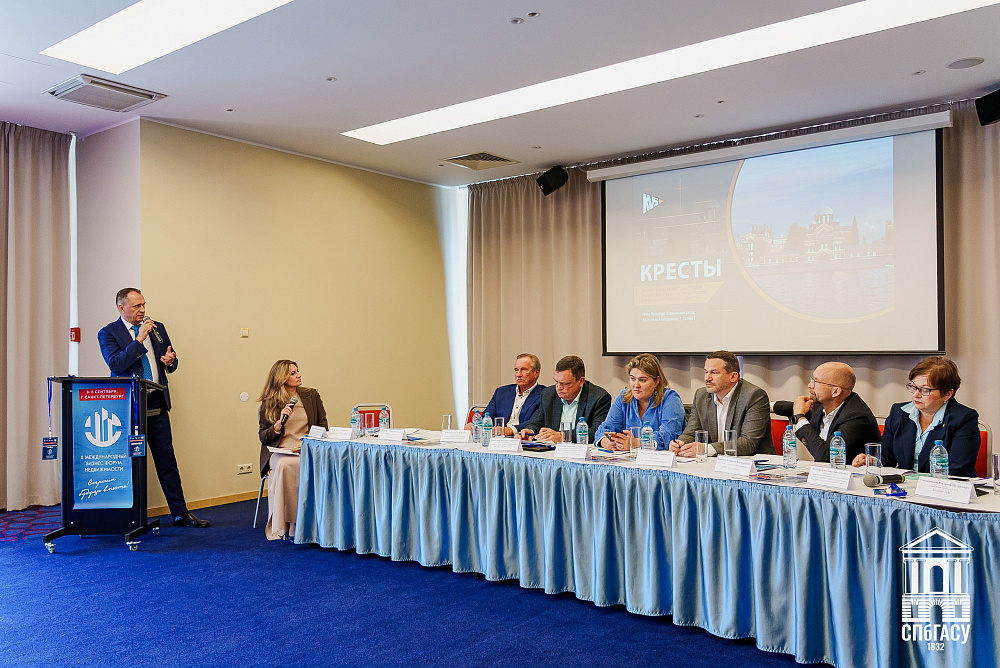
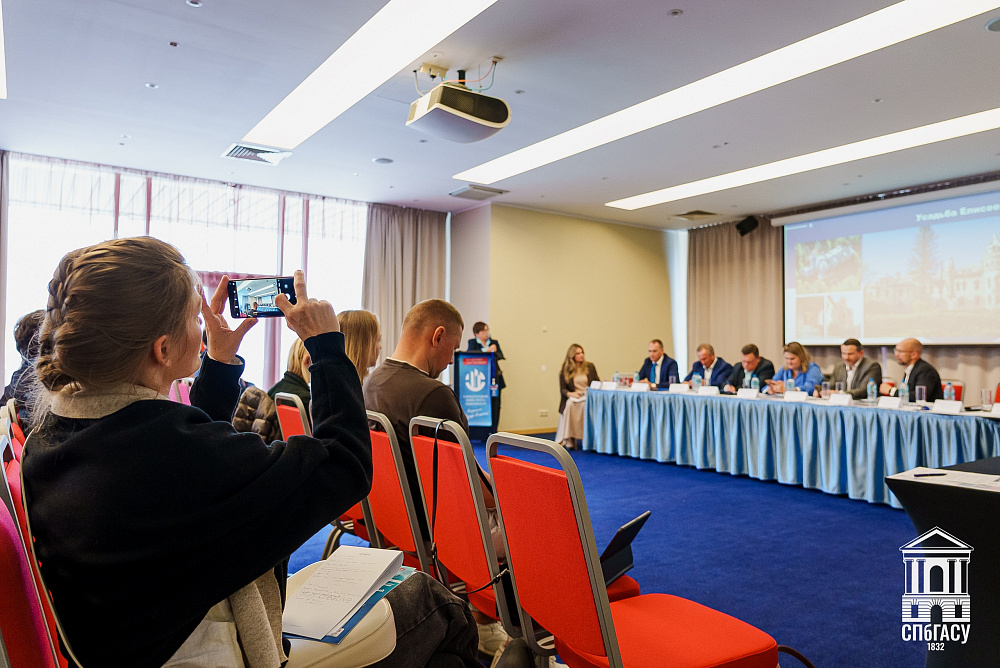
On 9 September, as part of the business program of the X International Real Estate Forum, a thematic discussion titled "Demolish not Restore: A Strategy for Handling Historical Heritage" took place. Representatives from cultural heritage preservation authorities, as well as from development, design, and restoration firms, discussed legislative changes, the challenges involved in adapting historical buildings, and the conditions necessary to attract investment for the preservation of cultural heritage sites.
The discussion was organized by the Construction Industry Consortium of the Northwestern Federal District, St Petersburg State University of Architecture and Civil Engineering (SPbGASU), the SRO Association "Union of St Petersburg Builders," and the editorial team of the NSP.RU website and newspaper (*Real Estate and Construction of St Petersburg*). The meeting was moderated by Nadezhda Akulova, Head of the SPbGASU Department of Architectural and Urban-Planning Heritage, PhD of Architecture, restoration architect, and Advisor to the Russian Academy of Architecture and Construction Sciences (RAACS).
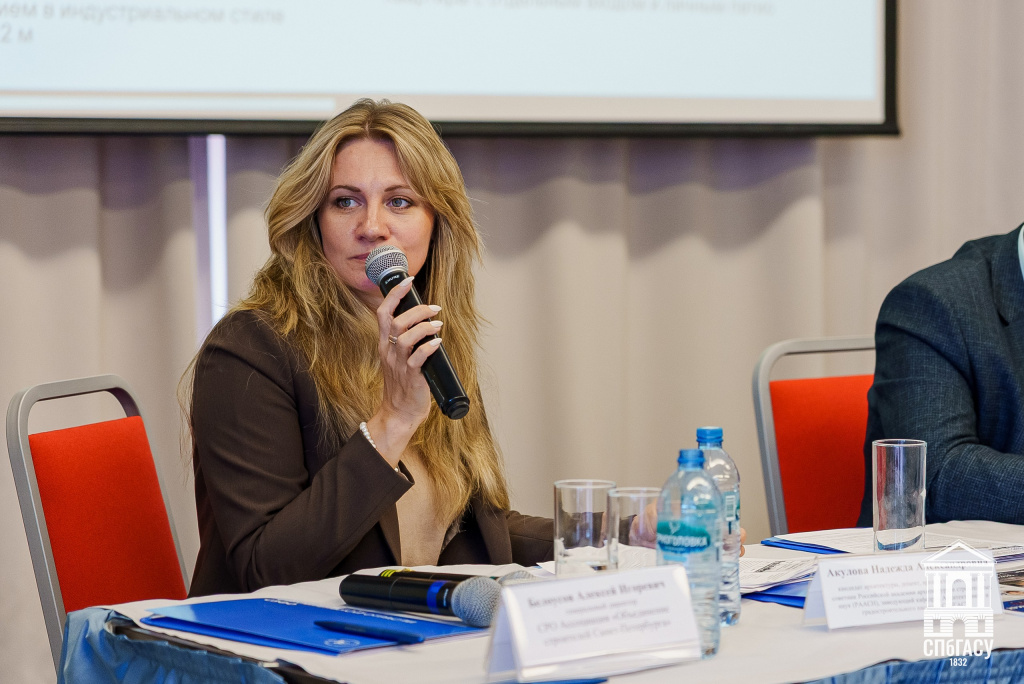 Nadezhda Akulova
The discussion opened with a presentation by Aleksey Belousov, Director General of the SRO Association "Union of St Petersburg Builders." Participants included Andrey Ermakov, Head of the Ministry of Culture’s Northwestern Federal District Department; Ekaterina Kozyreva, First Deputy Chair of the St Petersburg Committee for State Control, Use, and Protection of Historical and Cultural Landmarks (KGIOP); Svetlana Volkova, Head of the Department for the Exercise of Russian Federation Powers regarding Cultural Heritage Sites at the Leningrad Region Committee for Cultural Heritage Preservation; Viktor Svistunov, Deputy Head of the St Petersburg State Construction Supervision and Expert Review Service; Sergey Yaroshenko, Director General of the KVS Group; Igor Pasechnik, Head of the NIiPI Spetsrestavratsiya Group; Vladislav Shipunov, Head of the Special Projects Directorate at Setl Stroy LLC; Grigory Ivanov, Head of the Restoration Division at the Studio 44 architectural bureau; and Vladimir Rukavishnikov, Project Manager at AVANT (AAG Holding).
Changes to federal legislation were a key topic of the discussion. Over the past year, several regulatory acts have been adopted that alter the procedures for handling cultural heritage sites. In particular, Federal Law No. 73-FZ (or No. 142-FZ) has streamlined certain maintenance activities for monuments. A new system for preservation work on cultural heritage sites is set to take effect in March 2027.
At the same time, participants in the professional discussion noted that legislative changes must take into account the specific nature of historic buildings. Modern building codes cannot always be directly applied to cultural heritage sites constructed decades or even centuries ago. Historic structural elements—which form part of the building and may themselves be subject to preservation requirements—were cited as examples; replacing or damaging them to conduct necessary tests could result in the loss of a historic feature.
According to representatives of the restoration community, objects of cultural heritage cannot be treated in the same way as ordinary construction projects. Their historical value, authenticity, and unique structural and architectural elements require a special approach.
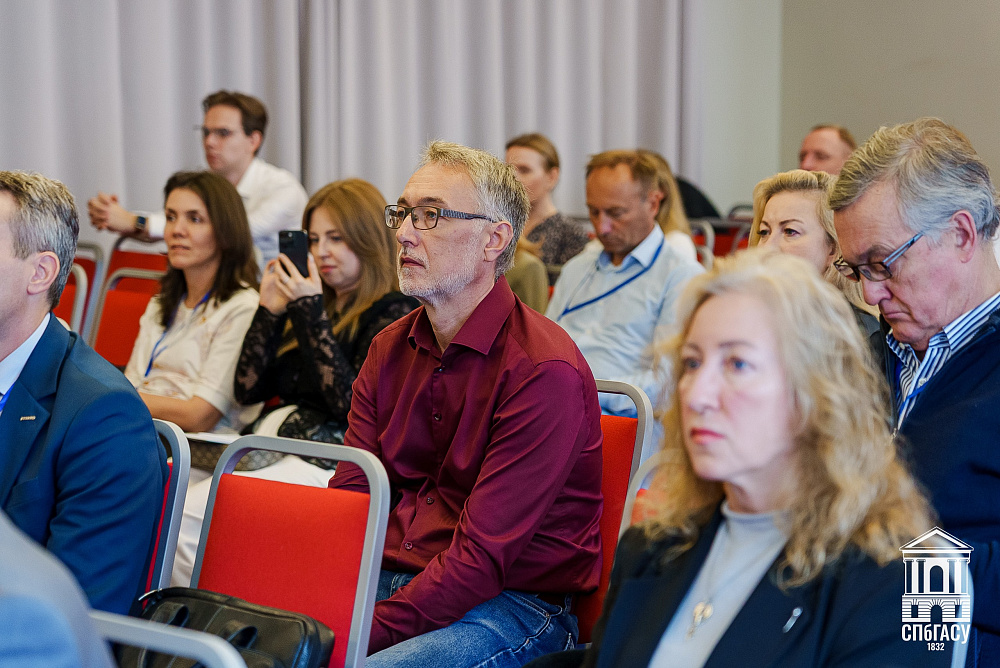
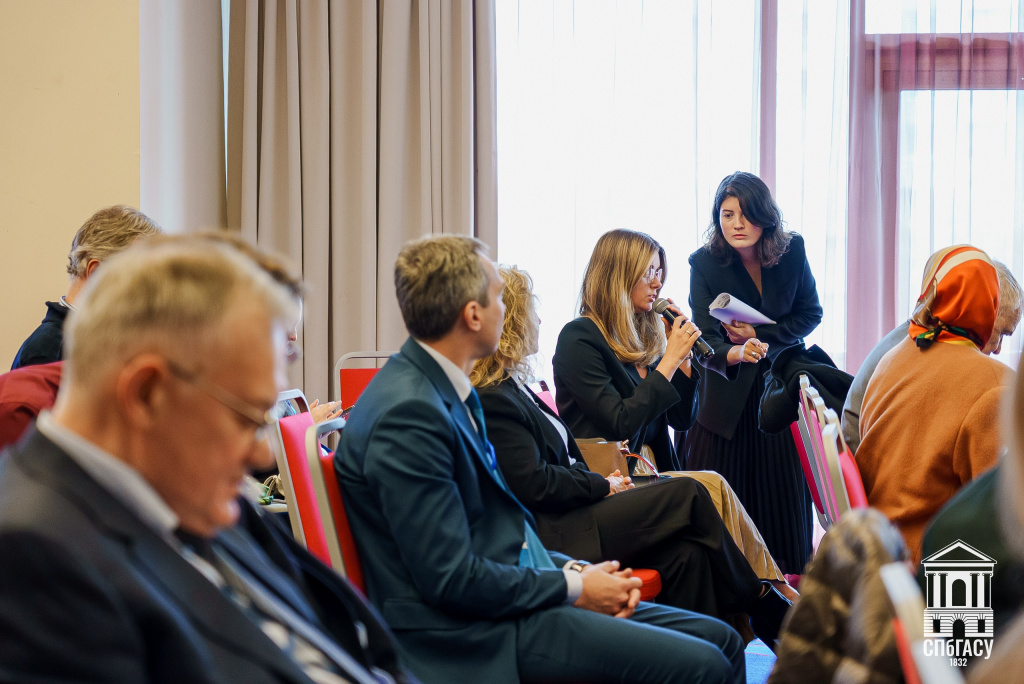 Discussion participants
Particular attention was paid at the meeting to how changes in the regulatory framework affect investment projects. Projects involving cultural heritage sites take years to complete, making clear rules and the ability to assess risks in advance especially important for investors. As the participants noted, the goal is to find a mechanism that makes the approval process more transparent and predictable without jeopardizing the monuments themselves.
"Working with cultural heritage sites is a labor of love"—this is how Vladimir Rukavishnikov described his approach to such projects. He noted that a cultural heritage site—and the process of engaging with preservation authorities—can be viewed not merely as a set of constraints, but as a distinct category of real estate development project. He identified early communication among the investor, designers, and government authorities as a key factor in their successful implementation.
Following the discussion, it was decided to prepare proposals for improving the regulatory framework.
In addition to a clear and stable regulatory framework, industry experts highlighted the importance of effective collaboration among investors, designers, and government authorities.
This is especially true for St Petersburg: there are more than 9 thousand CHSs in the city, and within the historical boundaries of the four central districts there are more than 14 thousand historical buildings built before 1917.
Ekaterina Kozyreva, First Deputy Chair of KGIOP, emphasized that preserving the historic urban fabric must go hand in hand with the city's development. According to her, St Petersburg already possesses significant experience in adapting cultural heritage sites for modern use. Examples of such projects include New Holland, Planetarium No. 1, the "Tkachi" creative space, Sevkabel Port, Petrovsky Arsenal, and others.
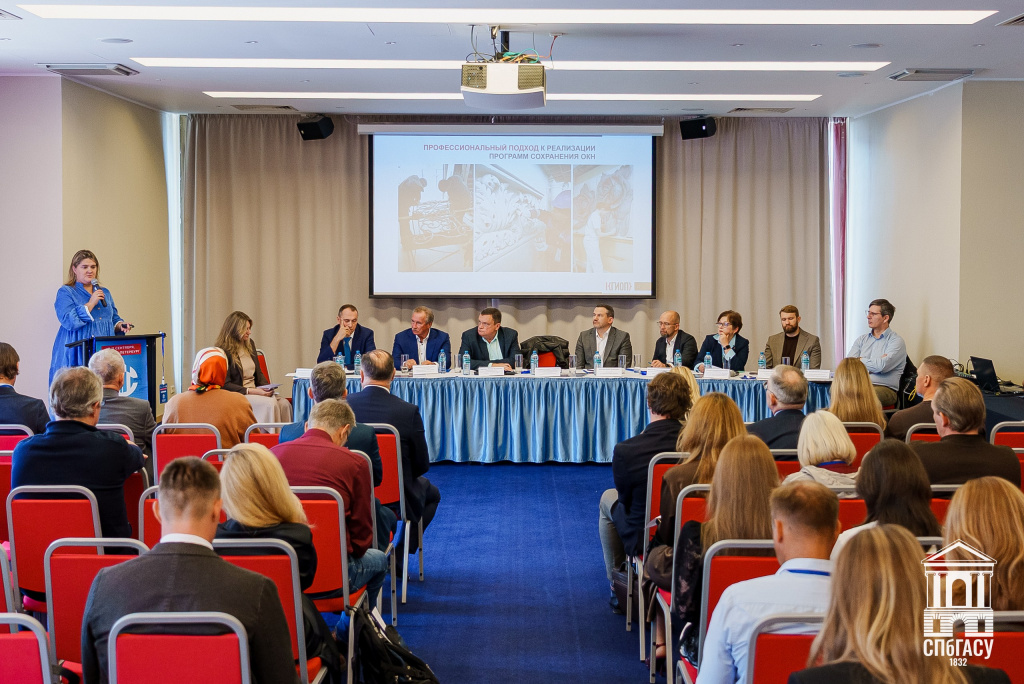 Presentation by Ekaterina Kozyreva
"It is very important when a cultural heritage site comes back to life," noted Ekaterina Kozyreva. Prolonged disuse and a lack of utility infrastructure lead to the deterioration of a building's technical condition; therefore, the arrival of investors willing to undertake the restoration and adaptation of these monuments for modern use is a crucial aspect of their preservation.
Svetlana Volkova shared the experience of the Leningrad Region. The region aims to restore one thousand cultural heritage sites by 2030. The year 2027—a milestone year for the region—will see the implementation of a project involving the Leningrad Region Committee for Urban Planning Policy and SPbGASU focused on the digital revitalization of architectural heritage sites; an agreement to this effect was signed in April at the IX International Scientific and Practical Conference BIMAC-2026.
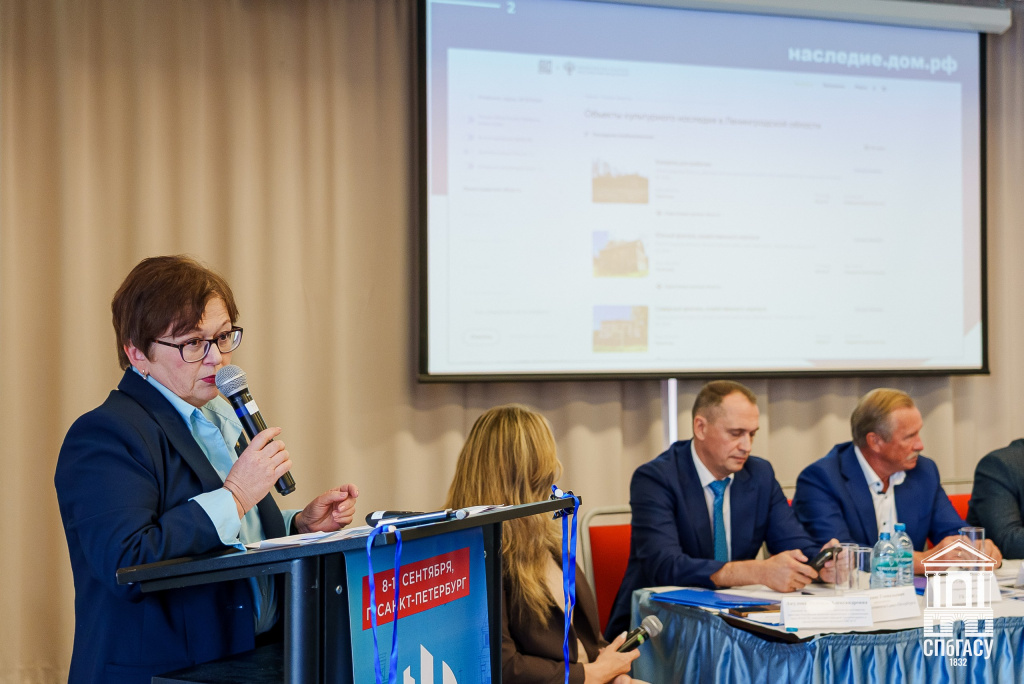 Svetlana Volkova
The training of professionals for the restoration sector was a key topic of discussion. Participants highlighted the role of SPbGASU as a leading specialized educational institution. Notably, a corporate department of KGIOP has been operating at the university since 2024, overseeing personnel training for cultural heritage preservation and the development of new educational programs for the industry. Starting in 2026, the SPbGASU Faculty of Civil Engineering is enrolling students in a new specialization—"Restoration of Buildings and Structures"—designed to train restoration engineers. In April 2026, during the VI National (All-Russian) Scientific and Practical Conference with International Participation "Reconstruction and Restoration of Architectural Heritage," an agreement was signed to establish the "Preservation of Architectural Heritage" Consortium. This initiative brought together representatives from the academic community, government authorities, and industry partners to consolidate efforts in the restoration and preservation of historic buildings, advance scientific research, and introduce innovative technologies into the sector.
In her concluding remarks, Nadezhda Akulova emphasized that the authenticity of the historical environment and historical structures is not an obstacle to development, but rather a resource for it. Preserving architectural details, the historical appearance, and the integrity of these sites is becoming increasingly important—including from tourism and economic perspectives.
Thus, the discussion participants agreed on the main point: the preservation of historical heritage and urban development need not be mutually exclusive. Through effective collaboration among the state, investors, designers, and restoration specialists, historical sites can be given new life while retaining their authenticity and cultural value.
Following the discussion, proposals for a resolution are to be prepared. Materials from the meeting will also be published in the *Real Estate and Construction of St Petersburg* newspaper and on the publication’s online platforms.